The June 14 shut down of BART's Transbay Tube that transports 110,000 daily East Bay/SF riders on four of the five BART lines resulted in one of the worst commuter nightmares the region has seen, showing how indispensable BART is to the Bay Area.


With BART service halted, Bay Bridge traffic for the most part came to a standstill, a clear illustration of how motorists depend on Bay Area Rapid Transit to keep cars off the bridge on a normal day. Michael Cabanatuan and additional San Francisco Chronicle reporters contributed to the "commuter nightmare" front-page article.
Help came from throughout the region.
- Buses from the East and South Bays stepped in to assist AC Transit which normally carries 14,000 Transbay passengers daily. It carried 12,500 extra passengers.
- The Water Emergency Transportation Authority added four additional boats to its Oakland-Alameda Route. Result: "ridership was 9,531--compared to approximately 2,500 passengers carried during a typical weekday."
However, transportation officials admitted that "there is no replacement for BART'S Transbay Tube." As Metropolitan Transportation Commission spokesman Randy Rentschler put it, "You just can't replace that kind of capacity".
"During the morning commute, he said, BART carries roughly the same number of passengers as a six-lane freeway. A 10-car standing-room-only BART train can carry as many as 1,200 people."
The San Francisco Chronicle editorial summed it up well. "The ensuing traffic jams, overcrowded ferries and lost productivity should be an important reminder to everyone about the importance of mass transit for keeping this region moving."
Thanks to MTC Library
Read the full story: BART shuts down transbay service after fire

$100 Billion Bay Area Transportation Tax Considered for November 2020 Ballot
Two years after voters in the nine-county Bay Area agreed to hike tolls on the region's seven state-owned bridges, regional business leaders are hoping they will approve a one-cent regional sales tax to fund $100 billion in transportation projects.
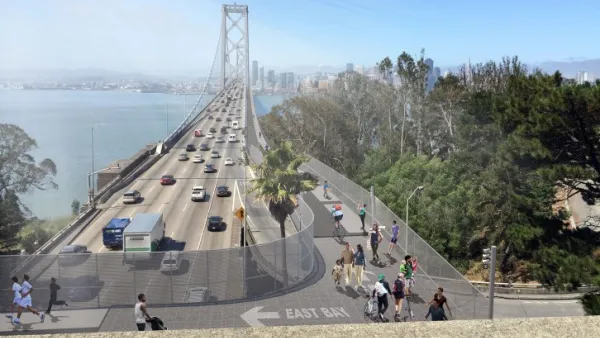
Planning Underway for New Bay Bridge Bike Path, and a Second Transbay BART Tube
In a distant and expensive future, there are two new ways to get across the San Francisco Bay without a car. One will have a much better view.
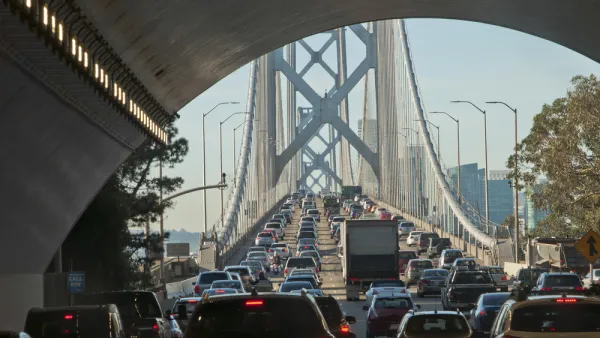
Bay Area's Transbay Dilemma: Second BART Tube or Second Bay Bridge?
In December, Sen. Dianne Feinstein reactivated her call for a southern crossing over the Bay while the BART Board last week began studying a second Transbay tube. The San Francisco Chronicle editorial board opines on which is preferable.

Eastern Nebraska is running out of electricity
Data centers and electrification are straining eastern Nebraska’s grid, throttling economic development.

Move over, LA: St. Louis gears up for Olympics, invests millions in downtown redevelopment
The Missouri city will host the 2028 Olympic soccer group stage and knockout matches.
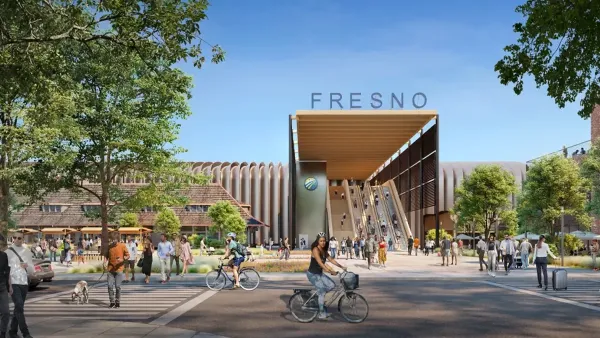
California High-Speed Rail Authority picks trainset manufacturer
The California High-Speed Rail Authority aims to start servicing passengers by 2033.

Dallas releases zoning code overhaul to officials
The drafted overhaul is over 400 pages long.

NYC renovations for dangerous, ‘mercilessly crammed’ street delayed until 2027
Construction was supposed to begin this fall.

San Diego’s Midway Rising project gets greenlight from city council
The project looks to become the largest affordable housing development in California's history.

FREE Course: Walkable City 1: Why Walkability?
After describing his path towards focusing on walkability as the essence of good planning, Jeff Speck marches through his five principal reasons for making more walkable places.
Reinventing Malls: Planning Alchemy—Turning Gray Fields Into Gold
The course focuses on the opportunities and imperatives that shape reinvention of mall sites.

City of Rosemead
Rutgers University, Edward J. Bloustein School of Planning and Public Policy
One Hundred Miles
University of Michigan School for Environment and Sustainability (SEAS)
Hunter College, City University of New York (CUNY)
The Architects Foundation
City of Cambridge
The Pocatello Development Authority
The Urban Renewal Agency of the City of Pocatello