California's erstwhile redevelopment agencies are pleading with the state to maintain funding for projects they consider crucial. So far, the Department of Finance has taken a decidedly conservative approach.


"In many cases, DOF has refused to allow high-density or transit-oriented projects to go forward – a move that makes sense in financial terms but seems to run counter to the Brown administration's urban development policy goals. And in at least one case, DOF is asking a local government to kill projects funded by federal dollars," writes Josh Stephens.
"DOF seems to be interpreting AB 1X 26 more conservatively than even successor agencies' oversight boards, which were expected to be conservative themselves insofar as oversight board members represent taxing entities that stand to gain from the freeing up of tax increment funds. As it turns out, many oversight boards have been sympathetic to the agendas of former redevelopment agencies."
Thanks to Josh Stephens
Read the full story: State Scrutinizes Successor Agency Payment Requests
How are California’s Bullet Train and Affordable Housing Connected?
California Gov. Brown’s support of high speed rail contrasts sharply with his gutting of affordable housing. Michael Russell, real estate developer and advisor, reviews pending bills and potential fixes for affordable housing.
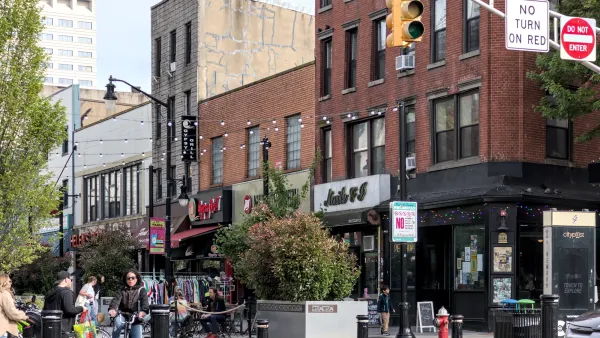
Jersey City could build 700 homes on city-owned parking lots
If approved, a redevelopment proposal would build hundreds of new homes on a pair of city parking lots.
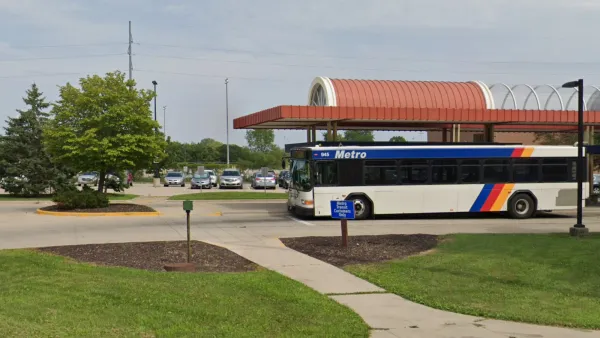
Madison approves hundreds of affordable apartments as deadline for federal funding looms
A recently approved project will bring 163 affordable units to the north side.

Planetizen Federal Action Tracker
A weekly monitor of how Trump’s orders and actions are impacting planners and planning in America.

Eastern Nebraska is running out of electricity
Data centers and electrification are straining eastern Nebraska’s grid, throttling economic development.

Study reveals best places in the U.S. for cycling, walking
New research from Streetlight Data examines bicycle and pedestrian miles per capita in the 100 largest U.S. cities by population.

Federal government nominates new FTA administrator
Mark Aesch is currently the founder and CEO of a transportation management consulting firm.

Developers reveal $10 billion stadium plan as ‘Hail Mary’ to keep Bears in Chicago
The plan would also boast a public park, high- and mid-rise buildings and a youth sports complex.

As Texas embraces carbon storage, a Black community questions the risks
Texas now issues permits for companies to store carbon dioxide underground. East Texas residents fear safety risks, and skeptics doubt the climate benefits.

FREE Course: Walkable City 1: Why Walkability?
After describing his path towards focusing on walkability as the essence of good planning, Jeff Speck marches through his five principal reasons for making more walkable places.
Reinventing Malls: Planning Alchemy—Turning Gray Fields Into Gold
The course focuses on the opportunities and imperatives that shape reinvention of mall sites.

City of Rosemead
Rutgers University, Edward J. Bloustein School of Planning and Public Policy
One Hundred Miles
University of Michigan School for Environment and Sustainability (SEAS)
Hunter College, City University of New York (CUNY)
The Architects Foundation
City of Cambridge
The Pocatello Development Authority
The Urban Renewal Agency of the City of Pocatello