As much-needed residential development projects in Boston prepare to seek their necessary approvals, George Thrush explores how a plague of "refusenicks" threaten to cost the city its competitive edge.


Thrush describes a convoluted approvals process in Boston that requires "every large-scale development proposal be approved by a citizens' advisory committee" to which "only committed anti-development gadflies show up."
As Thrush argues, in this system, only the high-end projects with deep pockets are able to commit to the lengthy and uncertain process, while "affordable projects that run on a tighter margin get killed by the protracted review process."
"Crazy as it sounds, in one of the nation's largest cities, a few local characters who regularly show up at public meetings somehow have the power to completely derail major projects. This has to change. If it doesn't, Boston could lose its competitive edge."
Read the full story: Why Must a Few Lonely Cranks Decide the Future of Boston's Buildings?


Defeating SB 827 Did Not Discourage the YIMBY Movement
Though the California housing bill was a high-profile failure for pro-development activists, there are initiatives all over the country that carry its spirit.
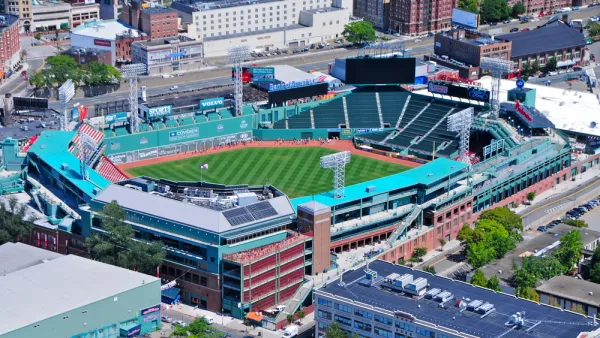
Boston Development Has a Famous Opponent: The Red Sox
Management from the Boston Red Sox has taken an interest in the planning process by opposing a nearby high-rise development.
Op-Ed: End the Excuses for Lack of Housing Construction
An op-ed in the Boston Globe argues that the endless negotiations over new residential developments—including over the inclusion of affordable housing units—hurts the city's housing market.

Planetizen Federal Action Tracker
A weekly monitor of how Trump’s orders and actions are impacting planners and planning in America.

‘Going backwards:’ Baltimore mayor, students rally against state's transit funding plan
Maryland's proposed six-year plan provides no funding for Baltimore’s BMORE bus program and reduces its road maintenance funding.

Detroit to transform waterfront with $2.2 billion investment
Developers will convert about 18 acres of unused parking lot space into civic spaces.

$2 trillion in economic growth may hide in ‘micropolitan communities’
Small cities hold 39% of America’s population, but receive only 10% of U.S. venture capital investment.

'I can't live in this:' Mississippi town besieged by power plant noise
A plant powering Elon Musk’s xAI data centers is subjecting Southaven, Mississippi residents to ceaseless noise.

Battered from federal attacks, Louisiana's offshore wind industry refuses to give up
State Representative Joe Orgeron expressed hope that the state could revitalize its wind industry once President Trump leaves office.

FREE Course: Walkable City 1: Why Walkability?
After describing his path towards focusing on walkability as the essence of good planning, Jeff Speck marches through his five principal reasons for making more walkable places.
Reinventing Malls: Planning Alchemy—Turning Gray Fields Into Gold
The course focuses on the opportunities and imperatives that shape reinvention of mall sites.

One Hundred Miles
County of Mendocino
planning NEXT
The Architects Foundation
University of Cincinnati Online
Montrose County
Northern Illinois Transit Authority (NITA)
The Pocatello Development Authority