Jordan Royer weighs in on two major developments in the Emerald City, and why the one that flew under the radar should have taken center stage.


Last week bore two great windfalls for the City of Seattle. First, investors unveiled a proposal to build a multi-purpose sports and entertainment center that would restore the city's beloved basketball team, which left for Oklahoma City in 2008. Then, online retail giant Amazon.com announced plans to expand its operations, adding 3 million square feet of office space, and the thousands of high-paying jobs that come with it.
But according to Royer, Seattleites have committed far too much attention to news of the sports arena for what little they have paid to Amazon. "In most cities this would be the biggest deal in decades," he writes. "There would be press conferences, celebrations, and photo ops."
Instead, it "was pushed to the 'also happened today' status last week," overshadowed by the prospect of regaining Seattle's long-lost Supersonics. While conceding that sports culture resonates with the public imagination, Royer expresses skepticism about the economic strength of the proposed arena, saying, "the year-to-year economics of an NBA franchise don't add up."
Read the full story: Arena or Amazon: Does Seattle know what's important?
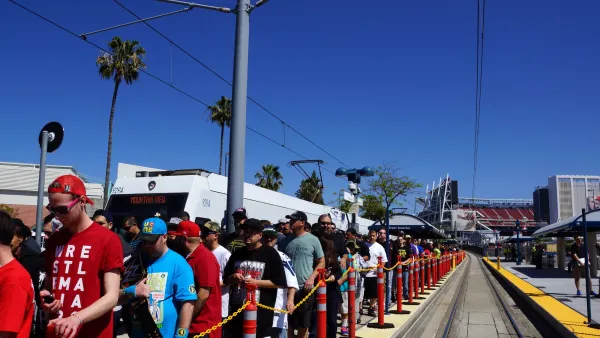
Super Bowl and Seahawks Victory Parade Break Transit Ridership Records in Bay Area and Seattle
Roughly 20 percent of Super Bowl attendees arrived at the stadium by transit.

‘The Power of the Kraken:’ Seattle Monorail Ridership Spikes for Hockey Games
Seattle’s new professional hockey team is drawing legions of enthusiastic fans. Around a quarter of them are taking public transit, such as the city’s often-maligned monorail, to games.
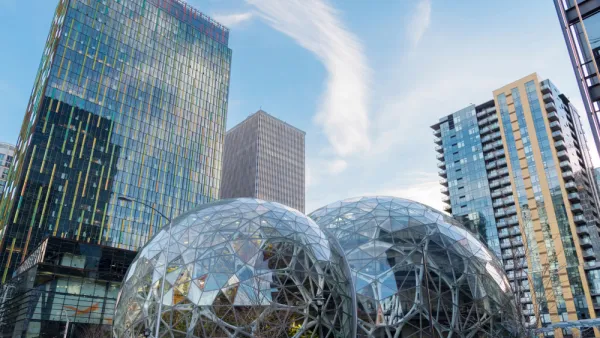
The City Beyond Amazon's ‘Great Return’
In GeekWire, Chuck Wolfe explains how, as the Amazon (and other) “Great Returns” to the office unfold, it's essential to dig deeper.

Planetizen Federal Action Tracker
A weekly monitor of how Trump’s orders and actions are impacting planners and planning in America.

California plans to bury El Niño’s downpour
If the state plays its cards right, it may be able to store a billion acre-feet of El Niño’s water in aquifers.

Desperate measures: Advocates weigh draining Lake Powell to fill Colorado River
Draining the reservoir could reduce evaporation losses by a couple hundred thousand acre-feet.

Housing is the top priority of Seattle’s sole new councilmember
Jenks campaigned on building 1,000 new units of affordable housing.

New tax cuts may slash $1.5 billion in funding for Miami transit, public parks
Amendment 3 will save Miami-Dade homeowners $2,700 in 2028.

Arizona, Wisconsin, Pennsylvania hope to finally advance climate goals post-midterms
The three states have spent years under Republican or divided control.

FREE Course: Walkable City 1: Why Walkability?
After describing his path towards focusing on walkability as the essence of good planning, Jeff Speck marches through his five principal reasons for making more walkable places.
Reinventing Malls: Planning Alchemy—Turning Gray Fields Into Gold
The course focuses on the opportunities and imperatives that shape reinvention of mall sites.

City of Rosemead
Rutgers University, Edward J. Bloustein School of Planning and Public Policy
One Hundred Miles
University of Michigan School for Environment and Sustainability (SEAS)
Hunter College, City University of New York (CUNY)
The Architects Foundation
City of Cambridge
Montrose County
The Pocatello Development Authority