Silicon Valley real estate agents and residents are primed for the potential rush of "newly minted Facebook millionaires," now that the company is on its way to becoming publicly traded.


The area has weathered nationwide dips in home prices relatively well, and it is surmised that with the anticipated influx of Facebook employees, already-high prices could go higher still as demand remains strong.
"In recent weeks, [Real Estate Agent Ken DeLeon] said, there have been signs that the market has been heating up more: 10 homes in Palo Alto sold for more than their asking prices last month, some by large amounts.
Now, with the long-expected Facebook public offering a step closer to reality, Mr. DeLeon said he expected to see several things happen: some sellers may keep their homes off the market until they judge the time is right, some speculators may snap up old houses to tear down and rebuild, and some buyers may feel pressure to make offers before the deluge hits."
Read the full story: If Silicon Valley Costs a Lot Now, Wait Until the Facebook Update
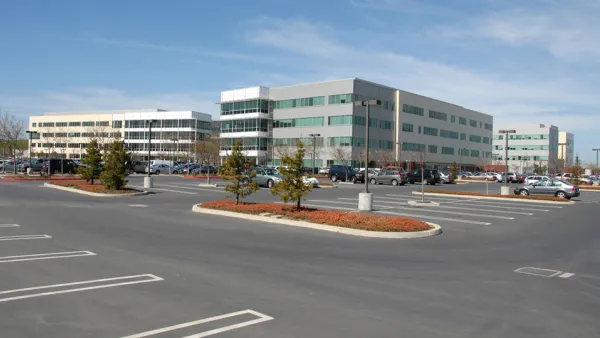
Tech Giants Bank on Growth, Acquire More Space
To provide room for long-term expansion, companies like Google, Facebook, and LinkedIn are buying up even more Bay Area real estate. Their flush cash reserves have them nudging out the traditional development and investment crowd.
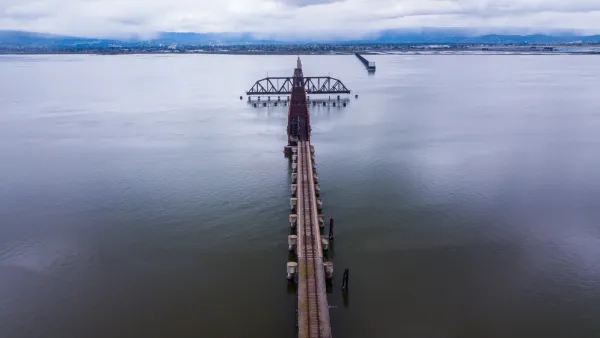
Meta’s Plans to Revive an Old Rail Bridge Halted During the Pandemic
The company formerly known as Facebook’s once planned to revive the Dumbarton Rail Bridge across the San Francisco Bay. Those plans are as derelict as the bridge.
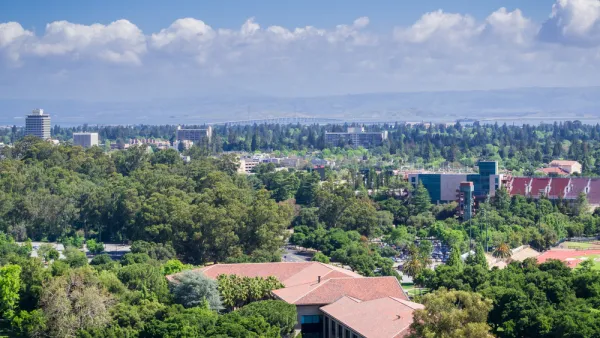
Another Silicon Valley Town Tries To Sidestep State Density Law
Palo Alto could designate more than one hundred properties as historic in an attempt to prevent lot splitting permitted under a new state law designed to lightly increase residential density.

Planetizen Federal Action Tracker
A weekly monitor of how Trump’s orders and actions are impacting planners and planning in America.

California plans to bury El Niño’s downpour
If the state plays its cards right, it may be able to store a billion acre-feet of El Niño’s water in aquifers.

Desperate measures: Advocates weigh draining Lake Powell to fill Colorado River
Draining the reservoir could reduce evaporation losses by a couple hundred thousand acre-feet.

Mamdani’s pied-à-terre tax survives legal challenge
A panel of judges found that the plaintiffs failed to demonstrate injury as a result of New York City's implementation of the tax.

Eastern Nebraska is running out of electricity
Data centers and electrification are straining eastern Nebraska’s grid, throttling economic development.

Seattle passes record-breaking transit services expansion
Proposition 1 will double the city’s transit tax to add 95,000 more bus trips and preserve 180,000 bus trips annually.

FREE Course: Walkable City 1: Why Walkability?
After describing his path towards focusing on walkability as the essence of good planning, Jeff Speck marches through his five principal reasons for making more walkable places.
Reinventing Malls: Planning Alchemy—Turning Gray Fields Into Gold
The course focuses on the opportunities and imperatives that shape reinvention of mall sites.

City of Rosemead
Rutgers University, Edward J. Bloustein School of Planning and Public Policy
One Hundred Miles
University of Michigan School for Environment and Sustainability (SEAS)
Hunter College, City University of New York (CUNY)
The Architects Foundation
City of Cambridge
Montrose County
The Pocatello Development Authority