As developers across the country increasingly recognize the market advantages of redevelopment oriented around transit, and property values rise in response, hundreds of thousands of units of affordable housing are at risk.


Federal rental subsidy contracts affect the affordability of a quarter of a million apartments within walking distance of transit nationwide, and advocates fear owners may opt out of those contracts to take advantage of rising values, forcing out their vulnerable tenants.
There are efforts underway, however, to help preserve affordability near transit, writes Michael Bodaken. In Seattle, Denver, and Atlanta, community development corporations, equipped with good data and flexible financing are working to acquire, preserve, and maintain affordable housing near transit.
"In an environment where resources are scant, preservation becomes a critical priority, as well as an attractive option. Preserving an existing home is significantly less expensive than constructing new affordable housing. Rehabilitating an existing affordable apartment can cost one-third less than building a new apartment. In more expensive communities with high land costs, the cost of building new affordable housing could be as much as double the cost of preserving existing housing."
Thanks to Matthew Brian Hersh
Read the full story: Transit-Oriented Preservation

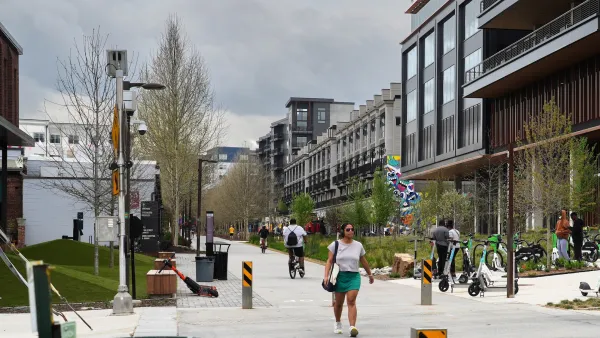
Atlanta's Beltline hits 79% of its affordable housing goal
The walking, biking, and transit corridor set a goal to create 5,600 affordable housing units in the area by 2030.
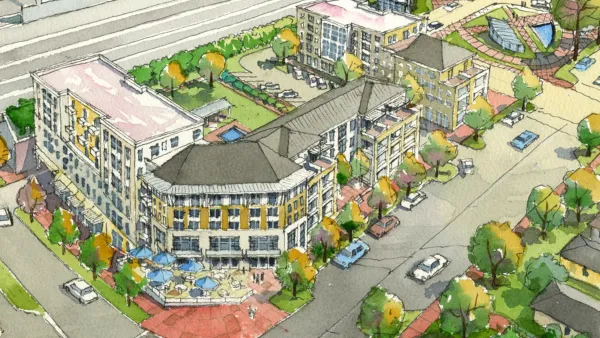
MARTA Completes New Transit-Oriented Development
A mixed-use complex in Edgewood/Candler Park brings hundreds of new housing units, retail, and office space to the area.
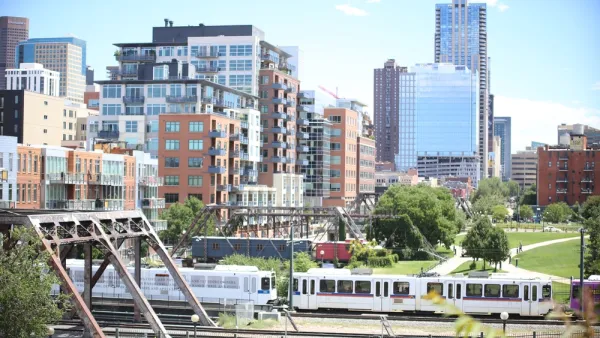
Denver Affordable Housing Program Moves Forward
A proposal to reduce parking requirements near transit and encourage higher-density affordable housing development received Planning Board approval, but community concerns about affordability and displacement remain.

Planetizen Federal Action Tracker
A weekly monitor of how Trump’s orders and actions are impacting planners and planning in America.

California plans to bury El Niño’s downpour
If the state plays its cards right, it may be able to store a billion acre-feet of El Niño’s water in aquifers.

Chicago breaks ground on $3 billion megadevelopment
The new neighborhood, titled Foundry Park, will one day host 3,700 residences.

California High-Speed Rail Authority CEO resigns after $600,000 scandal
Under Ian Choudri, the authority used taxpayer dollars to fund first class flights and trips to nightclubs.

Want to study the Missouri River? Soon, you may need unanimous approval from 10 states
Legislation would require 10 governors’ permission to study or build projects moving water outside the basin.

Desperate measures: Advocates weigh draining Lake Powell to fill Colorado River
Draining the reservoir could reduce evaporation losses by a couple hundred thousand acre-feet.

FREE Course: Walkable City 1: Why Walkability?
After describing his path towards focusing on walkability as the essence of good planning, Jeff Speck marches through his five principal reasons for making more walkable places.
Reinventing Malls: Planning Alchemy—Turning Gray Fields Into Gold
The course focuses on the opportunities and imperatives that shape reinvention of mall sites.

City of Rosemead
Rutgers University, Edward J. Bloustein School of Planning and Public Policy
One Hundred Miles
Hunter College, City University of New York (CUNY)
The Architects Foundation
University of Cincinnati Online
City of Cambridge
Montrose County
The Pocatello Development Authority