A new report by the Rails-to-Trails Conservancy titled "Active Transportation Beyond Urban Centers,” debunks the myth that "nobody walks" in rural America.


In D.C. Streetsblog, Ben Goldman writes about the findings of the report and its implications for Federal transportation funding.
According to Goldman, "The report...shows that in large and small "rural cores" of 2,500 to 50,000 residents, the share of total trips made on foot or by bike is only 20 percent below the rate for larger urban cores." And, perhaps more surprisingly, "when it comes to work trips, rural areas fall right in line with the national rates of biking and walking to work."
"Besides compiling numerical data on rural transportation, the report also includes testimonials from rural communities across the country, demonstrating the benefits of bicycle and pedestrian infrastructure."
Read the full story: Rails-to-Trails Conservancy Busts Myth That “Nobody Walks” in Rural America

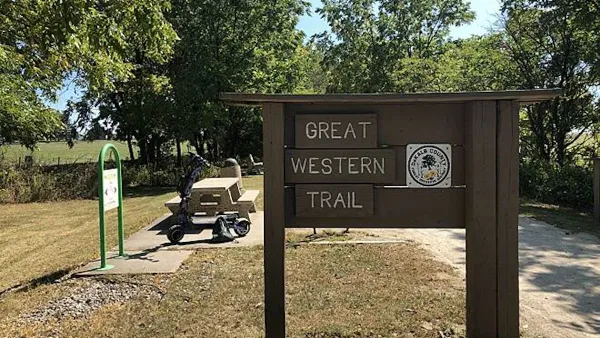
Advocates Champion the Great Western Trail
A Chicago walking and biking trail along a former railroad right-of-way has been a labor of love for local residents.
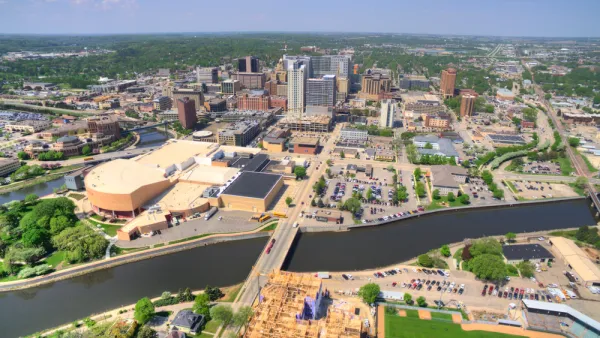
Rochester to Update Bicycle Master Plan with More Multimodal Infrastructure
The new active transportation plan will amend the existing bicycle master plan to include additional safety improvements for pedestrians and other multimodal road users.

How To Get Federal Infrastructure Funding for Bike Projects
How bicycling advocates can strengthen existing partnerships and make strategic alliances that will benefit cyclists, pedestrians, and other vulnerable road users.

Planetizen Federal Action Tracker
A weekly monitor of how Trump’s orders and actions are impacting planners and planning in America.

Amtrak, CN end decades-long dispute with eight-year agreement
The new operating agreement establishes an updated framework for the companies to work together, including processes to resolve disputes.

Judges permit Denver to divert 77,000 acre feet from the Colorado River for reservoir expansion
Overuse and climate change have caused the Colorado River’s water levels to plummet.

Philadelphia to invest $2 billion into upgrading city airports as PHL places last in customer satisfaction
Modernizations to Philadelphia's airports will include baggage system upgrades and a new automated parking garage guidance system.

The LA housing policies making developers turn away from the city
Despite LA’s housing shortage, developers say the city’s "mansion-tax" and pandemic-era policies make it an unappealing place to build housing.

New density bill would require 7 California cities to establish regional transit hubs
The bill would also require major cities in California to permit high-rise residential buildings.

FREE Course: Walkable City 1: Why Walkability?
After describing his path towards focusing on walkability as the essence of good planning, Jeff Speck marches through his five principal reasons for making more walkable places.
Reinventing Malls: Planning Alchemy—Turning Gray Fields Into Gold
The course focuses on the opportunities and imperatives that shape reinvention of mall sites.

City of Wisconsin Rapids
Harvard University Graduate School of Design
KFH Group Inc.
The Architects Foundation
University of Cincinnati Online
The Pocatello Development Authority
The Urban Renewal Agency of the City of Pocatello