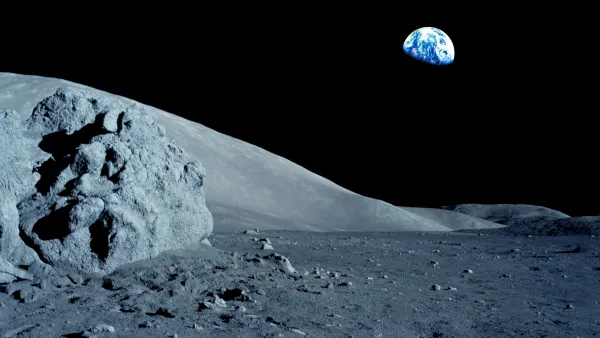
Writing in the New York Times, Kenneth Chang explores the challenges of Historic Preservation in an unlikely location, the surface of the moon.


For most of the last decade Beth L. O'Leary, a professor of anthropology at New Mexico State University, and her students have been seeking formal protections for the artifacts remaining on the Moon from the Apollo 11 and Apollo 17 missions.
The States of California and New Mexico have now officially listed the areas as Historical Resources. More crucially, NASA recently joined the effort by issuing a series of recommendations to protect the landing sites and the remaining artifacts.
Unfortunately, those official actions have no legal force. To protect the items from future visitors, Robert Kelso, manager of lunar commercial services at NASA's Johnson Space Center in Houston, is "hoping that whether it's an international team or a commercial team, they would honor and recognize the value of these sites and honor these recommendations."
Read the full story: To Preserve History on the Moon, Visitors Are Asked to Tread Lightly
Train on the Moon? US to Explore Lunar Railway
Program proponents say this “visionary” endeavor “heralds a new era of human presence and economic activity beyond Earth.”

Historic Newark building to become affordable housing
The century-old building will be converted into nearly 200 homes with ground-floor retail.

A call for people-centered historic preservation
'Managing the Magic of Old Places' offers a new vision for preservation that maintains its relevance while prioritizing the lived experience of residents of historic places.

Planetizen Federal Action Tracker
A weekly monitor of how Trump’s orders and actions are impacting planners and planning in America.

California plans to bury El Niño’s downpour
If the state plays its cards right, it may be able to store a billion acre-feet of El Niño’s water in aquifers.

Desperate measures: Advocates weigh draining Lake Powell to fill Colorado River
Draining the reservoir could reduce evaporation losses by a couple hundred thousand acre-feet.

Los Angeles just elected an urban planner as its mayor
Transportation analysts are optimistic that Raman will be more aggressive in addressing transit issues than Bass.

Mamdani’s pied-à-terre tax survives legal challenge
A panel of judges found that the plaintiffs failed to demonstrate injury as a result of New York City's implementation of the tax.

Eastern Nebraska is running out of electricity
Data centers and electrification are straining eastern Nebraska’s grid, throttling economic development.

FREE Course: Walkable City 1: Why Walkability?
After describing his path towards focusing on walkability as the essence of good planning, Jeff Speck marches through his five principal reasons for making more walkable places.
Reinventing Malls: Planning Alchemy—Turning Gray Fields Into Gold
The course focuses on the opportunities and imperatives that shape reinvention of mall sites.

City of Rosemead
Rutgers University, Edward J. Bloustein School of Planning and Public Policy
One Hundred Miles
University of Michigan School for Environment and Sustainability (SEAS)
Hunter College, City University of New York (CUNY)
The Architects Foundation
City of Cambridge
Montrose County
The Pocatello Development Authority