Richard Florida examines the "Geography of Health" in American and why some cities are healthier than others.


Richard Florida and Charlotta Mellander at the Martin Prosperity Institute find a number of correlations between geography and health:
"The kinds of work people do also plays a role in smoking and obesity levels. Metros with higher percentages of creative class workers do consistently better on the Metro Health Index (the correlation is .38), while metros with higher shares of blue-collar workers do significantly worse (a correlation of -.43). Metros with greater shares of high-tech industry also have higher scores on the Metro Health Index (with a correlation of.46)."
Read the full story: Why Some Cities Are Healthier Than Others

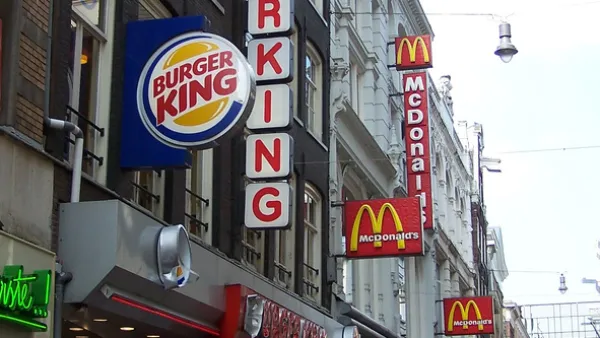
Transportation Access, Inactivity, and Obesity Play a Role in Cancer Deaths
As smoking related cancer deaths decline, other unhealthy lifestyle choices are quickly replacing it as a leading causes of cancer.

'The New Urban Crisis' and the High Line
A PBS NewsHour two-fer: an interview of urbanologist Richard Florida conducted in a walking tour of New York's famed High Line in the gentrifying West Chelsea neighborhood, a fitting backdrop for his new book, "The New Urban Crisis."

Florida, Florida, Florida
In his new book, Richard Florida worries about segregation and redefines "the creative class."

Planetizen Federal Action Tracker
A weekly monitor of how Trump’s orders and actions are impacting planners and planning in America.

California plans to bury El Niño’s downpour
If the state plays its cards right, it may be able to store a billion acre-feet of El Niño’s water in aquifers.

Chicago breaks ground on $3 billion megadevelopment
The new neighborhood, titled Foundry Park, will one day host 3,700 residences.

California High-Speed Rail Authority CEO resigns after $600,000 scandal
Under Ian Choudri, the authority used taxpayer dollars to fund first class flights and trips to nightclubs.

Want to study the Missouri River? Soon, you may need unanimous approval from 10 states
Legislation would require 10 governors’ permission to study or build projects moving water outside the basin.

Desperate measures: Advocates weigh draining Lake Powell to fill Colorado River
Draining the reservoir could reduce evaporation losses by a couple hundred thousand acre-feet.

FREE Course: Walkable City 1: Why Walkability?
After describing his path towards focusing on walkability as the essence of good planning, Jeff Speck marches through his five principal reasons for making more walkable places.
Reinventing Malls: Planning Alchemy—Turning Gray Fields Into Gold
The course focuses on the opportunities and imperatives that shape reinvention of mall sites.

City of Rosemead
Rutgers University, Edward J. Bloustein School of Planning and Public Policy
One Hundred Miles
Hunter College, City University of New York (CUNY)
The Architects Foundation
University of Cincinnati Online
City of Cambridge
Montrose County
The Pocatello Development Authority