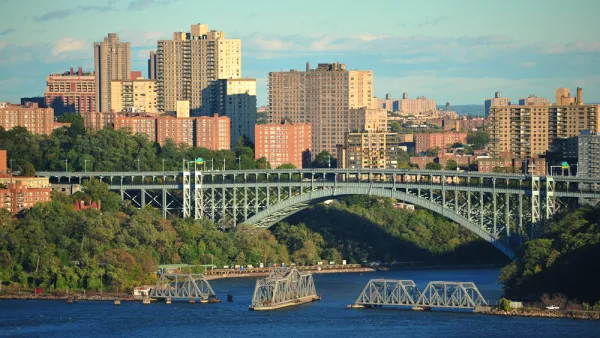
Traditionally immigrant neighborhoods in the northernmost reaches of Manhattan, Washington Heights and Inwood are seeing new, white collar companies set up shop in the low-rent neighborhoods.


"According to the latest census data, the number of white-collar jobs in sectors likes information technology, finance, management, and other professional and scientific areas in Washington Heights and Inwood has doubled from 10,173 in 2000 to 20,038 in 2010.
The total number of jobs in the neighborhoods has also risen 31 percent since 2000, though the population has remained almost constant, registering a tiny dip from 208,414 to 208, 215. The unemployment rate for the neighborhoods is still significantly more than the city average of 9 percent, but has declined from 14.3 percent to 13.5 percent since 2000, at a time when it is increasing elsewhere."
Read the full story: Washington Heights Sees White-Collar Boom

NYC Rezoning Plan Reinstated Despite Lack of Racial Impact Analysis
The New York Appellate Division's First Department made short work of a ruling that reinstated the Inwood NYC Action Plan, which a lower court dismissed in December 2019.
Judge Tosses Manhattan Rezoning; Developer Tosses Affordable Housing Project
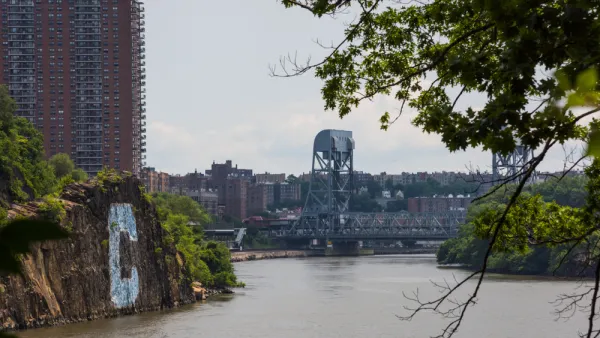
A court decision to toss a signature rezoning plan of the de Blasio administration in New York City had immediate repercussions for a development proposal that would have added hundreds of new affordable housing units.
Rezoning Enhances the Changes Already Coming to Manhattan's Northern End
The New York City Council this month approved a rezoning plan for the neighborhood of Inwood, located at the northern tip of Manhattan.

Planetizen Federal Action Tracker
A weekly monitor of how Trump’s orders and actions are impacting planners and planning in America.

‘Going backwards:’ Baltimore mayor, students rally against state's transit funding plan
Maryland's proposed six-year plan provides no funding for Baltimore’s BMORE bus program and reduces its road maintenance funding.

Detroit to transform waterfront with $2.2 billion investment
Developers will convert about 18 acres of unused parking lot space into civic spaces.

San Antonio approves $1.1 billion transit agenda
The agency has also begun construction of its Via Rapid Green line, which will service passengers from the San Antonio International Airport.

Guerilla urbanists’ DIY benches joined by sanctioned seats in Chicago
The group behind the original homemade benches said they will continue installing them across bench-less bus stops in Chicago.

Boston spent $765 million to lease battery-powered trains
The trains will serve Boston’s Fairmount Line for fifteen years.

FREE Course: Walkable City 1: Why Walkability?
After describing his path towards focusing on walkability as the essence of good planning, Jeff Speck marches through his five principal reasons for making more walkable places.
Reinventing Malls: Planning Alchemy—Turning Gray Fields Into Gold
The course focuses on the opportunities and imperatives that shape reinvention of mall sites.

One Hundred Miles
County of Mendocino
planning NEXT
The Architects Foundation
University of Cincinnati Online
Montrose County
Northern Illinois Transit Authority (NITA)
The Pocatello Development Authority