In California, a recent poll, according to Charles Chieppo, brought bad news stating that 53% of the states voters approved a $9.9 billion bond three years ago, but of those polled, 64% support a re-vote, and 59% would vote no if they had the chance.


Chieppo says that "Opponents now include a plurality of Democrats and a majority of both Republicans and independents. Even 37 percent of those who supported the 2008 package say they've changed their minds."
The reason why many have changed their minds is due to a number of reasons.
"The projected cost of bringing high-speed rail to California also has nearly doubled, to almost $100 billion, since the 2008 referendum. And the project timetable has changed dramatically. In 2008, voters were presented with a plan to connect Los Angeles and San Francisco by 2020. It's currently estimated that the project would be completed in 2033."
Chieppo mentions that there are still those in favor of the project, and those advocates "point to the extensive rail systems in Europe and Japan. But Europe and Japan don't have vast, lightly populated areas between densely populated coasts."
Read the full story: The Bullet-Train Misfire


Northwest rail fans eager for Sept. 30 debut of Amtrak’s Airo fleet
Get ready for that new train smell and more seats. But they won’t go faster or run more frequently on the Cascades route in Washington and Oregon.
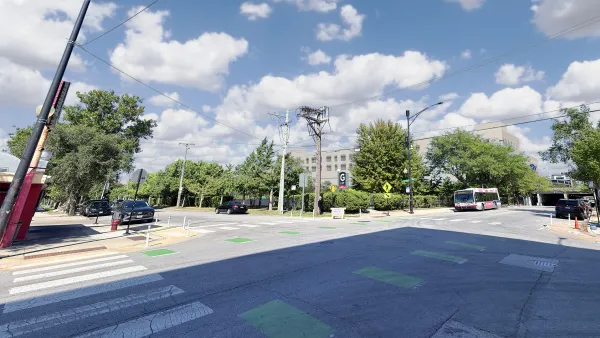
A ‘shady’ deal: Chicagoans rally against planned Amtrak maintenance facility
The $900 million facility would allow Amtrak to maintain entire trains in one building, which the company says will reduce delays.

Amtrak, CN end decades-long dispute with eight-year agreement
The new operating agreement establishes an updated framework for the companies to work together, including processes to resolve disputes.

Planetizen Federal Action Tracker
A weekly monitor of how Trump’s orders and actions are impacting planners and planning in America.
Amtrak, CN end decades-long dispute with eight-year agreement
The new operating agreement establishes an updated framework for the companies to work together, including processes to resolve disputes.

Judges permit Denver to divert 77,000 acre feet from the Colorado River for reservoir expansion
Overuse and climate change have caused the Colorado River’s water levels to plummet.

Boston has spent millions making the Green Line more accessible — and there’s no end in sight
While the city has invested millions into expanding and adding platforms to the Green Line to make it more accessible, new train cars set to arrive next year will be too tall for disabled passengers to board without raising the current platforms.

Idaho may see an 18% drop in federal surface transit funding — the largest estimated cut in the US
Transit systems in rural communities are much more reliant on federal funding to provide their services.

How ‘post-disaster gentrification’ alters neighborhoods after natural calamities
After hurricanes, fires or other calamities, the original residents of a community are often replaced by younger, wealthier residents.

FREE Course: Walkable City 1: Why Walkability?
After describing his path towards focusing on walkability as the essence of good planning, Jeff Speck marches through his five principal reasons for making more walkable places.
Reinventing Malls: Planning Alchemy—Turning Gray Fields Into Gold
The course focuses on the opportunities and imperatives that shape reinvention of mall sites.

City of Wisconsin Rapids
Harvard University Graduate School of Design
KFH Group Inc.
The Architects Foundation
University of Cincinnati Online
The Pocatello Development Authority
The Urban Renewal Agency of the City of Pocatello