Long the sole preserve of Manhattan developers, Brooklyn is now the setting for its own race to the sky. Two developers are planning to break ground next year on residential buildings that will loom nearly 100 ft over any of their predecessors.


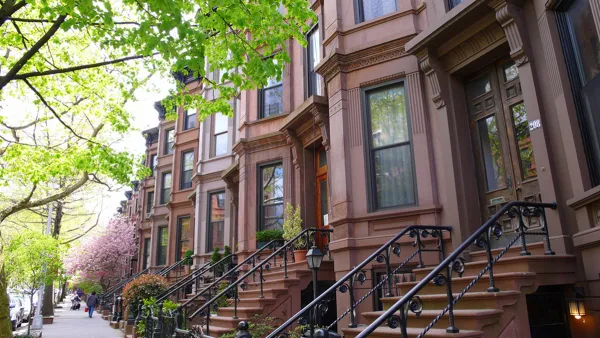
At the beginning of next year, Stahl Real Estate will begin laying the foundations of a 590-foot tower at 388 Bridge Street that will be the boroughs tallest. But its reign could be short lived if Avalon Bay Communities succeeds in realizing plans for a 596-foot residential tower just down the street. The new buildings continue a trend away from Brownstone dotted Brooklyn, which has seen steady growth in demand for luxury residential towers over the last half a decade.
It remains to be seen if Brooklyn can support the current development boom, as it's poised to add hundreds of rental units in the next couple of years downtown and on the waterfront. The boom is thanks in part to the Bloomberg administration's rezoning of Downtown Brooklyn and the Williamsburg and Greenpoint waterfronts in 2004 and 2005 to allow for more high-rise development.
Critics have questioned if the glass towers being erected along the Brooklyn waterfront are too bland to reflect the borough's fashionable identity. "We have big buildings popping up and they could be anywhere. They don't really inspire a profile that's interesting," said Timothy Johnson, an architect and chairman of the Council on Tall Buildings and Urban Habitat.
Read the full story: Developers Launch Battle Of Brooklyn
Brooklyn's Tallest Proposed Building Has Date With Landmarks Preservation Commission
Perhaps the most remarkable aspect of the 1,066-foot building is what distinguishes it from other high rises of its size across the East River—it will be residential.
A Tower the Height of the Empire State Building…in Brooklyn
The wave of skyscraper construction in New York is about to jump the East River.
Southern Brooklyn Experiencing a Bonafide Skyscraper Boom
A lot of noise has been made of the potential skyscraper boom in Manhattan. Very quietly, however, Brooklyn has also become a target for a series of skyward development plans.

Planetizen Federal Action Tracker
A weekly monitor of how Trump’s orders and actions are impacting planners and planning in America.

Eastern Nebraska is running out of electricity
Data centers and electrification are straining eastern Nebraska’s grid, throttling economic development.

Study reveals best places in the U.S. for cycling, walking
New research from Streetlight Data examines bicycle and pedestrian miles per capita in the 100 largest U.S. cities by population.

DSA members accuse Mamdani of 'abandoning values' over housing redevelopment
New York City's mayor plans to replace about 2,000 units of public housing with private, mixed-income housing.

All sides of BRT debate unhappy with CDOT’s most recent move
The Colorado Department of Transportation is no longer considering center-running bus lanes for Colorado Boulevard.

Massachusetts bogs generate both power, and cranberries
Putting solar panels above farmland is one way Massachusetts is advancing toward its goal of net-zero carbon emissions by 2050.

FREE Course: Walkable City 1: Why Walkability?
After describing his path towards focusing on walkability as the essence of good planning, Jeff Speck marches through his five principal reasons for making more walkable places.
Reinventing Malls: Planning Alchemy—Turning Gray Fields Into Gold
The course focuses on the opportunities and imperatives that shape reinvention of mall sites.

City of Rosemead
Rutgers University, Edward J. Bloustein School of Planning and Public Policy
One Hundred Miles
University of Michigan School for Environment and Sustainability (SEAS)
Hunter College, City University of New York (CUNY)
The Architects Foundation
City of Cambridge
The Pocatello Development Authority
The Urban Renewal Agency of the City of Pocatello