Complete streets, road diets, streetscape improvements - geared to promote suburban downtowns for new residents who seek access to amenities without having to drive is a hit for some towns who have successfully obtained government grants to fund them


Just a few miles from the Queens (New York City) border lies the quiet, upscale hamlet of Great Neck in Long Island's Nassau County.
"Jean A. Celender, the mayor of Great Neck Plaza, sees walkability as a 'big issue' in her 0.33-square-mile village of 7,000 residents... Many have downsized from two-story homes nearby, seeking the 'availability to age in place' in the village. "They like it even more when they can go downstairs and have everything," she said, from Great Neck's array of boutiques and restaurants to the 26-minute train trip to Manhattan."
On Great Neck Road - which the article depicts with a photograph showing resident using a walker utilizing the new median strip for crossing, travel lanes were reduced and bike lanes added.
"Dealing with 'requests from residents to make our streets safer,' Ms. Celender, a professional planner, has helped enact five traffic-calming pedestrian and bicycle-safety projects over the last decade."
At a mid-November workshop on the legislation, part of the 10th Annual Vision Long Island Smart Growth Summit, (Republican) State Senator Charles J. Fuschillo Jr., the original sponsor of the Complete Streets bill, said that retrofitting suburbs with pedestrians rather than cars in mind was "a positive for any community" and "would certainly encourage" development.
FULL STORY: ‘Walkable’ Steps Into Spotlight

Grassroots Activism Wins a Road Diet Instead of a Road Widening in Toledo
Streetsblog tells the story of how a Toledo resident got involved in complete streets activism in her community.
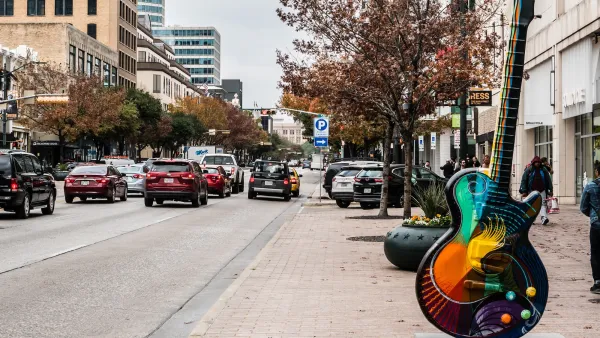
Austin Kicks off Multimodal Congress Avenue Redesign
The Congress Avenue Urban Design Initiative is bringing new pedestrian infrastructure and ‘storefront activation zones’ to the popular street.
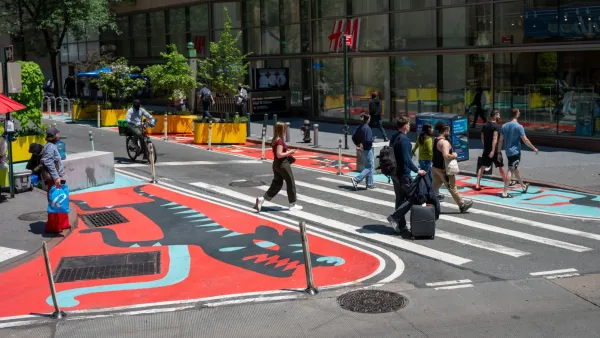
See Downtown Brooklyn’s Dramatic Complete Streets Transformation
A streetscape redesign spearheaded by the Downtown Brooklyn Partnership has quickly made many of Brooklyn’s streets unrecognizable.

The state-sanctioned urbicide of Austin
People don’t kill cities. Freeways do.

US to reduce Colorado River water deliveries to Mexico
A new Colorado Treaty amendment reduces Mexico’s Colorado River water allocation by 250,000 acre feet.

New Jersey’s second-largest city bans standalone data centers
Jersey City will continue to allow co-location facilities, such as those meant for research institutions that store their own data.

Amtrak not solely to blame for New Jersey commuter rail's unreliability, report finds
A new study from the Garden State Initiative found that NJ Transit’s budget grew 20% across a 4 year period, but reliability declined significantly over the same period.

EPA erases limits on planet-warming pollution from power plants
Under Monday’s plan, power plants would still have some limits on how much mercury, arsenic and other contaminants they can emit.

Phoenix announces new on-demand transit service, more frequent RAPID buses
Both new services will launch in October, and are part of Phoenix's Project Effective Access Solutions for Easing Congestion.

FREE Course: Walkable City 1: Why Walkability?
After describing his path towards focusing on walkability as the essence of good planning, Jeff Speck marches through his five principal reasons for making more walkable places.
Reinventing Malls: Planning Alchemy—Turning Gray Fields Into Gold
The course focuses on the opportunities and imperatives that shape reinvention of mall sites.

Eagle County Government
Harvard University Graduate School of Design
Nashville Planning Department
The Architects Foundation
University of Cincinnati Online
The Pocatello Development Authority
The Urban Renewal Agency of the City of Pocatello
Journal of the American Planning Association