David Levinson poses some possible answers, such as inaccurate project scopes, insufficient economies of scale, and an increase in safety standards.


"We are simultaneously spending too much and not spending enough," writes Levinson.
"Because we mis-prioritize where the money is spent, we have inadequate resources for other things. We cut corners."
"There is a tension between the risk of gold plating (focus on benefits to the exclusion of cost) and of corner cutting (focusing on costs to the exclusion of benefits). But there is available to us a balance, building something which maximizes the difference between benefits and costs, not just looking at benefits or costs. Insufficient attention is placed on the trade-off, too much on the ends by advocates of one side or the other."
Read the full story: Transportation costs too much


Cost of living too high? Planners to the rescue!
Excessive costs of living force many people to work more than optimal hours, leaving less time for family and fun. Local policies that favor affordable housing and transportation increase freedom, opportunity and happiness.
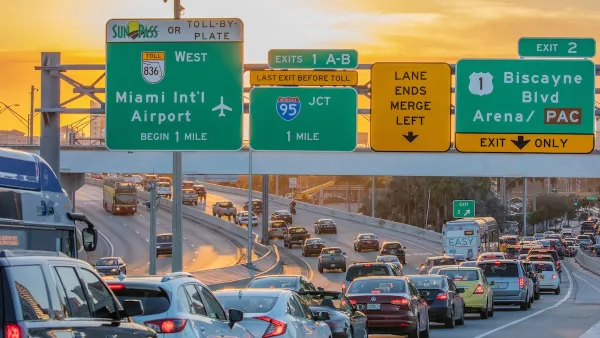
Miami, Houston Residents Spend Most on Transportation
South Floridians and Houstonians spent roughly 20 percent of their income on transportation in regions that offer few alternatives to driving.
USDOT: Low-Income Households Bear Highest Transportation Cost Burden
Transportation costs are the second-highest household expenditure behind housing for all income levels.

Planetizen Federal Action Tracker
A weekly monitor of how Trump’s orders and actions are impacting planners and planning in America.

Amtrak, CN end decades-long dispute with eight-year agreement
The new operating agreement establishes an updated framework for the companies to work together, including processes to resolve disputes.
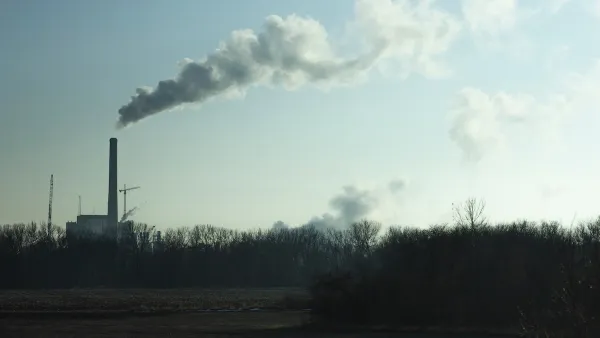
Nation's most wind-powered state turns to coal as data centers increase energy demand
For the first time in decades, Iowa has increased its generation of coal power.

Alabama scores up to $2.5 billion federal loan for largest infrastructure project in state’s history
The Mobile River Bridge and Bayway Project aims to ease congestion at Alabama’s worst bottleneck.

Trump is considering data centers on 6 states' public land — some state officials say they had no idea
If the administration approves the proposed projects, data center and data center-related developments will cover 17,600 acres of public land.

Despite court ruling, Trump is keeping nearly all wind projects in the US on hold
At least 110 wind energy projects have not heard from the government since a federal judge ruled that the Trump administration's freeze on wind turbine clearances was likely illegal.

FREE Course: Walkable City 1: Why Walkability?
After describing his path towards focusing on walkability as the essence of good planning, Jeff Speck marches through his five principal reasons for making more walkable places.
Reinventing Malls: Planning Alchemy—Turning Gray Fields Into Gold
The course focuses on the opportunities and imperatives that shape reinvention of mall sites.

KFH Group Inc.
Greater Baltimore Committee
Eagle County Government
The Architects Foundation
University of Cincinnati Online
The Pocatello Development Authority
The Urban Renewal Agency of the City of Pocatello