Op-ed columnist Andrew Ross notes that while some progressive cities are being lauded for sustainable, green design, most American cities struggle to achieve sustainable results that are available to all residents.


Andrew Ross, op-ed columnist for the New York Times makes the argument that cities need to include all demographics in sustainability planning.
"Whereas uptown populations are increasingly sequestered in green showpiece zones, residents in low-lying areas who cannot afford the low-carbon lifestyle are struggling to breathe fresh air or are even trapped in cancer clusters. You can find this pattern in many American cities. The problem is that the carbon savings to be gotten out of this upscale demographic - which represents one in five American adults and is known as Lohas, an acronym for 'lifestyles of health and sustainability' - can't outweigh the commercial neglect of the other 80 percent. If we are to moderate climate change, the green wave has to lift all vessels."
Ross argues for infill opportunities, utility pricing that encourages renewable energy development and redevelopment in urban cores that serves existing residents.
Thanks to Cathie Pagano
Read the full story: The Dark Side of the "Green" City

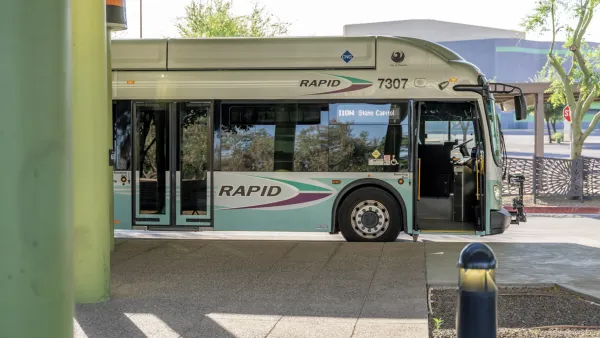
Phoenix announces new on-demand transit service, more frequent RAPID buses
Both new services will launch in October, and are part of Phoenix's Project Effective Access Solutions for Easing Congestion.
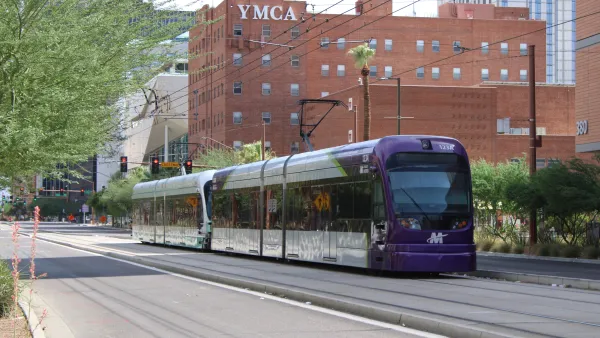
Phoenix cuts transit fares for low-income riders, tables fare-free days
The city council tabled discussions of four free transit days until it could do more research on the economic impact.
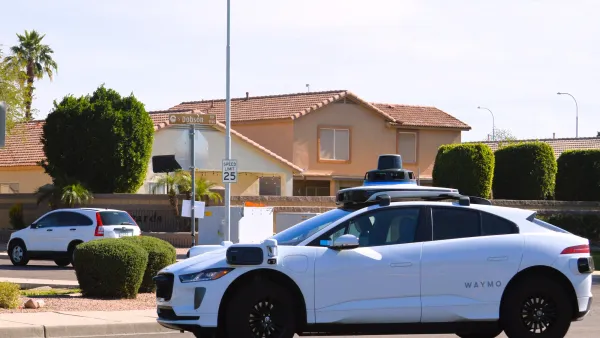
Uber and Waymo part ways in Phoenix
The companies ended a three-year pilot program, with Waymo saying it plans to keep its Phoenix robotaxi fleet available through its own app.

Planetizen Federal Action Tracker
A weekly monitor of how Trump’s orders and actions are impacting planners and planning in America.

Amtrak, CN end decades-long dispute with eight-year agreement
The new operating agreement establishes an updated framework for the companies to work together, including processes to resolve disputes.

Judges permit Denver to divert 77,000 acre feet from the Colorado River for reservoir expansion
Overuse and climate change have caused the Colorado River’s water levels to plummet.

Boston has spent millions making the Green Line more accessible — and there’s no end in sight
While the city has invested millions into expanding and adding platforms to the Green Line to make it more accessible, new train cars set to arrive next year will be too tall for disabled passengers to board without raising the current platforms.

Idaho may see an 18% drop in federal surface transit funding — the largest estimated cut in the US
Transit systems in rural communities are much more reliant on federal funding to provide their services.

How ‘post-disaster gentrification’ alters neighborhoods after natural calamities
After hurricanes, fires or other calamities, the original residents of a community are often replaced by younger, wealthier residents.

FREE Course: Walkable City 1: Why Walkability?
After describing his path towards focusing on walkability as the essence of good planning, Jeff Speck marches through his five principal reasons for making more walkable places.
Reinventing Malls: Planning Alchemy—Turning Gray Fields Into Gold
The course focuses on the opportunities and imperatives that shape reinvention of mall sites.

City of Wisconsin Rapids
Harvard University Graduate School of Design
KFH Group Inc.
The Architects Foundation
University of Cincinnati Online
The Pocatello Development Authority
The Urban Renewal Agency of the City of Pocatello