New Urbanist Peter Katz presents his guidelines for creating a popular urban park. First published in 1995, Katz's ideas still hold up.


Katz bemoans the "windswept plazas and sterile atria" created by corporate developments in downtowns across the country:
"A public park should look and feel truly public. Being bounded by streets or sidewalks on all sides is one sure way to communicate "publicness." The presence of civic buildings and monuments also reinforces this public character.
Conversely, spatial relationships get confusing when private houses or buildings back up to a park, without a clear public zone in between. This ambiguous edge fosters conflict between those who live next to the park, and others who come from the surrounding area. A better approach would be for houses to front the park, so that porches, front yards, and streets buffer the edge between public use and private enjoyment."
This is 1 of 5 tips Katz presents for making great urban parks.
Read the full story: What makes a good urban park
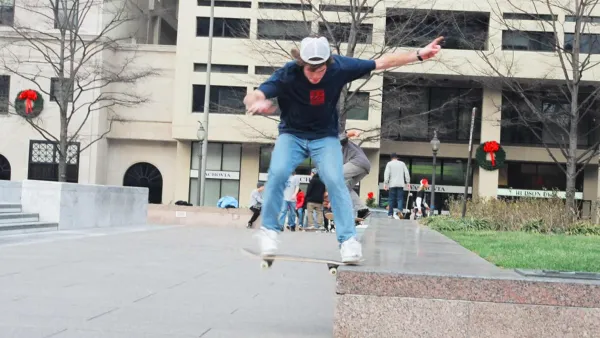
Trump's DC 'beautification' efforts threaten historic skate spots
The city is taking more aggressive measures to prevent skateboarders from using unsanctioned public spaces.

Public Pools: A Threatened Amenity?
Municipal pools offer important benefits to urban residents, but some cities are struggling to keep them open.

City Parks as Cooling Centers
Strategies for making parks cool, inviting community cooling centers during extreme heat.

Planetizen Federal Action Tracker
A weekly monitor of how Trump’s orders and actions are impacting planners and planning in America.

California plans to bury El Niño’s downpour
If the state plays its cards right, it may be able to store a billion acre-feet of El Niño’s water in aquifers.

Desperate measures: Advocates weigh draining Lake Powell to fill Colorado River
Draining the reservoir could reduce evaporation losses by a couple hundred thousand acre-feet.

Chicago voters approve permanent festival grounds, penalty for vacant property owners
Currently, major summer and fall festivals take over public parks for weeks at a time, drawing criticism from nearby residents

NYC votes to cut outdoor dining red tape, speed up permitting
New York City also voted to allow the Department of Transportation to begin work on urgent projects before notifying elected officials.

California appears to reject Prop. 45
The proposition would have expanded the projects that qualify for a streamlined environmental review, effectively paring down the California Environmental Quality Act.

FREE Course: Walkable City 1: Why Walkability?
After describing his path towards focusing on walkability as the essence of good planning, Jeff Speck marches through his five principal reasons for making more walkable places.
Reinventing Malls: Planning Alchemy—Turning Gray Fields Into Gold
The course focuses on the opportunities and imperatives that shape reinvention of mall sites.

City of Rosemead
Rutgers University, Edward J. Bloustein School of Planning and Public Policy
One Hundred Miles
Hunter College, City University of New York (CUNY)
The Architects Foundation
University of Cincinnati Online
City of Cambridge
Montrose County
The Pocatello Development Authority