Olympic Planners have just ten months left to prepare for an anticipated 15 million trips a day during the event in an already congested city. So far, about 6.5 billion pounds ($10.2 billion) has been invested.


Recalling the 1996 Atlanta Games, "with bus drivers getting lost, athletes arriving moments before their events and overloaded trains that couldn't get residents home," the improvements were prompted by the International Olympic Committee's demands to prevent such issues from coming up again.
"Among the biggest problems are the streets themselves - laid out as they are in a pattern relatively unchanged since medieval times. That means only a handful of thoroughfares, and even those are nothing like the great boulevards that bisect cities like New York and Paris. Earmarking some lanes for Olympic traffic could cause disruption - because they are the main ones."
Read the full story: London Olympic planners work to avoid transport chaos at games, recalling Atlanta debacle

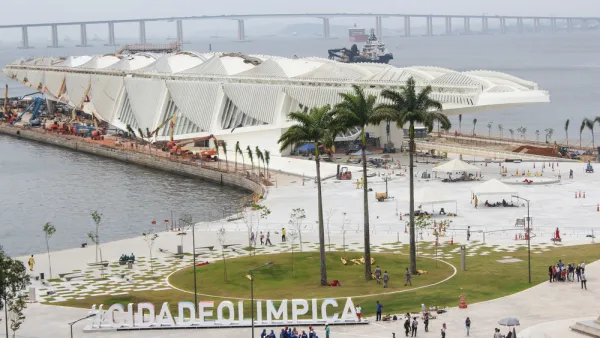
Abandoned Olympic Venues Cast Doubt on the Value of Hosting
Though cities hope for an economic boost, these photos show it's far from guaranteed.
The London Subway Is Bad for Commuters' Lungs
A new study from the University of Surrey produced counterintuitive results about the relative pollution levels of commuters around London.
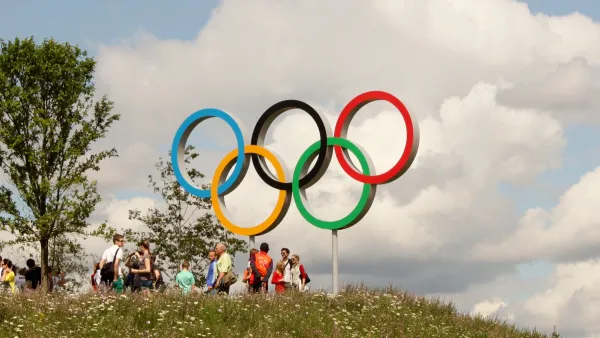
For Host Cities, Olympic Legacies Are Mixed
The two-week competition is often touted as a galvanizing force for urban development. But that's only cities include the Games' legacy in their planning process from the start.

Planetizen Federal Action Tracker
A weekly monitor of how Trump’s orders and actions are impacting planners and planning in America.

Amtrak, CN end decades-long dispute with eight-year agreement
The new operating agreement establishes an updated framework for the companies to work together, including processes to resolve disputes.

Judges permit Denver to divert 77,000 acre feet from the Colorado River for reservoir expansion
Overuse and climate change have caused the Colorado River’s water levels to plummet.

NYC DOT wants faster, more permanent street upgrades
The city is examining ways to build more concrete infrastructure without getting entangled in 'decades-long' projects.

'Something we’ve never seen before:' rising utility rates could strain city finances nationwide
Data centers, climate change and other factors have caused utility rates in the United States to increase by 38% since 2020.

Trump to overrule local leaders, lease millions of acres of America’s Pacific Island territories’ seafloors to mining companies
International law says that the Indigenous people of America’s territories have a right to prior and informed consent regarding projects that impact their countries.

FREE Course: Walkable City 1: Why Walkability?
After describing his path towards focusing on walkability as the essence of good planning, Jeff Speck marches through his five principal reasons for making more walkable places.
Reinventing Malls: Planning Alchemy—Turning Gray Fields Into Gold
The course focuses on the opportunities and imperatives that shape reinvention of mall sites.

Harvard University Graduate School of Design
KFH Group Inc.
Greater Baltimore Committee
The Architects Foundation
University of Cincinnati Online
The Pocatello Development Authority
The Urban Renewal Agency of the City of Pocatello