Denver was the angriest city in the nation with 12,018 protesters per million, 5000 attending the April 15,2009 Tea Party Protest, and 2000 for the the October 15 Occupy Wall Street protest.


The Daily Beast explain how they compiled the list:
"To find America's 10 Angriest Cities we combined the turnout totals per capita for the Tea Party's April 15, 2009 protests and the Occupy Wall Street protests on October 15, 2011-with data from Nate Silver's FiveThirtyEight Blog, and reliable reports and estimates-to find the number of protesters per million residents in cities with more than 500,000 people. At least 500 people had to show up to each protest to be considered for our ranking."
Portland, with 8,197 protesters per million, and Seattle, with 6,902, round out the top-three.
Read the full story: America’s 10 Angriest Cities

Occupy D.C.'s Urban Design Model
Evelio Contreras and Philip Kennicott film the Occupy movement transforming MacPherson Square into an urban hub, in one of Washington's central nodal points.
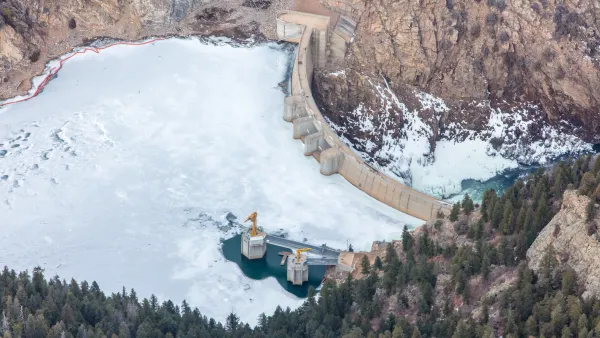
Instead of water, sediment from droughts and wildfire is choking U.S. dams
Sediment has filled 8% of dam storage capacity in the United States. Because of climate change, researchers expect it will only accumulate quicker.
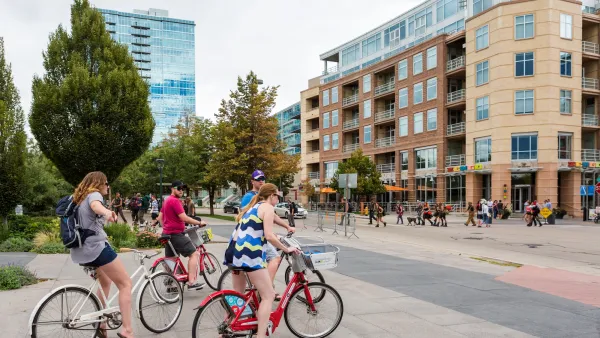
Denver mayor announces 'Mile High Line' vision for interconnected bike and transit routes
The mayor emphasized building more housing near transit lines and bike paths, but failed to address planned transit service cuts.

Planetizen Federal Action Tracker
A weekly monitor of how Trump’s orders and actions are impacting planners and planning in America.

Amtrak, CN end decades-long dispute with eight-year agreement
The new operating agreement establishes an updated framework for the companies to work together, including processes to resolve disputes.

Judges permit Denver to divert 77,000 acre feet from the Colorado River for reservoir expansion
Overuse and climate change have caused the Colorado River’s water levels to plummet.

Boston has spent millions making the Green Line more accessible — and there’s no end in sight
While the city has invested millions into expanding and adding platforms to the Green Line to make it more accessible, new train cars set to arrive next year will be too tall for disabled passengers to board without raising the current platforms.

Idaho may see an 18% drop in federal surface transit funding — the largest estimated cut in the US
Transit systems in rural communities are much more reliant on federal funding to provide their services.

How ‘post-disaster gentrification’ alters neighborhoods after natural calamities
After hurricanes, fires or other calamities, the original residents of a community are often replaced by younger, wealthier residents.

FREE Course: Walkable City 1: Why Walkability?
After describing his path towards focusing on walkability as the essence of good planning, Jeff Speck marches through his five principal reasons for making more walkable places.
Reinventing Malls: Planning Alchemy—Turning Gray Fields Into Gold
The course focuses on the opportunities and imperatives that shape reinvention of mall sites.

City of Wisconsin Rapids
Harvard University Graduate School of Design
KFH Group Inc.
The Architects Foundation
University of Cincinnati Online
The Pocatello Development Authority
The Urban Renewal Agency of the City of Pocatello