Because the Port Authority Bus Terminal lacks a garage, empty buses shuttle off to New Jersey for storage between the AM and PM commutes. The garage would have been funded by a higher toll, which NJ and NY governors rejected.


Every weekday morning, 225,000 commuters using hundreds of New Jersey Transit buses are transported to Manhattan's Port Authority Bus Terminal. Most buses then return empty to Jersey only to return, empty again, to take their passengers home.
The "construction of an $800 million bus parking garage in Manhattan - which promised to ease rush-hour congestion by eliminating hundreds of empty-bus trips to New Jersey parking lots each day - was lopped off the Port Authority's 10-year to-do list when toll hikes were approved in August.
Port Authority officials say they cannot afford the garage with the lower-than-proposed toll hikes that went into effect Sept. 18. And that frustrates mass transit advocates, bus commuters and the motorists who battle empty buses for space on New Jersey roads."
From Road Warrior: Delaying bus garage expansion is senseless: "It probably came as shock to many readers to learn in this newspaper on Monday that hundreds of empty buses clog afternoon traffic on the highways leading into the city." He notes that had Governors Christie and Cuomo not trimmed the toll to $12, the Port could have kept the garage as a capital project.
Read the full story: Cut in toll hike killed funds for $800M garage, PA says
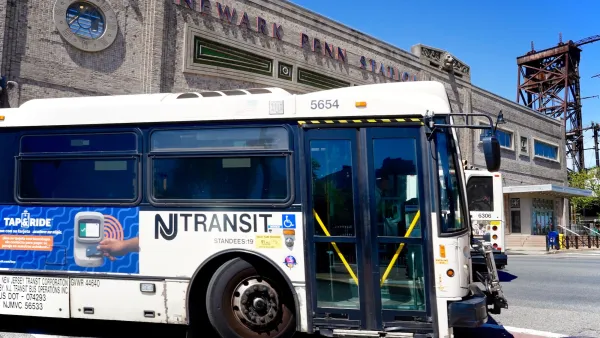
Facing Federal Funding Freeze, NJ Transit Revises Zero-emission Plan
The agency is retooling a plan to modernize its aging bus depots after the Trump administration decided to freeze nearly $324 million in grants.
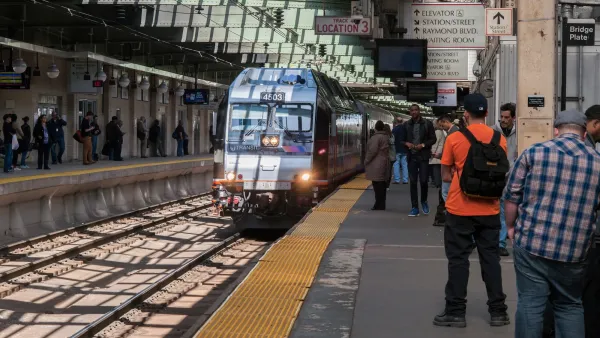
NJ Transit to Cut Service by Half for 4 Weeks for Gateway Project Work
Service between New Jersey and New York will be cut by 50 percent as the agency switches rail operations to another track.
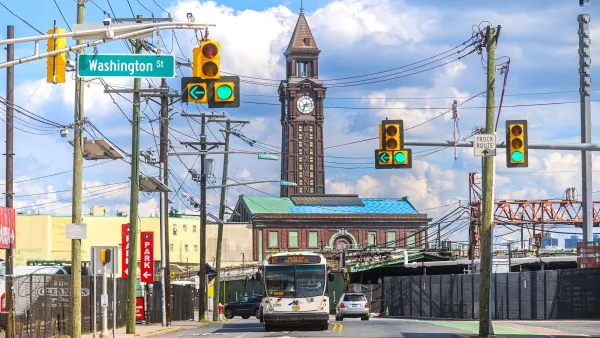
New Jersey has a Plan to buy Transit with LAND. Will it Actually Work?
I have questions.

Planetizen Federal Action Tracker
A weekly monitor of how Trump’s orders and actions are impacting planners and planning in America.

California plans to bury El Niño’s downpour
If the state plays its cards right, it may be able to store a billion acre-feet of El Niño’s water in aquifers.

Desperate measures: Advocates weigh draining Lake Powell to fill Colorado River
Draining the reservoir could reduce evaporation losses by a couple hundred thousand acre-feet.

Los Angeles just elected an urban planner as its mayor
Transportation analysts are optimistic that Raman will be more aggressive in addressing transit issues than Bass.

Mamdani’s pied-à-terre tax survives legal challenge
A panel of judges found that the plaintiffs failed to demonstrate injury as a result of New York City's implementation of the tax.

Eastern Nebraska is running out of electricity
Data centers and electrification are straining eastern Nebraska’s grid, throttling economic development.

FREE Course: Walkable City 1: Why Walkability?
After describing his path towards focusing on walkability as the essence of good planning, Jeff Speck marches through his five principal reasons for making more walkable places.
Reinventing Malls: Planning Alchemy—Turning Gray Fields Into Gold
The course focuses on the opportunities and imperatives that shape reinvention of mall sites.

City of Rosemead
Rutgers University, Edward J. Bloustein School of Planning and Public Policy
One Hundred Miles
University of Michigan School for Environment and Sustainability (SEAS)
Hunter College, City University of New York (CUNY)
The Architects Foundation
City of Cambridge
Montrose County
The Pocatello Development Authority