The Obama Administration has decided to provide federal funding for a variety streetcar projects. Over the past few months, cities including San Antonio have proposed routes that will run through densely populated areas.


Beginning in 2009, the Department of Transportation began encouraging many cities to apply for federal funds that would assist in construction of these streetcar projects. Washington, D.C. has been encouraging cities to think about new transit ideas, says Yonah Freemark:
"The fact that streetcars can be built with lower per-mile costs than other forms of rail transit, their ability to attract denser development in some cases, and the possibility of farming off most of their costs to another government entity has made them incredibly appealing. Washington, seeking transit projects that are visible and reinforce dense communities, has been a willing partner in this effort."
Freemark doesn't entirely approve of the shift to streetcars, however:
"...the difficult side of the story is that many of the projects are planned to be constructed in a manner that provides an inferior quality of service than the bus lines they replace."
FULL STORY: The Appeal of Modern Streetcars Continues to Mount, But There Are Obstacles to It Bringing Mobility Gains

DC Streetcars to Be a Shot in the Arm
It was nearly 50 years ago, when streetcars were seen on the roadways of downtown Washington, DC. Dan Tangherlini, the former transportation director for the District discusses why streetcars matter in the United States capital.
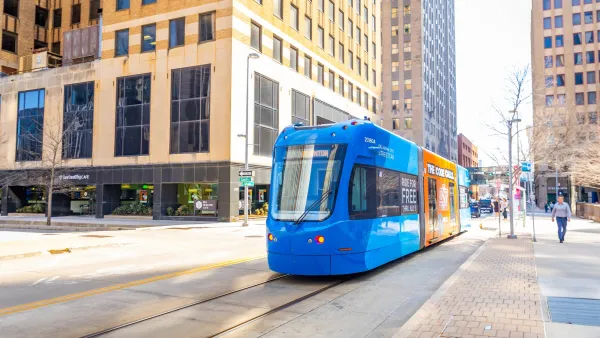
OKC streetcar will stay fare-free after ridership shot up 74%
The downtown streetcar saw a surge in ridership after it eliminated fares in January.
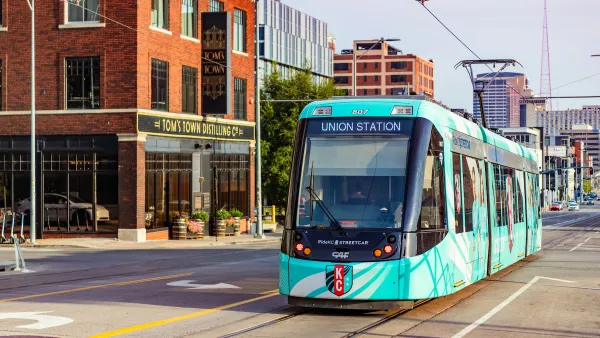
Kansas City completes riverfront streetcar extension
The streetcar line carries a third of the region's transit riders.

The state-sanctioned urbicide of Austin
People don’t kill cities. Freeways do.

US to reduce Colorado River water deliveries to Mexico
A new Colorado Treaty amendment reduces Mexico’s Colorado River water allocation by 250,000 acre feet.

New Jersey’s second-largest city bans standalone data centers
Jersey City will continue to allow co-location facilities, such as those meant for research institutions that store their own data.

Amtrak not solely to blame for New Jersey commuter rail's unreliability, report finds
A new study from the Garden State Initiative found that NJ Transit’s budget grew 20% across a 4 year period, but reliability declined significantly over the same period.

EPA erases limits on planet-warming pollution from power plants
Under Monday’s plan, power plants would still have some limits on how much mercury, arsenic and other contaminants they can emit.

Phoenix announces new on-demand transit service, more frequent RAPID buses
Both new services will launch in October, and are part of Phoenix's Project Effective Access Solutions for Easing Congestion.

FREE Course: Walkable City 1: Why Walkability?
After describing his path towards focusing on walkability as the essence of good planning, Jeff Speck marches through his five principal reasons for making more walkable places.
Reinventing Malls: Planning Alchemy—Turning Gray Fields Into Gold
The course focuses on the opportunities and imperatives that shape reinvention of mall sites.

Eagle County Government
Harvard University Graduate School of Design
Nashville Planning Department
The Architects Foundation
University of Cincinnati Online
The Pocatello Development Authority
The Urban Renewal Agency of the City of Pocatello
Journal of the American Planning Association