Thanks to massive projects fuelled by developers rather than retailers, and official efforts to spur a consumer economy, China is becoming home to massive, deserted malls.


Dongguan's enormous South China Mall is the world's largest. However, with barely 2 percent of the outlets rented, it has become a cavernous white elephant. Yet this is merely the largest of China's dead malls -- and construction continues on even more. The Globe and Mail examines what went wrong.
"Even by China's standards, the New South China Mall was particularly ill-conceived. A high-end shopping destination was always a stretch for Dongguan, a factory city of six million people in southern Guangdong province that relies on low-cost labour imported from other parts of China. Just past its fifth birthday, the mall's exterior paint is already starting to peel off its faux European architecture. Rivers of rust streak down from the railings of the emergency exit staircases...Only 47 of an astonishing 2,350 retail spaces are filled, the most successful businesses being McDonalds and KFC restaurants near the mall's front entrance.
The most curious thing about the New South China Mall is that it's far from unique. Largely empty megamalls are an increasingly common sight in cities around China. More are being built, even as millions of square metres of retail space already sit empty."
Read the full story: China’s giant, deserted malls wait for reluctant consumers
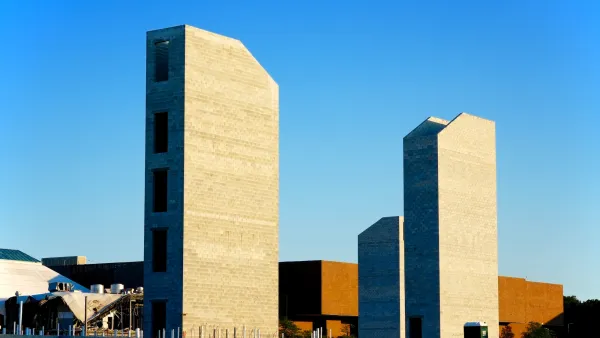
New Jersey affordable housing requirements spur infill development across the state
A 50-year-old law continues to reshape development around housing goals.
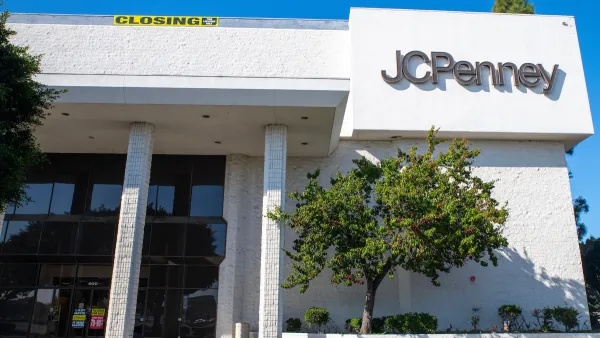
Thousands of new homes are replacing Orange County's dead malls
Southern California cities are adjusting their zoning codes to support mixed-use and residential developments that are replacing dying shopping malls.
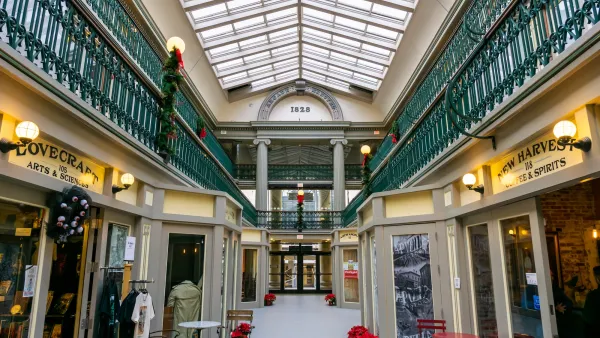
You Can Live Inside America’s Oldest Indoor Shopping Mall
The Arcade in Providence, Rhode Island, first built in 1828, was redeveloped into 48 micro-housing units.

Planetizen Federal Action Tracker
A weekly monitor of how Trump’s orders and actions are impacting planners and planning in America.

California plans to bury El Niño’s downpour
If the state plays its cards right, it may be able to store a billion acre-feet of El Niño’s water in aquifers.

Desperate measures: Advocates weigh draining Lake Powell to fill Colorado River
Draining the reservoir could reduce evaporation losses by a couple hundred thousand acre-feet.

Chicago voters approve permanent festival grounds, penalty for vacant property owners
Currently, major summer and fall festivals take over public parks for weeks at a time, drawing criticism from nearby residents

NYC votes to cut outdoor dining red tape, speed up permitting
New York City also voted to allow the Department of Transportation to begin work on urgent projects before notifying elected officials.

California appears to reject Prop. 45
The proposition would have expanded the projects that qualify for a streamlined environmental review, effectively paring down the California Environmental Quality Act.

FREE Course: Walkable City 1: Why Walkability?
After describing his path towards focusing on walkability as the essence of good planning, Jeff Speck marches through his five principal reasons for making more walkable places.
Reinventing Malls: Planning Alchemy—Turning Gray Fields Into Gold
The course focuses on the opportunities and imperatives that shape reinvention of mall sites.

City of Rosemead
Rutgers University, Edward J. Bloustein School of Planning and Public Policy
One Hundred Miles
Hunter College, City University of New York (CUNY)
The Architects Foundation
University of Cincinnati Online
City of Cambridge
Montrose County
The Pocatello Development Authority