It may not be apparent to American motorists, but the U.S. oil refinery industry is ailing. Reduced VMT, mandated ethanol use, and escalating vehicle fuel efficiency standards caused a decrease of gasoline consumed. Diesel may revive the industry.


President Obama's new CAFE target of 54.5 miles per gallon by 2025 may not be as ominous as many believe for the refinery industry.
While many auto industry followers believe the high standards will boost sales of hybrids, electric cars, plug-in hybrid vehicles, as well as highly efficient conventional vehicles, many see them as boosting sales of vehicles that run on diesel, as opposed to gasoline, because "diesel engines carry vehicles 25 percent farther per tank than gasoline engines do, according to Hart Energy", an industry consulting and publishing firm.
"Diesel powers about 3 percent of U.S. passenger vehicles, said Allen Schaeffer, executive director of the Diesel Technology Forum, a nonprofit industry organization. Industry consultants expect the CAFE regulations will help push their market share to 8 percent by 2025."
"Still, demand continued to slide for gasoline, U.S. refiners' most popular product. Drivers used less than 378 million gallons of gasoline per day in 2010, according to the U.S. Energy Information Administration. That was down more than 3 percent from 2007, the year industry watchers mark as the peak for gasoline consumption."
"Many believe we'll never reach those levels again," said one oil analyst.
Thanks to Susan Frank
Read the full story: Diesel could fuel refinery comeback

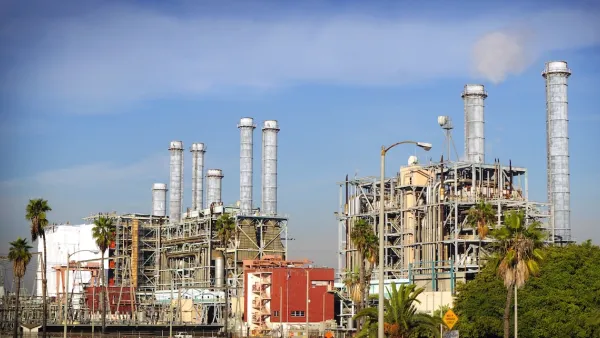
Even in California, Energy Affordability Trumps the Environment
A Democratic senator proposes to relax vehicle emissions standards in order to increase the supply of gasoline as the state's oil refinery capacity decreases, thus mitigating increases in gasoline prices in the state with the highest fuel prices.

Appeals Court: California Emissions Standards Upheld
The U.S. Environmental Protection Agency and the California Air Resources Board, the nation's two most powerful environmental regulatory agencies, won an important round in federal court last week. But the emissions standards battle may not be over.
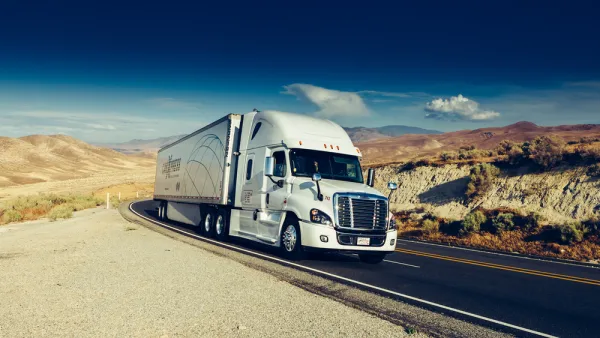
Electrifying Trucks: Will California Ban Diesel Power?
Five days after approving a landmark rule to phase out the sale of new light duty vehicles powered by internal combustion engines, the California Air Resource Board released a rule that applies to the sale of new medium and heavy duty ICE vehicles.

Planetizen Federal Action Tracker
A weekly monitor of how Trump’s orders and actions are impacting planners and planning in America.

California plans to bury El Niño’s downpour
If the state plays its cards right, it may be able to store a billion acre-feet of El Niño’s water in aquifers.

Chicago breaks ground on $3 billion megadevelopment
The new neighborhood, titled Foundry Park, will one day host 3,700 residences.

This road in NYC is infamously dangerous — and Mamdani can't fix it
New York City's Ocean Parkway is known for reckless driving, but the power to implement safety measures lies with the state rather than the city.

One of Denver’s busiest corridors to gain BRT
The project will span 18 miles and contain 74 bus rapid transit stations.

275,000 bus trips are at stake on Seattle's ballot
If passed, the Seattle Transit Measure would trigger a 0.3% sales tax and raise an average of $138 million per year to maintain and expand Seattle’s bus services.

FREE Course: Walkable City 1: Why Walkability?
After describing his path towards focusing on walkability as the essence of good planning, Jeff Speck marches through his five principal reasons for making more walkable places.
Reinventing Malls: Planning Alchemy—Turning Gray Fields Into Gold
The course focuses on the opportunities and imperatives that shape reinvention of mall sites.

City of Rosemead
Rutgers University, Edward J. Bloustein School of Planning and Public Policy
One Hundred Miles
Hunter College, City University of New York (CUNY)
The Architects Foundation
University of Cincinnati Online
City of Cambridge
Montrose County
The Pocatello Development Authority