While the photos of the flooded towns in New England captivated our attention, it is the devastation to the roads and bridges that has become the priority in the rebuilding effort - as they must be repaired or replaced to allow relief and rebuilding.


Roads and bridges are to rural New England what transit is to New York City - they provide the backbone for all the towns and hamlets that were hard-hit by Hurricane Irene. To complicate matters, Vermont's Agency of Transportation must rebuild, repair, or replace the damaged road infrastructure before winter's snow and frost arrives - in about two and half months, as the ground freezes, thus making construction very difficult.
"Of all the challenges facing Vermont as it tries to recover from the floods caused by the remnants of Hurricane Irene, there may be none more daunting - or vital to solve - than repairing and reopening the hundreds of roads and dozens of bridges that the storm knocked out. In many spots, the roads must be fixed before equipment can be brought in to repair everything from homes and businesses to the power grid, railroad tracks and water and wastewater systems."
"Faced with so much devastation, state officials are taking a triage approach. The first order of business was restoring access to 13 towns that were isolated when the roads and bridges were washed out. They did this by building what state officials call "goat paths," pouring gravel and sand and storm debris onto washed-out roads, and flattening them until they were strong enough for emergency vehicles to get over them."
Read the full story: Battered Vermont Looks First to Its Roads

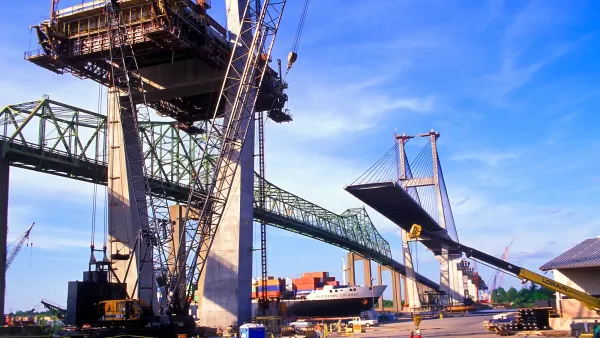
Five reasons infrastructure costs are spiking
State DOTs face a $86 billion shortfall over the next 10 years.
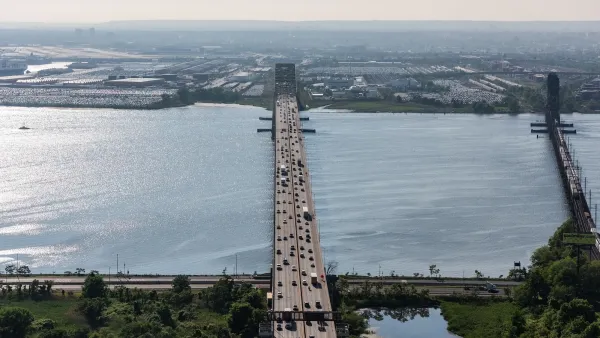
New Jersey Governor Kills ‘Boondoggle’ Highway Expansion
Gov. Sherrill ‘right-sized’ the Newark Bay Bridge reconstruction project, nixing a second proposed bridge and road expansion.
Texas Infrastructure Gets a ‘C’
The American Society of Civil Engineers rates states in 16 categories related to transportation, water, waste management, parks, and more.

Planetizen Federal Action Tracker
A weekly monitor of how Trump’s orders and actions are impacting planners and planning in America.

Amtrak, CN end decades-long dispute with eight-year agreement
The new operating agreement establishes an updated framework for the companies to work together, including processes to resolve disputes.

Northwest rail fans eager for Sept. 30 debut of Amtrak’s Airo fleet
Get ready for that new train smell and more seats. But they won’t go faster or run more frequently on the Cascades route in Washington and Oregon.

NYC to turn city-owned property into thousands of homes
The city has scheduled a public hearing regarding the development for October.

Buses travel at 5mph along this route in NYC. The Bronx's first-ever busway looks to change that
Prior to the busway, buses on the Bx36 route traveled as slowly as 5 miles per hour.

Pittsburg launches 'EZ permits,' aims for one-day turnaround for low-risk permits
The pilot ‘fast lane’ for permits is part of a bundle of modernization efforts for Pittsburg’s permitting process.

FREE Course: Walkable City 1: Why Walkability?
After describing his path towards focusing on walkability as the essence of good planning, Jeff Speck marches through his five principal reasons for making more walkable places.
Reinventing Malls: Planning Alchemy—Turning Gray Fields Into Gold
The course focuses on the opportunities and imperatives that shape reinvention of mall sites.

City of Thousand Oaks
City of Wisconsin Rapids
Harvard University Graduate School of Design
The Architects Foundation
University of Cincinnati Online
The Pocatello Development Authority
The Urban Renewal Agency of the City of Pocatello