The two founders of New York's famous High Line give NPR an exclusive tour of the park and provide the inside scoop on the creation of the park.


Two Chelsea (lower Manhattan) residents, Joshua David and Robert Hammond, met at a community meeting (a first for both of them) to decide on the future of the elevated tracks. Neither had a planning or urban design background, but they were not short on energy or determination. They are credited with 20-year effort to bring the elevated park to fruition (and have just co-authored High Line: The Inside Story of New York City's Park in the Sky) due out this month.
"Mayor [Rudy] Giuliani really wanted to demolish the High Line," Hammond says. "One of his last acts in office - two days before he left - was signing the demolition order."
"(David and Hammond) wooed the Bloomberg administration with an economic feasibility study that showed the High Line would easily double its original $150 million cost in tax revenue from increased property values in the area. (That revenue figure has since been raised to nearly half a billion dollars.)" Bloomberg reversed the Giuliani demotion order.
The link includes a 13-photo gallery showing historic (freight line opened 1934 and was in operation till 1980) as well as contemporary photos).
Podcast: Take A Walking Tour Of The High Line
Read the full story: The Inside Track On New York City's High Line
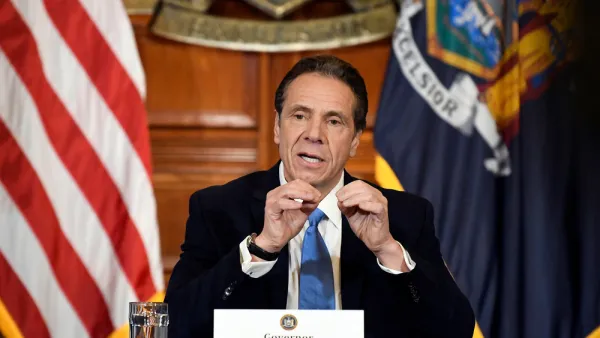
Massive, Expensive Redevelopment of Midtown Manhattan Proposed
New York Governor Cuomo's State of the State speeches last week included an ambitious proposal for a large-scale redevelopment project on Manhattan's west side, adjacent to Penn Station.
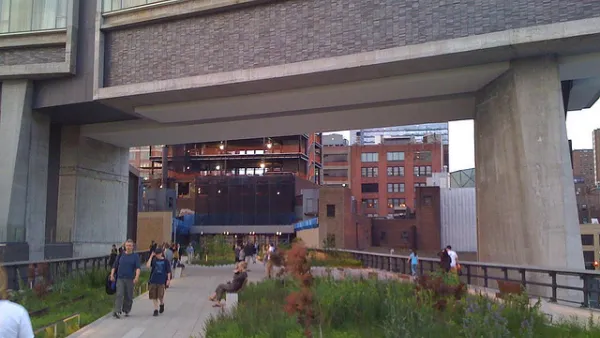
The All-New High Line
With travel restrictions requiring quarantines for many out-of-state visitors to New York City, the normal hordes of tourists on New York's High Line will be absent for months to come.
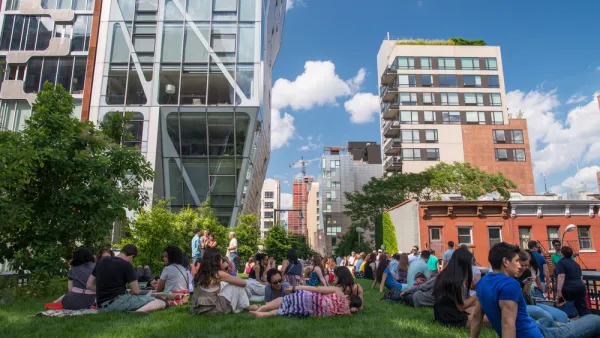
Ten Years of the High Line—Time to Reflect
As the High Line turns ten, a debate about the costs and benefits of urban revitalization continues.

Planetizen Federal Action Tracker
A weekly monitor of how Trump’s orders and actions are impacting planners and planning in America.

California plans to bury El Niño’s downpour
If the state plays its cards right, it may be able to store a billion acre-feet of El Niño’s water in aquifers.

Desperate measures: Advocates weigh draining Lake Powell to fill Colorado River
Draining the reservoir could reduce evaporation losses by a couple hundred thousand acre-feet.

In Texas, data centers are swallowing promised parkland
Residents who moved to Taylor, Texas for a rural community now have to contend with three data centers in their backyard.

How a Chicago-sized wind farm beat the odds and powered on
The project spanned five presidential administrations and a standoff with a U.S. military base.

MTA gives itself 30 days to transform pit into basketball court
The site has been under construction since 2022; the city originally estimated it would finish the court in 2024.

FREE Course: Walkable City 1: Why Walkability?
After describing his path towards focusing on walkability as the essence of good planning, Jeff Speck marches through his five principal reasons for making more walkable places.
Reinventing Malls: Planning Alchemy—Turning Gray Fields Into Gold
The course focuses on the opportunities and imperatives that shape reinvention of mall sites.

City of Rosemead
Rutgers University, Edward J. Bloustein School of Planning and Public Policy
One Hundred Miles
Hunter College, City University of New York (CUNY)
The Architects Foundation
University of Cincinnati Online
City of Cambridge
Montrose County
The Pocatello Development Authority