What if gambling was legal all over the United States? Neal Peirce reviews Sam Skolnik’s new book, "High Stakes: The Rising Cost of America’s Gambling Addiction" and looks at what might be the result of bills pending in CA and MA.


With state governments "...desperate for any new form of revenue", and chants of "No new taxes!" sweeping the land, Peirce says it is no surprise that states are considering gambling as a possible new income source:
"Already, government-countenanced (or directly run) gambling is at an historic high water mark. All but seven states have lotteries. Casino gambling, both state-countenanced and run by Indian tribes, is spreading like wildfire, especially in the Northeast. Each year at least half of America's states consider new gambling outlets," writes Peirce.
Skolnik's book warns of the deleterious effects legalized gambling can have on states and municipalities, looking at Nevada as an obvious example.
Read the full story: America’s Gambling Craze: Playing with Fire

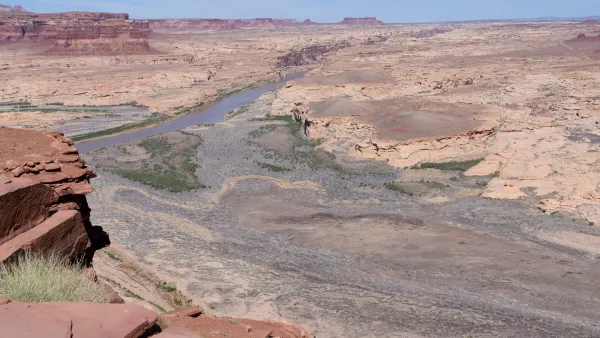
Feds say Arizona, California and Nevada must cut Colorado River water use by 1.25 million acre-feet
The new plan does not apply mandatory cuts to any of the river’s upper basin states.
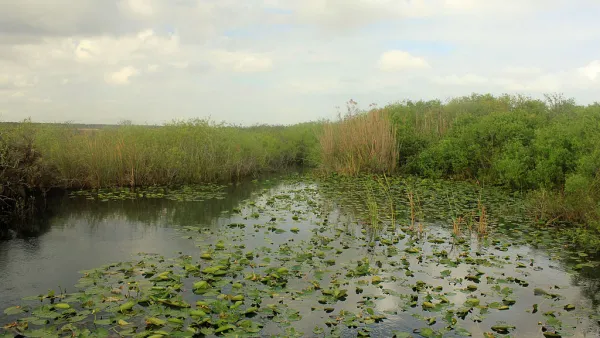
Water Quality Comes Up Trumps in New Florida Gambling Deal
Florida will direct almost all the revenue from its gambling compact with the Seminole Tribe to fund water quality projects, to the tune of billions.
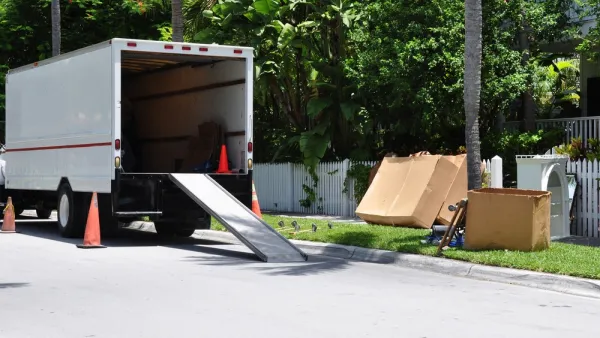
The Demographics of Leaving California
The state is seeing an outmigration of residents moving to more affordable places, but it isn’t just wealthy retirees leaving the Golden State.

Planetizen Federal Action Tracker
A weekly monitor of how Trump’s orders and actions are impacting planners and planning in America.

Amtrak, CN end decades-long dispute with eight-year agreement
The new operating agreement establishes an updated framework for the companies to work together, including processes to resolve disputes.

Judges permit Denver to divert 77,000 acre feet from the Colorado River for reservoir expansion
Overuse and climate change have caused the Colorado River’s water levels to plummet.

NYC DOT wants faster, more permanent street upgrades
The city is examining ways to build more concrete infrastructure without getting entangled in 'decades-long' projects.

'Something we’ve never seen before:' rising utility rates could strain city finances nationwide
Data centers, climate change and other factors have caused utility rates in the United States to increase by 38% since 2020.

Trump to overrule local leaders, lease millions of acres of America’s Pacific Island territories’ seafloors to mining companies
International law says that the Indigenous people of America’s territories have a right to prior and informed consent regarding projects that impact their countries.

FREE Course: Walkable City 1: Why Walkability?
After describing his path towards focusing on walkability as the essence of good planning, Jeff Speck marches through his five principal reasons for making more walkable places.
Reinventing Malls: Planning Alchemy—Turning Gray Fields Into Gold
The course focuses on the opportunities and imperatives that shape reinvention of mall sites.

Harvard University Graduate School of Design
KFH Group Inc.
Greater Baltimore Committee
The Architects Foundation
University of Cincinnati Online
The Pocatello Development Authority
The Urban Renewal Agency of the City of Pocatello