Cities with high populations of older adults are beginning to alter their programs and street signs to make it easier to respond to senior citizens' needs.


"Ahead of a federal mandate that will kick in in 2012, Aiken has begun installing oversize street signs downtown and on major thoroughfares; they have increased reflectivity as well, designed to help older drivers who may not see as well as they used to.
In Mayfield, Ohio (23.8 percent over age 65), the large number of seniors who no longer drive threatened to swamp a program offering $3 rides for older people to doctor's offices, shopping and the like. Says Stacey O'Brien, director of the Tri-City Consortium on Aging, "The demand is far greater than we anticipated." After analyzing people's travel patterns and consulting with the managers of complexes with high senior populations, the consortium is making plans to move away from what has essentially been a taxi system and toward a scheduled shuttle that would run a loop among set locations such as grocery stores and medical facilities."
The U.S. population older than 65 is expected to nearly double by 2050.
Read the full story: Towns change programs, enlarge street signs to adapt to an older population
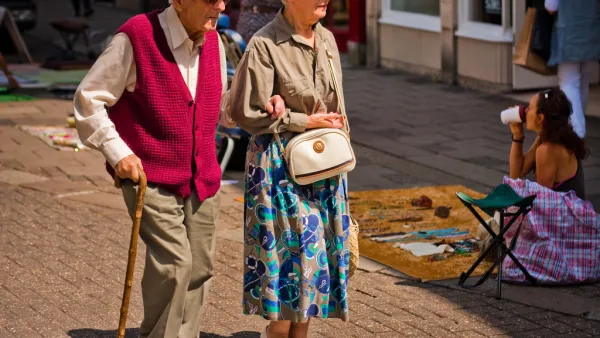
Redefining Public Spaces for Older People
The elderly population in cities is growing, and research points to the health benefits of an active, connected lifestyle. So why are cities still so inhospitable to aging?
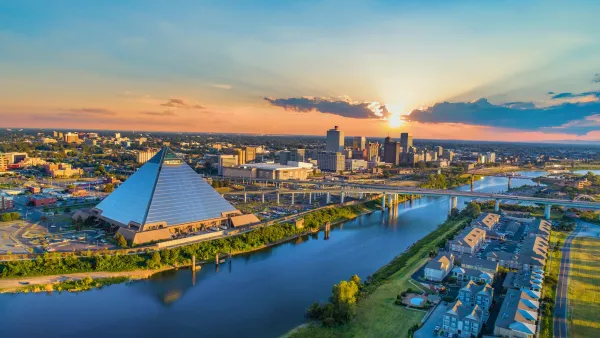
15 US cities and their global namesakes
Hundreds of cities around the United States are named after other places. We tour a few of them.
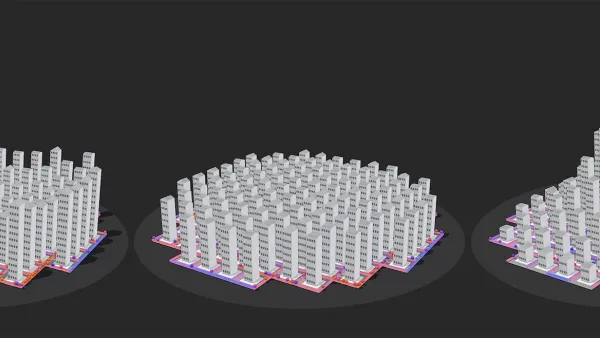
New study visualizes how city shapes impact mobility
Whether circular or linear, the shape and layout of cities affects how their residents get around.

Desperate measures: Advocates weigh draining Lake Powell to fill Colorado River
Draining the reservoir could reduce evaporation losses by a couple hundred thousand acre-feet.

Eastern Nebraska is running out of electricity
Data centers and electrification are straining eastern Nebraska’s grid, throttling economic development.

Malls are becoming the midtowns of the future
Mall and office park redevelopments are a generational opportunity to create new nodes of urbanity.

NYC breaks ground on anti-flooding infrastructure project
New York City's new system will reduce stormwater flows to local sewers by 90%.

One Kentucky town’s secret to affordable housing
The Smoketown Community Land Trust has already built seven affordable homes for community members.

Houston gains petal-shaped cooling infrastructure to make streets more ‘delightful’
The city has installed the pavilions along 15 blocks in Houston.

FREE Course: Walkable City 1: Why Walkability?
After describing his path towards focusing on walkability as the essence of good planning, Jeff Speck marches through his five principal reasons for making more walkable places.
Reinventing Malls: Planning Alchemy—Turning Gray Fields Into Gold
The course focuses on the opportunities and imperatives that shape reinvention of mall sites.

City of Rosemead
Rutgers University, Edward J. Bloustein School of Planning and Public Policy
One Hundred Miles
University of Michigan School for Environment and Sustainability (SEAS)
Hunter College, City University of New York (CUNY)
The Architects Foundation
City of Cambridge
Montrose County
The Pocatello Development Authority