The weekend closure of the 405 freeway in L.A. highlights the city's limited mobility but also the skewed way transit and transportation projects are debated.


"There is certainly something to be said in this diffuse, diverse and distractible city for collectivity of any kind. And anything that forces us to imagine a Los Angeles without cars - or less dependent on cars, at any rate - has some civic value.
It's striking, though, that amid all this handwringing we've barely paused to ask the most basic questions about what the widening project means for the city and how we navigate it or how we think about the relationship between architecture and mobility in a city planned for more than half a century around the primacy of the car.
To begin with: Is widening the 405 (to add one solitary carpool lane on the freeway's northbound side) really something that we should be spending $1 billion on? Will it actually make traffic through the pass better? And if so, for how long?"
By comparison, much more noise has been created in the face of extensions of the city's light rail, for example.
Read the full story: Critic's Notebook: Fast lane to gridlock

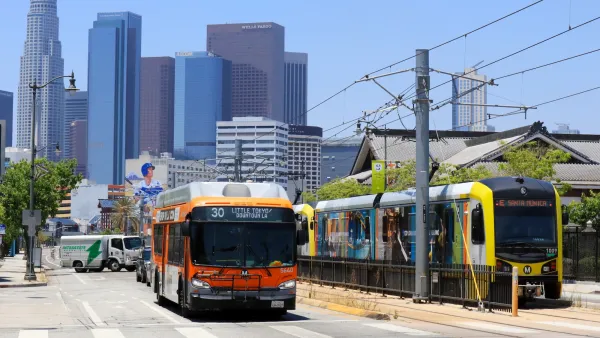
LA Metro Increases Highway Expansion Budget by 40%
Metro has plans to expand freeways including the 5, 105, and 405, among others.
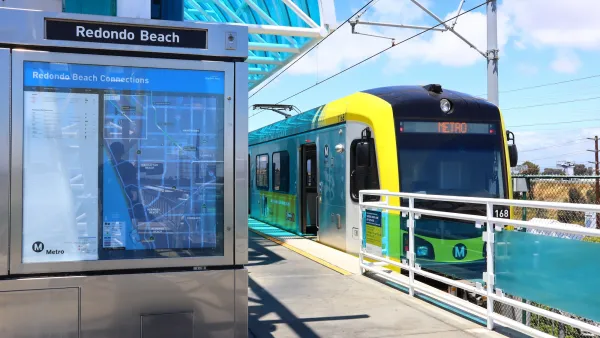
LA Metro Greenlights South Bay Light Rail Extension
When complete, the K Line extension will offer a 19-minute ride from Torrance to LAX.
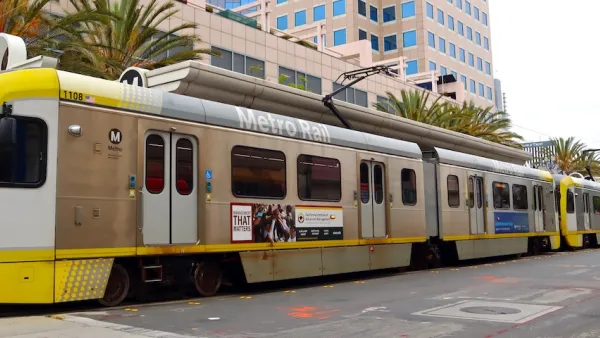
The World’s Longest Light Rail Line is in… Los Angeles?
In a city not known for its public transit, the 48.5-mile A Line is the longest of its kind on the planet.

Planetizen Federal Action Tracker
A weekly monitor of how Trump’s orders and actions are impacting planners and planning in America.

Amtrak, CN end decades-long dispute with eight-year agreement
The new operating agreement establishes an updated framework for the companies to work together, including processes to resolve disputes.

Northwest rail fans eager for Sept. 30 debut of Amtrak’s Airo fleet
Get ready for that new train smell and more seats. But they won’t go faster or run more frequently on the Cascades route in Washington and Oregon.

NYC to turn city-owned property into thousands of homes
The city has scheduled a public hearing regarding the development for October.

Buses travel at 5mph along this route in NYC. The Bronx's first-ever busway looks to change that
Prior to the busway, buses on the Bx36 route traveled as slowly as 5 miles per hour.

Pittsburg launches 'EZ permits,' aims for one-day turnaround for low-risk permits
The pilot ‘fast lane’ for permits is part of a bundle of modernization efforts for Pittsburg’s permitting process.

FREE Course: Walkable City 1: Why Walkability?
After describing his path towards focusing on walkability as the essence of good planning, Jeff Speck marches through his five principal reasons for making more walkable places.
Reinventing Malls: Planning Alchemy—Turning Gray Fields Into Gold
The course focuses on the opportunities and imperatives that shape reinvention of mall sites.

City of Thousand Oaks
City of Wisconsin Rapids
Harvard University Graduate School of Design
The Architects Foundation
University of Cincinnati Online
The Pocatello Development Authority
The Urban Renewal Agency of the City of Pocatello