In Stockholm, Sweden, planners are moving ahead with a broad central city redevelopment plan that seeks to continue the city's trend of reducing car traffic and congestion, and making it easier for bikers, walkers and transit takers to get around.


Writing for Citiwire, Roberta Brandes Gratz details the project.
"Imagine this: A major city center redevelopment scheme would take down two highway bridges and build one replacement, shrink vehicular access from 12 to 8 lanes (6 for cars, 2 for trams and buses), expand cycle, pedestrian and public transit capacity, diminish the number and height of proposed new buildings after public comment, and add a sizable park also at the urging of the public. No developer input is solicited or accepted until a final design is approved by the City Council and fully designed. Plus, the long and involved process, with its extensive public input, actually thrills city planners.
Sound like a fantasy?"
Read the full story: Stockholm Model: Planning Yields Dramatic Results
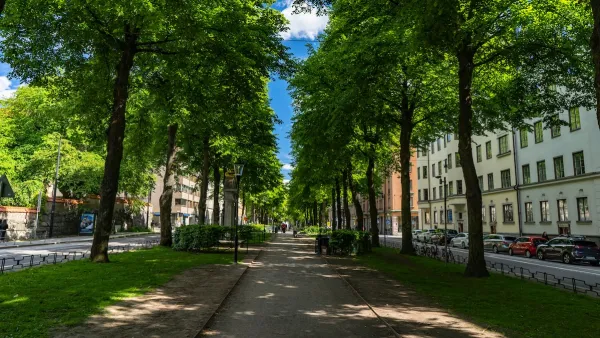
‘Stockholm Tree Pit’ Saves Dying Urban Trees
After noticing that two-thirds of its trees were dying, Stockholm developed a new planting method to protect trees surrounded by concrete.
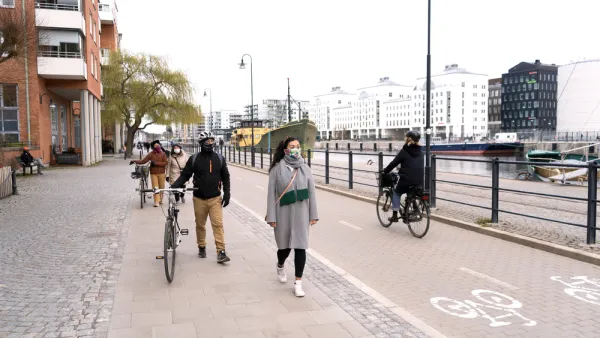
Rent Control Buckling Under Market Pressure, Sweden Increases Development
A housing affordability case study, provided by the unique housing policies in the country of Sweden.
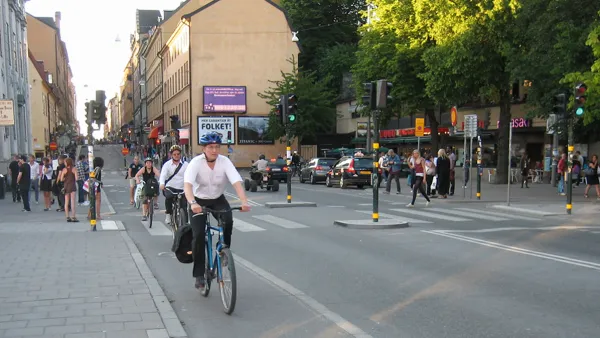
Sweden's 'One-Minute City' Reimagines the Street at a Hyper-Local Level
Rather than trying to meet all of a community's needs within a one-minute radius, Sweden's Street Moves pilot program gives residents the power to decide how street space gets used.

Planetizen Federal Action Tracker
A weekly monitor of how Trump’s orders and actions are impacting planners and planning in America.

California plans to bury El Niño’s downpour
If the state plays its cards right, it may be able to store a billion acre-feet of El Niño’s water in aquifers.

Desperate measures: Advocates weigh draining Lake Powell to fill Colorado River
Draining the reservoir could reduce evaporation losses by a couple hundred thousand acre-feet.

Mamdani’s pied-à-terre tax survives legal challenge
A panel of judges found that the plaintiffs failed to demonstrate injury as a result of New York City's implementation of the tax.

Eastern Nebraska is running out of electricity
Data centers and electrification are straining eastern Nebraska’s grid, throttling economic development.

Seattle passes record-breaking transit services expansion
Proposition 1 will double the city’s transit tax to add 95,000 more bus trips and preserve 180,000 bus trips annually.

FREE Course: Walkable City 1: Why Walkability?
After describing his path towards focusing on walkability as the essence of good planning, Jeff Speck marches through his five principal reasons for making more walkable places.
Reinventing Malls: Planning Alchemy—Turning Gray Fields Into Gold
The course focuses on the opportunities and imperatives that shape reinvention of mall sites.

City of Rosemead
Rutgers University, Edward J. Bloustein School of Planning and Public Policy
One Hundred Miles
University of Michigan School for Environment and Sustainability (SEAS)
Hunter College, City University of New York (CUNY)
The Architects Foundation
City of Cambridge
Montrose County
The Pocatello Development Authority