The Economist reports "a case of favoritism towards electricity generated by federal dams" in the Columbia River basin, a stretch of land that encompasses Oregon, Washington state, Idaho, and western Montana.


As a nonprofit agency under the umbrella of the U.S. Department of Energy, the Bonneville Power Administration (BPA) sells electricity generated by 31 federal dams in the Pacific Northwest.
Last month, the company "took all the region's wind turbines offline for about five hours and it expects to continue to pull the plug on them for a few hours almost every night until well into July, when enough snow in the Cascades and northern Rockies will have melted for the excess run-off (and therefore the excess power) to subside."
This radical course of action, in turn, triggered a litany of formal complaints from the wind power companies that spent upward of $100 million on wind turbines to serve the region's electricity needs.
"[T]he wind lobby is howling about government perfidy," The Economist reports.
Read the full story: Renewable energy in the north-west

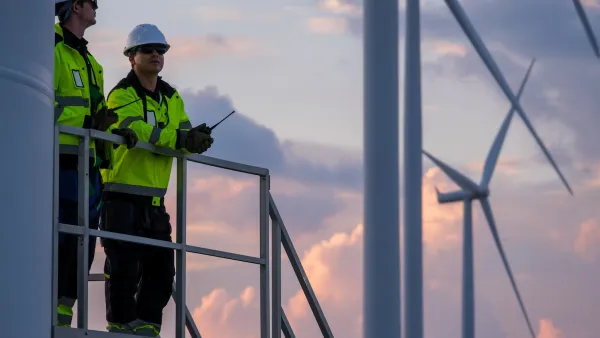
Despite court ruling, Trump is keeping nearly all wind projects in the US on hold
At least 110 wind energy projects have not heard from the government since a federal judge ruled that the Trump administration's freeze on wind turbine clearances was likely illegal.
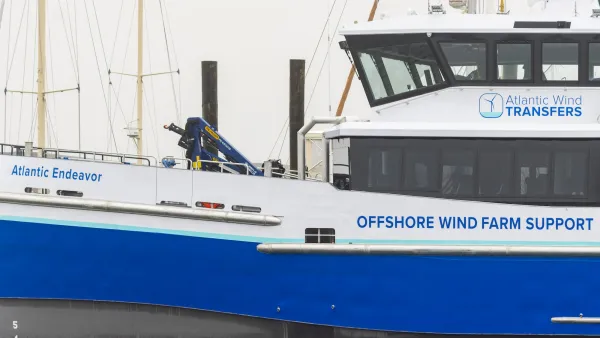
Nation’s Largest Offshore Wind Project, Suspended by Trump, Restarts Construction
A judge issued a temporary restraining order against the Trump administration’s suspension of five East Coast offshore wind projects.
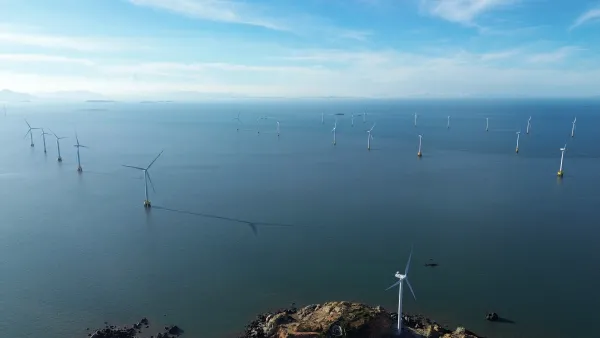
China is Building the World’s First Underwater, Wind-Fuelled Data Center
The facility claims it will cut energy demand by 22.8%.

Planetizen Federal Action Tracker
A weekly monitor of how Trump’s orders and actions are impacting planners and planning in America.

Amtrak, CN end decades-long dispute with eight-year agreement
The new operating agreement establishes an updated framework for the companies to work together, including processes to resolve disputes.

Northwest rail fans eager for Sept. 30 debut of Amtrak’s Airo fleet
Get ready for that new train smell and more seats. But they won’t go faster or run more frequently on the Cascades route in Washington and Oregon.

NYC to turn city-owned property into thousands of homes
The city has scheduled a public hearing regarding the development for October.

Buses travel at 5mph along this route in NYC. The Bronx's first-ever busway looks to change that
Prior to the busway, buses on the Bx36 route traveled as slowly as 5 miles per hour.

Pittsburg launches 'EZ permits,' aims for one-day turnaround for low-risk permits
The pilot ‘fast lane’ for permits is part of a bundle of modernization efforts for Pittsburg’s permitting process.

FREE Course: Walkable City 1: Why Walkability?
After describing his path towards focusing on walkability as the essence of good planning, Jeff Speck marches through his five principal reasons for making more walkable places.
Reinventing Malls: Planning Alchemy—Turning Gray Fields Into Gold
The course focuses on the opportunities and imperatives that shape reinvention of mall sites.

City of Thousand Oaks
City of Wisconsin Rapids
Harvard University Graduate School of Design
The Architects Foundation
University of Cincinnati Online
The Pocatello Development Authority
The Urban Renewal Agency of the City of Pocatello