In comparing data collected during the 2010 Census, walkable neighborhoods are shown to have greater vacancy rates than the cities they're in.


This post from Cubit Planning's Kristen Carney explores the numbers, which went against her own assumptions.
"I hypothesized that a socially redeeming characteristic of walkable neighborhoods would be a lower than average vacancy rate. More people buying property in walkable neighborhoods means more real estate taxes–which fund our public services. And haven't we all been reading articles about how Gen Y loves living in dense urban areas, and how 58 percent of American would prefer to live in a neighborhood where stores are within an easy walk?
Well, the Census 2010 data indicate that walkable neighborhoods have higher vacancy rates than their surrounding cities. Only Dupont Circle in DC and City Center East in Philadelphia have slightly lower vacancy rates than their surrounding cities. Every other walkable neighborhood had a higher vacancy rate than its surrounding city. Topping the chart is Core in San Diego with a vacancy rate of 24.6% while San Diego city has a vacancy rate of 6.4%."
Read the full story: Walkable Neighborhoods have Higher Housing Vacancy Rates per Census 2010 Data

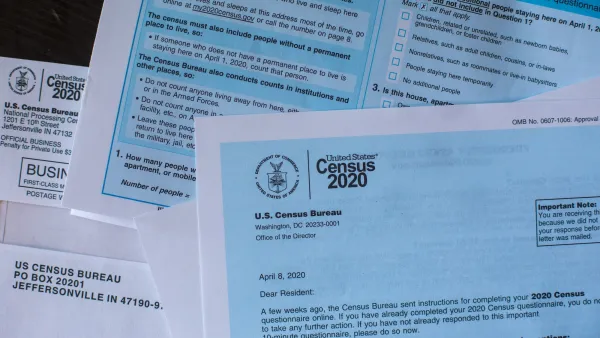
Republicans are Pushing to Make the American Community Survey Voluntary. History Shows That’s a Death Sentence for Data.
A voluntary survey will make demographic data “less accurate, less available, and less useful” — and for some rural communities, “a total blackout.”
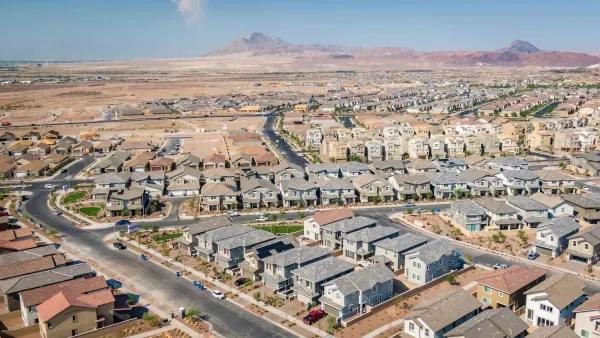
US Census Releases Most Accurate, Granular Housing Data Yet
A new measurement tool eliminates the inaccuracies that have plagued data about housing supply, helping governments more clearly understand how housing policies are impacting local needs.
Commentary: Residential Vacancies Don’t Outweigh Need for New Housing
The myth that there are plenty of vacant housing units in U.S. cities comes from misconceptions about leasing timelines and developer incentives.

Planetizen Federal Action Tracker
A weekly monitor of how Trump’s orders and actions are impacting planners and planning in America.

Amtrak, CN end decades-long dispute with eight-year agreement
The new operating agreement establishes an updated framework for the companies to work together, including processes to resolve disputes.

Judges permit Denver to divert 77,000 acre feet from the Colorado River for reservoir expansion
Overuse and climate change have caused the Colorado River’s water levels to plummet.

NYC DOT wants faster, more permanent street upgrades
The city is examining ways to build more concrete infrastructure without getting entangled in 'decades-long' projects.

'Something we’ve never seen before:' rising utility rates could strain city finances nationwide
Data centers, climate change and other factors have caused utility rates in the United States to increase by 38% since 2020.

Trump to overrule local leaders, lease millions of acres of America’s Pacific Island territories’ seafloors to mining companies
International law says that the Indigenous people of America’s territories have a right to prior and informed consent regarding projects that impact their countries.

FREE Course: Walkable City 1: Why Walkability?
After describing his path towards focusing on walkability as the essence of good planning, Jeff Speck marches through his five principal reasons for making more walkable places.
Reinventing Malls: Planning Alchemy—Turning Gray Fields Into Gold
The course focuses on the opportunities and imperatives that shape reinvention of mall sites.

Harvard University Graduate School of Design
KFH Group Inc.
Greater Baltimore Committee
The Architects Foundation
University of Cincinnati Online
The Pocatello Development Authority
The Urban Renewal Agency of the City of Pocatello