Plans to build a parkway around Houston will help ease traffic and spur growth in the region, but it will also run right through a key stopover point for millions of migrating birds.


Officials say the roadway plan is crucial for the economic vibrancy of the region, but environmentalists are trying to stop the plan to save a key link in the migratory path of birds.
"Development of this pristine land isn't just collateral damage - it's the point of the project. Project sponsors make no bones about it: The 15.2-mile Grand Parkway segment through Katy Prairie is a $462 million development project as much as it is a transportation project. Known as "Segment E," it would be the third phase in a 180-mile "scenic bypass" for Houston. Each of the 11 segments is considered a separate and 'independently justifiable project.'
Billy Burge of the Grand Parkway Association says right now there isn't much need for Segment E, in terms of traffic. Burge and his colleagues don't shy away from the fact that the project will generate more car trips and sprawl. In fact, they have what you might call a "build it and they will come" philosophy about road-building and traffic.
'There's real demand in 15 to 17 years to have this,' said Burge, who chairs the association overseeing the project for the state and the region. 'Once that link is completed, you'll have a steady stream of traffic.'"
Read the full story: Third Houston Outerbelt Would Turn Prairies Into Texas Toast
Animal Overpasses
Highways can be deadly for animals, especially when they cut directly through habitats. A recently completed design competition sought ideas for creating animal-safe bridges over highways.
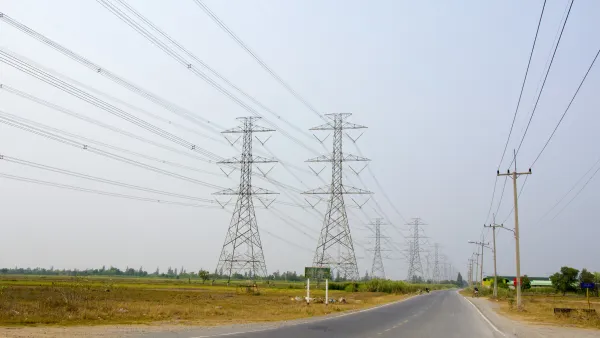
Trump to allow infrastructure along highways, railways in bid to bypass reviews
By building lines close to existing infrastructure, Trump aims to lower costs and bypass environmental oversight and opposition from local communities.
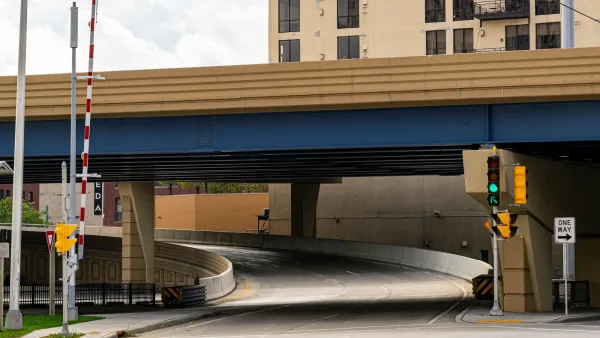
Milwaukee mayor abandons highway removal plan
Mayor Johnson spoke in opposition to a proposed plan to turn part of I-794 into an at-grade boulevard, expressing concerns about traffic.

Planetizen Federal Action Tracker
A weekly monitor of how Trump’s orders and actions are impacting planners and planning in America.

California plans to bury El Niño’s downpour
If the state plays its cards right, it may be able to store a billion acre-feet of El Niño’s water in aquifers.

Desperate measures: Advocates weigh draining Lake Powell to fill Colorado River
Draining the reservoir could reduce evaporation losses by a couple hundred thousand acre-feet.

Mamdani’s pied-à-terre tax survives legal challenge
A panel of judges found that the plaintiffs failed to demonstrate injury as a result of New York City's implementation of the tax.

Eastern Nebraska is running out of electricity
Data centers and electrification are straining eastern Nebraska’s grid, throttling economic development.

Seattle passes record-breaking transit services expansion
Proposition 1 will double the city’s transit tax to add 95,000 more bus trips and preserve 180,000 bus trips annually.

FREE Course: Walkable City 1: Why Walkability?
After describing his path towards focusing on walkability as the essence of good planning, Jeff Speck marches through his five principal reasons for making more walkable places.
Reinventing Malls: Planning Alchemy—Turning Gray Fields Into Gold
The course focuses on the opportunities and imperatives that shape reinvention of mall sites.

City of Rosemead
Rutgers University, Edward J. Bloustein School of Planning and Public Policy
One Hundred Miles
University of Michigan School for Environment and Sustainability (SEAS)
Hunter College, City University of New York (CUNY)
The Architects Foundation
City of Cambridge
Montrose County
The Pocatello Development Authority