Urban Omnibus ventures into the New York City Department of Transportation's Traffic Management Center to find out how technology is changing the way the city manages its traffic signals and traffic flows.



"This Urban Omnibus video is the first in a series called City of Systems, a suite of short videos intended to offer a poetic peek behind the scenes of some of the complex systems that enable New York City to function.
This video series is made possible by IBM as part of its commitment to use technology and information to help build more sustainable and intelligent cities. Most talk of urban systems these days seems to focus on efficiency and effectiveness, with a particular emphasis on using digital technologies to increase both.
At IBM Smarter Cities New York in October of 2009, IBM CEO Samuel Palmisano posed questions to illustrate the significant role that technology plays in building smarter cities. With four billion cell phones, 30 billion RFID tags and two billion internet users constantly providing and collecting data, what happens when we apply analytics to guide more strategic resource allocation as our digital and physical infrastructures converge?"
Read the full story: City of Systems: Traffic Signal
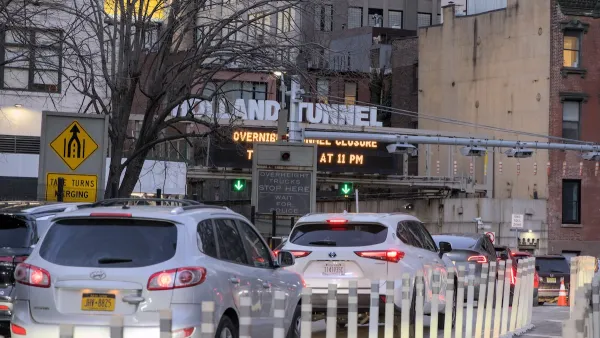
NYC Congestion Pricing Continues to Show Positive Results
While the Trump administration attempts to revoke the program’s federal approval, congestion pricing continues to reduce traffic, speed up bus travel times, and improve air quality in Manhattan.
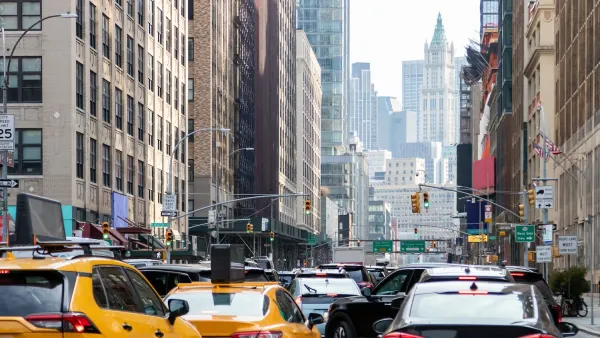
Agreement Keeps NYC Congestion Pricing Alive Through Summer
The tolling program will continue while a court considers the city’s lawsuit against the Trump administration.

NYC Congestion Pricing Goes Into Effect
The long-awaited congestion pricing program began on January 5.

Planetizen Federal Action Tracker
A weekly monitor of how Trump’s orders and actions are impacting planners and planning in America.

California plans to bury El Niño’s downpour
If the state plays its cards right, it may be able to store a billion acre-feet of El Niño’s water in aquifers.

Desperate measures: Advocates weigh draining Lake Powell to fill Colorado River
Draining the reservoir could reduce evaporation losses by a couple hundred thousand acre-feet.

Los Angeles just elected an urban planner as its mayor
Transportation analysts are optimistic that Raman will be more aggressive in addressing transit issues than Bass.

Mamdani’s pied-à-terre tax survives legal challenge
A panel of judges found that the plaintiffs failed to demonstrate injury as a result of New York City's implementation of the tax.

Eastern Nebraska is running out of electricity
Data centers and electrification are straining eastern Nebraska’s grid, throttling economic development.

FREE Course: Walkable City 1: Why Walkability?
After describing his path towards focusing on walkability as the essence of good planning, Jeff Speck marches through his five principal reasons for making more walkable places.
Reinventing Malls: Planning Alchemy—Turning Gray Fields Into Gold
The course focuses on the opportunities and imperatives that shape reinvention of mall sites.

City of Rosemead
Rutgers University, Edward J. Bloustein School of Planning and Public Policy
One Hundred Miles
University of Michigan School for Environment and Sustainability (SEAS)
Hunter College, City University of New York (CUNY)
The Architects Foundation
City of Cambridge
Montrose County
The Pocatello Development Authority