After a first attempt fizzled in 2007, Toronto is launching a new bike sharing system.


Officials are hoping the new system, modeled after other successful systems, will work better and be able to withstand the budget shortfalls that put the first system under.
"What's different this time? Beyond the basics, Bixi Toronto bears little resemblance to BikeShare's low-tech, grassroots approach. Instead, it follows a formula pioneered in Lyon, France that went for big scale and high tech to succeed where so many other bike sharing systems had failed. In 2005, Lyon and its private sector partner blanketed the city in automated rental kiosks so that there was always a station close to where you started and another to where you were going. Lyon subsidized its operation with ads on the specially built bikes, which featured a sturdy and distinctive design that discouraged theft. And, critically, they charged extra for trips over 30 minutes, encouraging members to return bikes promptly so that each bike could be used many times each day."
Read the full story: Bixi: Bike sharing is back in Toronto

Seeking Quality Not Quantity for Toronto's Bike Network
The head of Toronto's Cycling Committee is calling on the city to shift its focus from the quantity of bike lanes it creates to the quality of connections their planned infrastructure will create in the city's existing bike network.
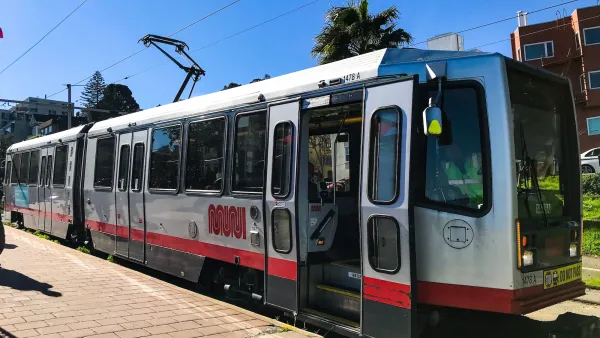
San Francisco cyclists push to allow bikes on Muni trains
The agency is one of few that bans bikes from its trains due to space constraints.
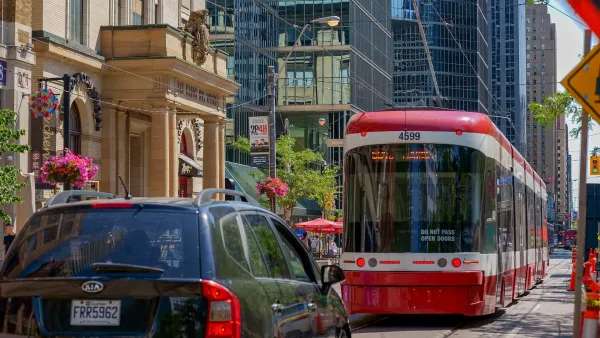
Toronto Man Beats Streetcar on Foot to Highlight Traffic Delays
Runner Mac Bauer says he hopes his project spurs the city to improve transit speed and reliability.

Planetizen Federal Action Tracker
A weekly monitor of how Trump’s orders and actions are impacting planners and planning in America.

The state-sanctioned urbicide of Austin
People don’t kill cities. Freeways do.

US to reduce Colorado River water deliveries to Mexico
A new Colorado Treaty amendment reduces Mexico’s Colorado River water allocation by 250,000 acre feet.

Nation's most wind-powered state turns to coal as data centers increase energy demand
For the first time in decades, Iowa has increased its generation of coal power.

NYC cools commuters with city's first rain garden above a bus stop
New York City officials say the plants in the rain garden can absorb 16 gallons of rainwater during heavy storms.

Brightline West’s future may rely on $6 billion federal loan
The company has until Nov. 2 to make a $400 million equity investment into its proposed high-speed rail line.

FREE Course: Walkable City 1: Why Walkability?
After describing his path towards focusing on walkability as the essence of good planning, Jeff Speck marches through his five principal reasons for making more walkable places.
Reinventing Malls: Planning Alchemy—Turning Gray Fields Into Gold
The course focuses on the opportunities and imperatives that shape reinvention of mall sites.

Eagle County Government
Harvard University Graduate School of Design
Nashville Planning Department
The Architects Foundation
University of Cincinnati Online
The Pocatello Development Authority
The Urban Renewal Agency of the City of Pocatello
Journal of the American Planning Association