The head of Toronto's Cycling Committee is calling on the city to shift its focus from the quantity of bike lanes it creates to the quality of connections their planned infrastructure will create in the city's existing bike network.


says City Councillor Adrian Heaps is hoping to shift the city's focus from its long-held goal of building 1,000 kilometers of bike lanes in the city. A new report doesn't even mention that goal, instead listing areas where new infrastructure could strengthen the system.
"A blueprint for the city's active transportation priorities over the next two years, Changing Gears lists connecting bikeway trails and completing downtown bikeways as the top two priorities. It will be used as the basis for a review of the 2001 Bike Plan by city staff after this fall's election.
Changing Gears documents the 9 per cent growth in Toronto cyclists biking for practical rather than recreational purposes - not just downtown but in the inner suburbs; the growing appetite for and availability of secure bike parking, including a bike station at Union Station; and a new zoning bylaw requiring developers to incorporate bike parking into new buildings."
Read the full story: City’s bike plan switches gears
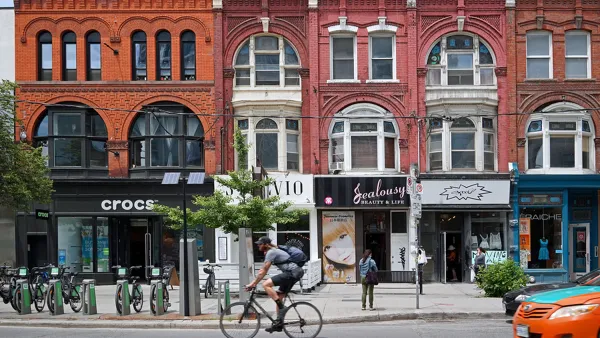
Biking Takes Off in Toronto
People in cities all over the world are choosing the bike as their preferred mode of transportation as the coronavirus shakes up work and travel patterns. Residents of the largest city in Canada are no exception.
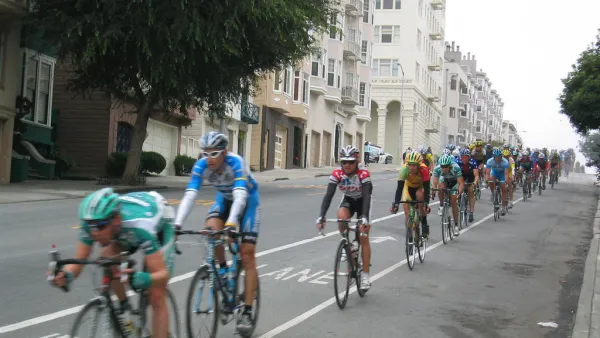
Quick Build Initiative Transforming the Streets of San Francisco
Street improvements to benefit cyclists and pedestrians have been moving rapidly in San Francisco since the June approval of the Vision Zero quick-build initiative, a two-year plan to expedite safety project on high-injury corridors.
Two New Bike Lanes Coming to St. Paul
A key north-south connection is coming to the St. Paul bicycle lane network.

Planetizen Federal Action Tracker
A weekly monitor of how Trump’s orders and actions are impacting planners and planning in America.

California plans to bury El Niño’s downpour
If the state plays its cards right, it may be able to store a billion acre-feet of El Niño’s water in aquifers.

Desperate measures: Advocates weigh draining Lake Powell to fill Colorado River
Draining the reservoir could reduce evaporation losses by a couple hundred thousand acre-feet.

Los Angeles just elected an urban planner as its mayor
Transportation analysts are optimistic that Raman will be more aggressive in addressing transit issues than Bass.

Mamdani’s pied-à-terre tax survives legal challenge
A panel of judges found that the plaintiffs failed to demonstrate injury as a result of New York City's implementation of the tax.

Eastern Nebraska is running out of electricity
Data centers and electrification are straining eastern Nebraska’s grid, throttling economic development.

FREE Course: Walkable City 1: Why Walkability?
After describing his path towards focusing on walkability as the essence of good planning, Jeff Speck marches through his five principal reasons for making more walkable places.
Reinventing Malls: Planning Alchemy—Turning Gray Fields Into Gold
The course focuses on the opportunities and imperatives that shape reinvention of mall sites.

City of Rosemead
Rutgers University, Edward J. Bloustein School of Planning and Public Policy
One Hundred Miles
University of Michigan School for Environment and Sustainability (SEAS)
Hunter College, City University of New York (CUNY)
The Architects Foundation
City of Cambridge
Montrose County
The Pocatello Development Authority