The built environment plays a big role in public health, and the professions involved in creating the built environment need to pay more attention to building healthy places, argues Clark Manus, president of the American Institute of Architects.


"Gaining a more balanced, integrated view of how we interact with the environment and one another is the role of design. Moving toward such a balance goes far beyond diet and exercise. It means giving people choices in how they negotiate their environment. It means restoring whole neighborhoods to health.
In suburban America, as well as within many cities, it's almost impossible to buy a stamp, shop at a grocery store, or drop your kids at a basketball game without driving halfway to hell and back. This is a direct result of poor design. Whether it's neglected open spaces, out-of-the-way stairs, limited access to recreation and cultural facilities, lack of generous sidewalks or retail density, or the absence of bike paths-the list goes on-every piece of the larger puzzle affects our health."
The AIA has instituted a new program aimed at splicing health-focused recommendations into public policy surrounding the built environment.
Read the full story: A PRESCRIPTION for a Healthier Nation

A Place to Recover from Illness: How Medical Respite Programs Help Unhoused People Heal
For people experiencing homelessness, recuperating after a hospitalization is difficult. Medical respite programs can help. Why aren't they more common?
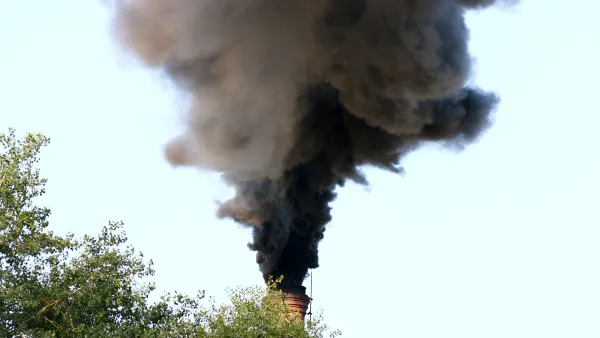
24 States Sue EPA Over New Soot Pollution Limit
The agency cites health risks of air pollution as reason for the new limit; states appear concerned it will kill their economies.

Forming Partnerships With Public Health Departments: How to Make the Connection
Tips for community organizations looking to build relationships with local public health departments.

Amtrak, CN end decades-long dispute with eight-year agreement
The new operating agreement establishes an updated framework for the companies to work together, including processes to resolve disputes.

Northwest rail fans eager for Sept. 30 debut of Amtrak’s Airo fleet
Get ready for that new train smell and more seats. But they won’t go faster or run more frequently on the Cascades route in Washington and Oregon.

Judges permit Denver to divert 77,000 acre feet from the Colorado River for reservoir expansion
Overuse and climate change have caused the Colorado River’s water levels to plummet.

NYC to turn city-owned property into thousands of homes
The city has scheduled a public hearing regarding the development for October.

Buses travel at 5mph along this route in NYC. The Bronx's first-ever busway looks to change that
Prior to the busway, buses on the Bx36 route traveled as slowly as 5 miles per hour.

Pittsburg launches 'EZ permits,' aims for one-day turnaround for low-risk permits
The pilot ‘fast lane’ for permits is part of a bundle of modernization efforts for Pittsburg’s permitting process.

FREE Course: Walkable City 1: Why Walkability?
After describing his path towards focusing on walkability as the essence of good planning, Jeff Speck marches through his five principal reasons for making more walkable places.
Reinventing Malls: Planning Alchemy—Turning Gray Fields Into Gold
The course focuses on the opportunities and imperatives that shape reinvention of mall sites.

City of Thousand Oaks
City of Wisconsin Rapids
Harvard University Graduate School of Design
The Architects Foundation
University of Cincinnati Online
The Pocatello Development Authority
The Urban Renewal Agency of the City of Pocatello