Salt Lake City is aggressively expanding its light rail network thanks to a voter approved tax increase. This post wonders whether the city could follow mimic a proposed plan in Los Angeles to speed up the use of those taxes.


"The good news for the UTA is that the 2006 sales tax increase does not sunset (by contrast, the Measure R sales tax increase approved by voters here is scheduled to expire in July 2039). However, a substantial portion of that revenue source will be tied up in paying for FrontLines 2015.
But what if there were a way to borrow cheaply against those future revenues, so that those crucial projects could move forward right away? So that Utahans can immediately begin to reap the benefits of a clean and convenient transit system serving the all reaches of the Salt Lake metro area."
The idea is to replicate the 30/10 plan, an idea being pushed in L.A. that would cram 30 years of transportation projects into 10 by borrowing against tax revenues that would be collected for transportation projects over a long period of time.
Read the full story: America Fast Forward and FrontLines: Could 30/10 work for Salt Lake City?


Well Intended Housing Tax Could Wreak Havoc in L.A.
A new transfer tax that intends to fund affordable housing might end up crushing Los Angeles's multifamily market—at exactly the wrong time.
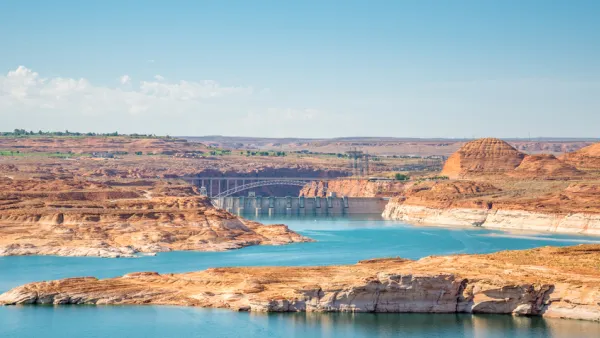
Climate Change Is Shrinking the Colorado River
Documenting the effects of climate change on the West's most vital source of water.

This November, Four Major Transportation Measures at Stake
If you live in Detroit, Atlanta, Seattle, or Los Angeles, you have more to look forward to in November than choosing Donald or Hillary. Major decisions concerning regional transportation are on the line.

Planetizen Federal Action Tracker
A weekly monitor of how Trump’s orders and actions are impacting planners and planning in America.

Amtrak, CN end decades-long dispute with eight-year agreement
The new operating agreement establishes an updated framework for the companies to work together, including processes to resolve disputes.

Judges permit Denver to divert 77,000 acre feet from the Colorado River for reservoir expansion
Overuse and climate change have caused the Colorado River’s water levels to plummet.

Maryland local governments examine if they should have more power to raise property taxes
Maryland’s housing market is out of reach for the majority of moderate-income residents.

Northwest rail fans eager for Sept. 30 debut of Amtrak’s Airo fleet
Get ready for that new train smell and more seats. But they won’t go faster or run more frequently on the Cascades route in Washington and Oregon.

NYC DOT wants faster, more permanent street upgrades
The city is examining ways to build more concrete infrastructure without getting entangled in 'decades-long' projects.

FREE Course: Walkable City 1: Why Walkability?
After describing his path towards focusing on walkability as the essence of good planning, Jeff Speck marches through his five principal reasons for making more walkable places.
Reinventing Malls: Planning Alchemy—Turning Gray Fields Into Gold
The course focuses on the opportunities and imperatives that shape reinvention of mall sites.

Harvard University Graduate School of Design
KFH Group Inc.
Greater Baltimore Committee
The Architects Foundation
University of Cincinnati Online
The Pocatello Development Authority
The Urban Renewal Agency of the City of Pocatello