A rapid transit system gets closer to reality in Honolulu as officials conduct groundbreaking ceremony, while some still object to the project for aesthetic reasons.


The proposed 20 mile rail system is not insignificant, considering the Hawaiian city population of only 375,000 residents. It should be completed by 2019 after the FTA recommended it for federal funding.
"Despite the clear need for improved transportation systems in Honolulu, however, the project's gestation has been difficult... the recent election of Governor Neil Abercrombie and Mayor Peter Carlisle, both of whom assumed office in 2010, represented a major step forward, as each have been solid defenders of the project... It is true that the project remains under debate on both aesthetic and land use grounds. The elevated nature of the system has a number of advantages: It will allow trains to run much more quickly between the ends of the island... and it will offer automated trains, allowing high frequencies even off-peak (6 minute maximum) and lower labor costs because of the lack of train drivers.
Nonetheless, the elevated guideway will not be a particularly beautiful addition to the Hawai'i landscape, and in some places it could represent a barrier between the city and its waterfront."
Read the full story: Rapid Transit Closer to Realization as Honolulu’s Rail Project Breaks Ground
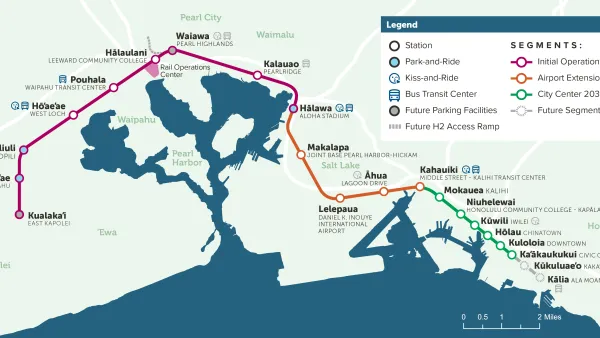
Skyline Rail, Now Serving Honolulu
In a historic day for public transit, Skyline Rail, a project once deemed the worst transit project in the United States due to extreme cost overruns and construction delays, finally opened to the public at the end of June.

Honolulu Light Rail to Open in June
The city’s first light rail line will finally begin service after more than a half century of planning.
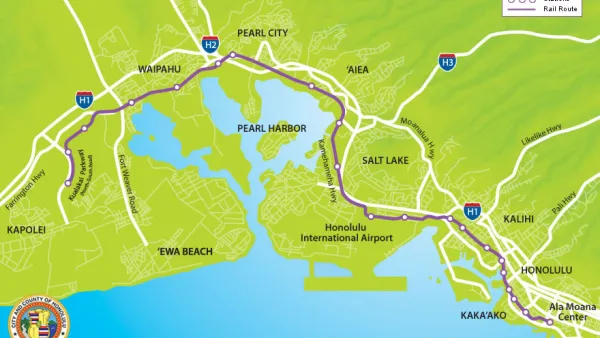
Honolulu Rail Cost Overruns Now Exceed $1 Billion
Add another $200 million to the $910 million shortfall already facing Honolulu's rail project. The changing circumstances surrounding the project won't make it any easier to create a viable funding plan to make up the difference.

Planetizen Federal Action Tracker
A weekly monitor of how Trump’s orders and actions are impacting planners and planning in America.

California plans to bury El Niño’s downpour
If the state plays its cards right, it may be able to store a billion acre-feet of El Niño’s water in aquifers.

Desperate measures: Advocates weigh draining Lake Powell to fill Colorado River
Draining the reservoir could reduce evaporation losses by a couple hundred thousand acre-feet.

Chicago voters approve permanent festival grounds, penalty for vacant property owners
Currently, major summer and fall festivals take over public parks for weeks at a time, drawing criticism from nearby residents

NYC votes to cut outdoor dining red tape, speed up permitting
New York City also voted to allow the Department of Transportation to begin work on urgent projects before notifying elected officials.

California appears to reject Prop. 45
The proposition would have expanded the projects that qualify for a streamlined environmental review, effectively paring down the California Environmental Quality Act.

FREE Course: Walkable City 1: Why Walkability?
After describing his path towards focusing on walkability as the essence of good planning, Jeff Speck marches through his five principal reasons for making more walkable places.
Reinventing Malls: Planning Alchemy—Turning Gray Fields Into Gold
The course focuses on the opportunities and imperatives that shape reinvention of mall sites.

City of Rosemead
Rutgers University, Edward J. Bloustein School of Planning and Public Policy
One Hundred Miles
Hunter College, City University of New York (CUNY)
The Architects Foundation
University of Cincinnati Online
City of Cambridge
Montrose County
The Pocatello Development Authority