The Dutch Water Line is a floodable defense system built in the 16th Century in the Netherlands. Hundreds of bunkers were built during World War II, but now sit unused. A design firm has constructed a walkway right through the middle of one.


"Despite advances in aerial warfare that rendered ground defences less relevant, the Dutch Water Line was remarkably long lived, employed all the way into the Second World War, when it was augmented with more than 700 bomb-resistant bunkers. For decades, these have sat dormant, dotting the Dutch countryside. Recently, the Amsterdam-based firm of Rietveld Landscape (working with the artist Erick de Lyon), in an effort to draw attention to the bunkers, took one of the structures – Bunker 599, just off the A2 highway near the town of Diefdijk – and sliced it in two, constructing a walkway between its two halves."
This piece from Icon looks at the project, which tries to show how these unused bunkers can be re-integrated into the public realm.
Read the full story: Bunker 599

Dutch Designer Makes Street Furnishings Fun
John Metcalfe spotlights the work of Dutch designer Thor ter Kulve, whose creative approach to designing street furniture blends utility and playfulness with the aim of liberating public space.
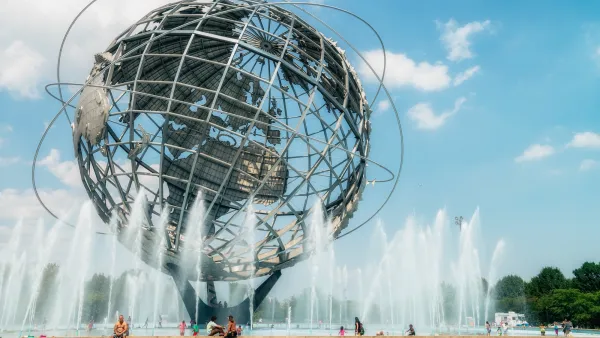
Historic Queens park is getting a $120M upgrade
The borough's largest park will undergo significant upgrades for accessibility, flood mitigation and historic preservation.
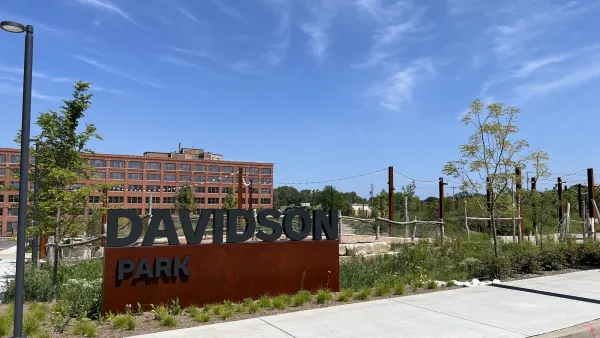
Harley-Davidson turned a Milwaukee parking lot into a green oasis
The park, adjacent to Harley-Davidson headquarters, doubles as stormwater retention infrastructure.

Amtrak, CN end decades-long dispute with eight-year agreement
The new operating agreement establishes an updated framework for the companies to work together, including processes to resolve disputes.

Northwest rail fans eager for Sept. 30 debut of Amtrak’s Airo fleet
Get ready for that new train smell and more seats. But they won’t go faster or run more frequently on the Cascades route in Washington and Oregon.

Judges permit Denver to divert 77,000 acre feet from the Colorado River for reservoir expansion
Overuse and climate change have caused the Colorado River’s water levels to plummet.

NYC to turn city-owned property into thousands of homes
The city has scheduled a public hearing regarding the development for October.

Buses travel at 5mph along this route in NYC. The Bronx's first-ever busway looks to change that
Prior to the busway, buses on the Bx36 route traveled as slowly as 5 miles per hour.

Pittsburg launches 'EZ permits,' aims for one-day turnaround for low-risk permits
The pilot ‘fast lane’ for permits is part of a bundle of modernization efforts for Pittsburg’s permitting process.

FREE Course: Walkable City 1: Why Walkability?
After describing his path towards focusing on walkability as the essence of good planning, Jeff Speck marches through his five principal reasons for making more walkable places.
Reinventing Malls: Planning Alchemy—Turning Gray Fields Into Gold
The course focuses on the opportunities and imperatives that shape reinvention of mall sites.

City of Thousand Oaks
City of Wisconsin Rapids
Harvard University Graduate School of Design
The Architects Foundation
University of Cincinnati Online
The Pocatello Development Authority
The Urban Renewal Agency of the City of Pocatello