Without doubt, the pride of the Amtrak fleet is the ten-year-old Acela train, the closest thing to high speed rail in existence in the United States. This piece looks at the current service and Amtrak's hope for the future for the northeast route.


"Acela has come of age as a popular alternative to flights or traversing Interstate 95 along the busy Northeast Corridor."
Patrons are for the most part pleased with the service (take the poll; 66% 'excellent' approval rating as of Dec. 15, 2010) but recognize that the trip is still longer than its competition - air shuttles.
"Amtrak's long-range vision (PDF) increases speeds of up to 220 miles per hour - cutting the trip from Washington to Boston from six and a half to just three hours and 20 minutes."
"Each Acela train has about 260 business class seats and 40 first-class seats with reclining leather chairs and tables in each car. [View 17-slide photogallery, includes Chinese high speed train.] An average of about 72 percent of the train's seats were sold on peak segments and 60 percent on all segments - figures that have improved substantially over the past five years, according to data from the rail agency."
Thanks to Kenyon Karl
Read the full story: As Acela turns 10, Amtrak envisions high-speed rail expansion

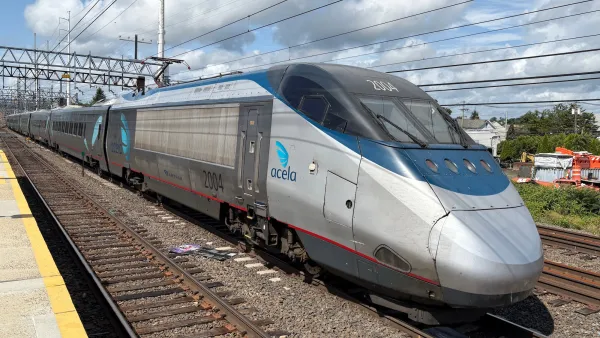
Amtrak cancels over a dozen trains due to extreme heat
The eastern side of the country faces a scorching holiday heat wave.
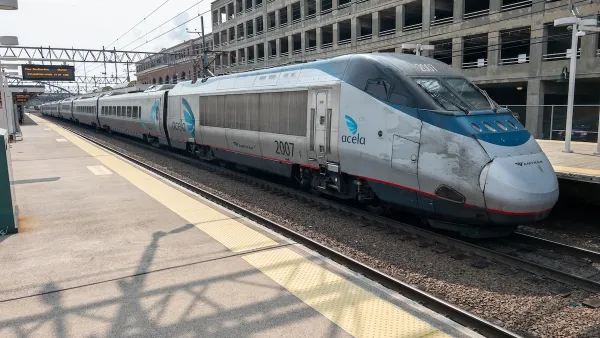
Amtrak Breaks Ridership Record in FY 2024
More Americans than ever rode the rails last year, also bringing the agency its highest ticket revenue.
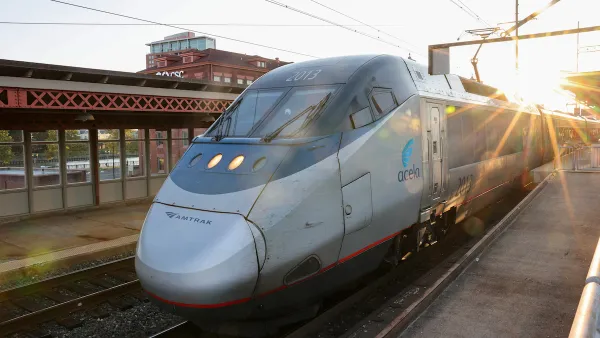
The Passenger Rail Revival Is Here
For the first time in decades, multiple rail projects are moving forward that could have a transformative impact on train travel in the United States.

Planetizen Federal Action Tracker
A weekly monitor of how Trump’s orders and actions are impacting planners and planning in America.

Amtrak, CN end decades-long dispute with eight-year agreement
The new operating agreement establishes an updated framework for the companies to work together, including processes to resolve disputes.

Judges permit Denver to divert 77,000 acre feet from the Colorado River for reservoir expansion
Overuse and climate change have caused the Colorado River’s water levels to plummet.

Boston has spent millions making the Green Line more accessible — and there’s no end in sight
While the city has invested millions into expanding and adding platforms to the Green Line to make it more accessible, new train cars set to arrive next year will be too tall for disabled passengers to board without raising the current platforms.

Idaho may see an 18% drop in federal surface transit funding — the largest estimated cut in the US
Transit systems in rural communities are much more reliant on federal funding to provide their services.

How ‘post-disaster gentrification’ alters neighborhoods after natural calamities
After hurricanes, fires or other calamities, the original residents of a community are often replaced by younger, wealthier residents.

FREE Course: Walkable City 1: Why Walkability?
After describing his path towards focusing on walkability as the essence of good planning, Jeff Speck marches through his five principal reasons for making more walkable places.
Reinventing Malls: Planning Alchemy—Turning Gray Fields Into Gold
The course focuses on the opportunities and imperatives that shape reinvention of mall sites.

Harvard University Graduate School of Design
KFH Group Inc.
Greater Baltimore Committee
The Architects Foundation
University of Cincinnati Online
The Pocatello Development Authority
The Urban Renewal Agency of the City of Pocatello