Urbanism tends to be an interest of a small group: the young, the male, and the pale, according to Kristen E. Jeffers who wants to see more groups and more people of color engaged.


"I didn't realize that this behavior and interest had a name -- urbanism -- until recently. Now, I'm not a hard-core urbanist (Southerners have a natural aversion to paid parking lots and tolls), but still, I'd like to be able to walk around in peace. Bike to a nice full service grocery. Take the bus across town without shame. Get on the train and be in Raleigh in less time than it takes to get down I-40 East.
Problem is, when I look around, I mostly see only one type of person associated with the urbanist label: young, white, and male. Not many young, black, and female, like me. The word "urban," when it's associated with African-Americans, is often synonymous with housing projects, poverty, and the poisoned legacy of urban renewal. Over the years, as various government-sponsored and social ills crept into our neighborhoods, our sense of community died."
Jeffers argues that urbanism isn't just bike lanes and TOD, but rather community-focused issues that people anywhere should be able to relate to or take interest in.
Read the full story: Does urbanism have to be black and white?
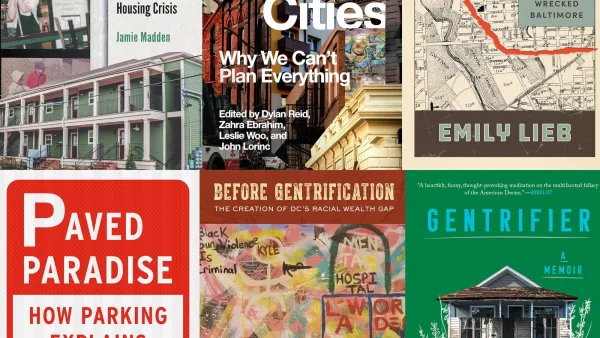
10 great urban planning summer reads
Wherever you're going (or staying) this summer, here are some suggestions for books to bring along.
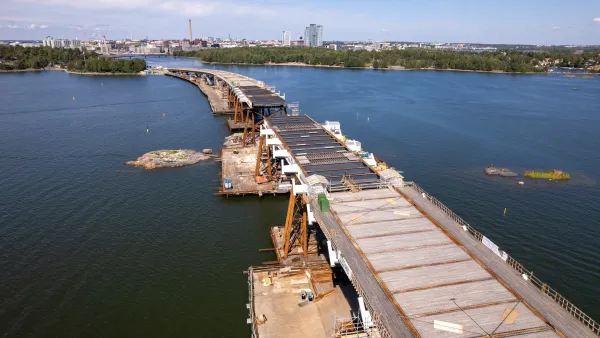
April must-reads: Top 10 articles from last month
The world's longest car-free bridge opens in Finland, Amtrak's new Mardi Gras line shatters ridership predictions, and Bay Area commuters could lose a third of Caltrain stations.
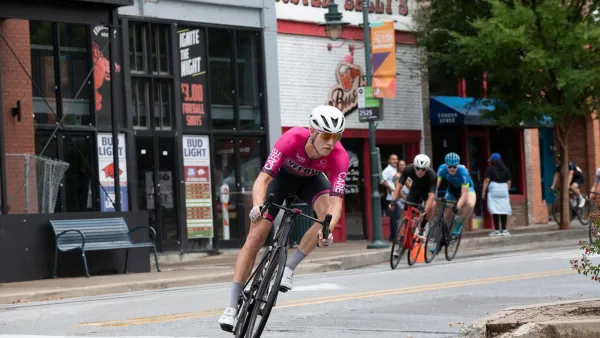
Northwest Arkansas grapples with growth as it prepares to host New Urbanism gathering
A compelling story of a fast-growing, polycentric region grappling with identity and affordability, Susan Henderson reframes CNU 34 as a hands-on workshop, inviting planners to explore Northwest Arkansas as it decides what it will become.

Planetizen Federal Action Tracker
A weekly monitor of how Trump’s orders and actions are impacting planners and planning in America.

California plans to bury El Niño’s downpour
If the state plays its cards right, it may be able to store a billion acre-feet of El Niño’s water in aquifers.

Desperate measures: Advocates weigh draining Lake Powell to fill Colorado River
Draining the reservoir could reduce evaporation losses by a couple hundred thousand acre-feet.

In Texas, data centers are swallowing promised parkland
Residents who moved to Taylor, Texas for a rural community now have to contend with three data centers in their backyard.

How a Chicago-sized wind farm beat the odds and powered on
The project spanned five presidential administrations and a standoff with a U.S. military base.

MTA gives itself 30 days to transform pit into basketball court
The site has been under construction since 2022; the city originally estimated it would finish the court in 2024.

FREE Course: Walkable City 1: Why Walkability?
After describing his path towards focusing on walkability as the essence of good planning, Jeff Speck marches through his five principal reasons for making more walkable places.
Reinventing Malls: Planning Alchemy—Turning Gray Fields Into Gold
The course focuses on the opportunities and imperatives that shape reinvention of mall sites.

City of Rosemead
Rutgers University, Edward J. Bloustein School of Planning and Public Policy
One Hundred Miles
Hunter College, City University of New York (CUNY)
The Architects Foundation
University of Cincinnati Online
City of Cambridge
Montrose County
The Pocatello Development Authority