According to new research, immigrant homeownership is shifting from large cities like New York and Los Angeles to smaller ones like Las Vegas and Minneapolis.


"'Our data suggest that immigrants are attracted to homes near active support networks of fellow immigrants and in places with lower rates of immigrant growth resulting in less competition for entry-level jobs,' [urban economist Gary] Painter said.
'The anticipated rapid growth of U.S. immigrant populations in the coming decades, coupled with their movement into midsize metro areas, has the potential to transform communities.'"
"Painter says good communication skills are vital in situations where smaller metro areas prepare to absorb an influx of recently arrived immigrants. 'Language is key to helping communities become more hospitable to immigrants,' who are then more likely to buy homes and stay there, he added.
In areas where communities succeed in offering a warm welcome, along with employment and housing opportunities, Painter says first-time immigrant home buyers can help stabilize previously declining home values."
Read the full story: Immigrant Flow Shifts to Smaller Cities

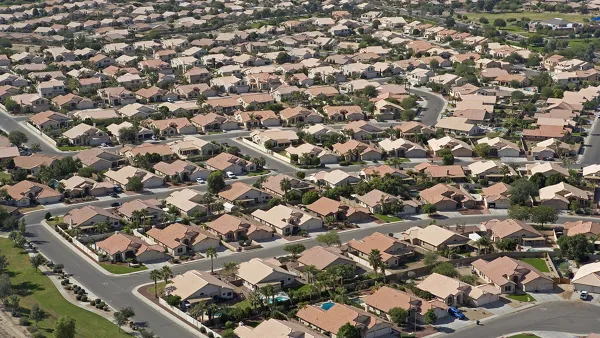
Could Immigration Crackdowns Crash the Housing Market?
Immigrants, both documented and undocumented, are a growing factor in the demand for new housing. In the long term (or sooner), the Trump Administration's hard line on newcomers could lead to instability for the rest of us.
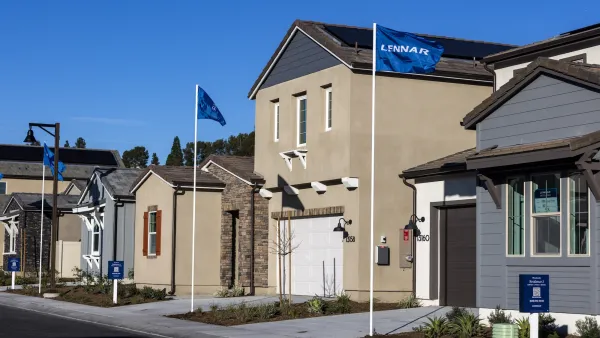
Just 17% of San Diego households can afford the city's $1M+ median home prices
The city is becoming increasingly unaffordable to prospective homebuyers.
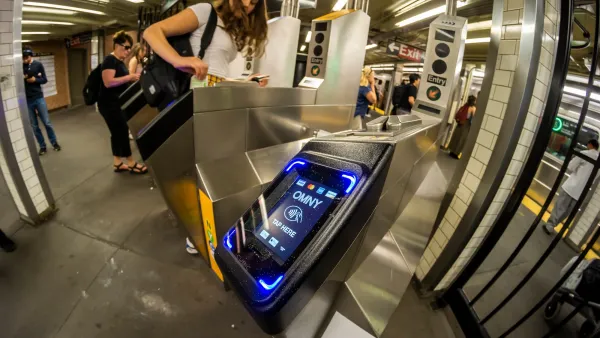
Popular transit payment system linked to Palantir could give ICE access to rider data
The tap-to-pay system is being used widely in transit systems including New York City, Boston and Chicago.

Planetizen Federal Action Tracker
A weekly monitor of how Trump’s orders and actions are impacting planners and planning in America.

Chicago breaks ground on $3 billion megadevelopment
The new neighborhood, titled Foundry Park, will one day host 3,700 residences.

This MA town is drowning in its own sewage — and residents like it that way
Susan Murcott, a waste water expert, said if Carlisle didn't address their leaking sewage, the problem could turn “deadly.”

Feds to more closely scrutinize proposed Amtrak facility’s environmental impact
The Federal Railroad Administration had initially said the facility qualified for a less extensive environmental review.

Boston is hard to build housing in: its chief of planning wants to keep it that way
Chief of Planning Kairos Shen said she would not make changes to Boston’s affordability requirements for new housing, which critics say have slowed down development.

California plans to bury El Niño’s downpour
If the state plays its cards right, it may be able to store a billion acre-feet of El Niño’s water in aquifers.

FREE Course: Walkable City 1: Why Walkability?
After describing his path towards focusing on walkability as the essence of good planning, Jeff Speck marches through his five principal reasons for making more walkable places.
Reinventing Malls: Planning Alchemy—Turning Gray Fields Into Gold
The course focuses on the opportunities and imperatives that shape reinvention of mall sites.

City of Rosemead
Rutgers University, Edward J. Bloustein School of Planning and Public Policy
One Hundred Miles
Hunter College, City University of New York (CUNY)
The Architects Foundation
University of Cincinnati Online
Montrose County
The Pocatello Development Authority
The Urban Renewal Agency of the City of Pocatello