Passage of a bill in Berkeley that allows taller buildings to be built in the city's downtown illustrates changing attitudes about development amongst environmentalists.


Instead of merely opposing growth or development, environmental groups are increasingly focusing on directing that growth to places where it works or is more appropriate, according to this piece from the San Francisco Chronicle.
"A big reason for the success, I'll wager, is that the backers included the Sierra Club and Greenbelt Alliance, organizations with long track records and solid green reputations.
'The concept of environmentalism is maturing,' suggests Jeremy Madsen, Greenbelt Alliance's executive director.
The group until 1987 was known as People for Open Space; from the start, it took the position that growth should be steered toward existing cities, rather than farmland and bare hills. Only in the past decade has the alliance taken assertive steps regarding what happens inside the greenbelt."
Read the full story: Younger greens reject old ideas about urbanity
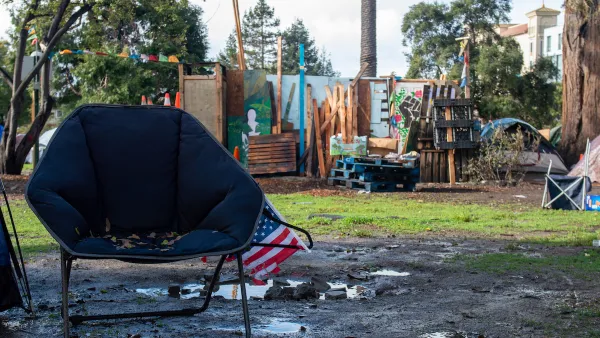
UC Berkeley Says Supportive Housing ‘Inseparable’ Part of People’s Park Project
The park remains closed to the public as a court weighs a decision on the university’s proposed housing development.
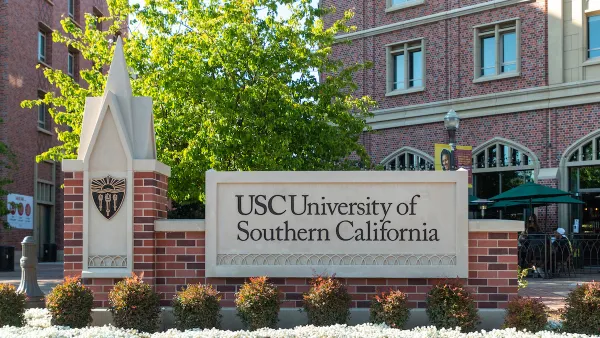
Berkeley Noise Pollution Precedent Blocks Los Angeles Housing
Opponents to a new university housing project cited a recent Berkeley case in which noise pollution was successfully used to deny an exemption from environmental review.
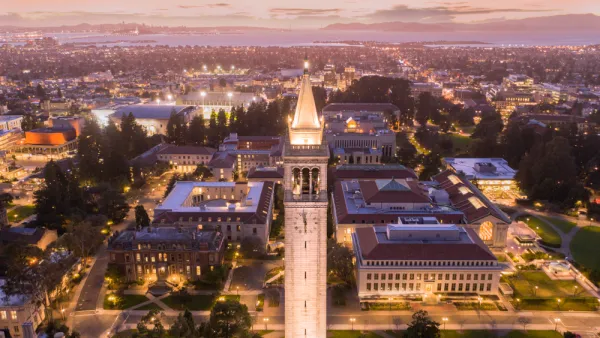
Opinion: How California’s Environmental Law Empowers NIMBYs
Critics of a new provision calling “social noise” an environmental impact say the law can too easily be co-opted by anti-housing groups to block new development.

Planetizen Federal Action Tracker
A weekly monitor of how Trump’s orders and actions are impacting planners and planning in America.

California plans to bury El Niño’s downpour
If the state plays its cards right, it may be able to store a billion acre-feet of El Niño’s water in aquifers.

Desperate measures: Advocates weigh draining Lake Powell to fill Colorado River
Draining the reservoir could reduce evaporation losses by a couple hundred thousand acre-feet.

Voters across the country reject data centers
Dozens of communities voted on measures to restrict the buildout of data centers.

US buildings threatened, destroyed by fires set to triple by 2060
Researchers found a high fire risk for socioeconomically vulnerable neighborhoods in the American West.

LA residents may be allowed to paint their own crosswalks
Councilwoman Katy Yaroslavsky put out a motion instructing the Los Angeles Department of Public Transportation to study the feasibility of allowing volunteers to paint crosswalks.

FREE Course: Walkable City 1: Why Walkability?
After describing his path towards focusing on walkability as the essence of good planning, Jeff Speck marches through his five principal reasons for making more walkable places.
Reinventing Malls: Planning Alchemy—Turning Gray Fields Into Gold
The course focuses on the opportunities and imperatives that shape reinvention of mall sites.

City of Rosemead
Rutgers University, Edward J. Bloustein School of Planning and Public Policy
One Hundred Miles
Hunter College, City University of New York (CUNY)
The Architects Foundation
University of Cincinnati Online
City of Cambridge
Montrose County
The Pocatello Development Authority