Next June, Paris will begin a test phase of a citywide electric car-sharing program.


Similar to the bike-sharing program that has been a success in the city, locals are hoping to fight off some of the city's notorious car congestion through this car-sharing program.
"Autolib is the proposed name, after the Parisian bike-sharing project that began three years ago, Vélib. A total of 3,000 electric cars will be made available, distributed among over 700 stations in the city. Autolib is due to enter a test phase in June 2011, and Delanoë wants the scheme to be fully operational from September. Paris isn't doing things by halves, says a spokesman for the city: 'We want to make it a big success.'
An Autolib subscription will cost €15 ($20) a month, plus an additional €5 ($7) for every half hour that a car is used. The prices sound affordable, but the killer argument for users could prove to be the guaranteed parking."
Read the full story: E-Car Scheme to Tackle City's Permanent Congestion

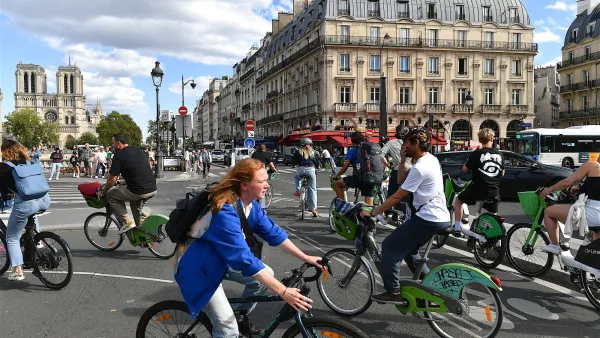
Biking in Paris grew by 240% in 5 years
The city saw a significant rise in bike use thanks to data-driven policy changes.
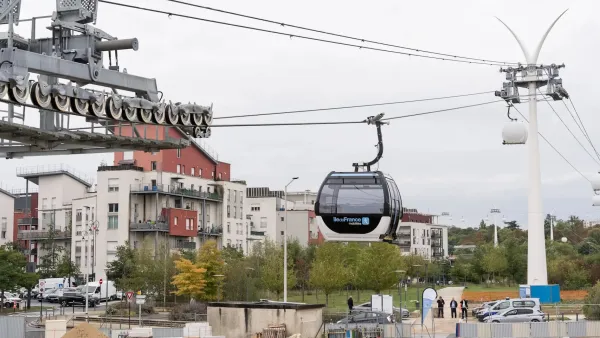
Paris Opens Europe’s Longest Aerial Gondola Line
The new cable car line, France’s seventh, is expected to carry roughly 11,000 passengers per day.

France Tightens Restrictions on Short-Term Rentals
The vacation rental market is shouldering part of the blame for rising housing costs, particularly in popular tourist destinations.

Planetizen Federal Action Tracker
A weekly monitor of how Trump’s orders and actions are impacting planners and planning in America.

Amtrak, CN end decades-long dispute with eight-year agreement
The new operating agreement establishes an updated framework for the companies to work together, including processes to resolve disputes.

Judges permit Denver to divert 77,000 acre feet from the Colorado River for reservoir expansion
Overuse and climate change have caused the Colorado River’s water levels to plummet.

Boston has spent millions making the Green Line more accessible — and there’s no end in sight
While the city has invested millions into expanding and adding platforms to the Green Line to make it more accessible, new train cars set to arrive next year will be too tall for disabled passengers to board without raising the current platforms.

Idaho may see an 18% drop in federal surface transit funding — the largest estimated cut in the US
Transit systems in rural communities are much more reliant on federal funding to provide their services.

How ‘post-disaster gentrification’ alters neighborhoods after natural calamities
After hurricanes, fires or other calamities, the original residents of a community are often replaced by younger, wealthier residents.

FREE Course: Walkable City 1: Why Walkability?
After describing his path towards focusing on walkability as the essence of good planning, Jeff Speck marches through his five principal reasons for making more walkable places.
Reinventing Malls: Planning Alchemy—Turning Gray Fields Into Gold
The course focuses on the opportunities and imperatives that shape reinvention of mall sites.

City of Wisconsin Rapids
Harvard University Graduate School of Design
KFH Group Inc.
The Architects Foundation
University of Cincinnati Online
The Pocatello Development Authority
The Urban Renewal Agency of the City of Pocatello