After nearly collapsing under the pressure of a free-wheeling building boom, Dubai is on the rebound. A new internal accounting effort is trying to explore what went wrong and how to avoid those mistakes in the future.


"The auditors' task is to investigate exactly where the money went, who lined whose pockets, and what other financial landmines might lie in store. Forensic audits at state-linked firms, such as Dubai Holding, are part of a wider corruption probe that has targeted senior figures from Dubai's boom years.
But even as the accountants work to get to the bottom of the financial mess, Dubai is changing. Its rescue last year by Abu Dhabi -- details of which Reuters reports here for the first time -- has encouraged the city-state to become more conservative, both politically and socially. Dubai's crisis prompted a shift of power to the rulers in Abu Dhabi, the wealthiest of the seven states that make up the United Arab Emirates.
Now a chastened Dubai is recovering some of its confidence as it seeks to convince international investors it can deliver now where last year it failed."
With a new, more pragmatic approach to building and development, Dubai is expecting to step back in line with its goals of becoming a major player in the Middle East.
Read the full story: Special report: How Dubai got serious

The Bust of Williamsburg
Sales in Brooklyn are down, and that's made a ghost town out of the recently booming but now busted Williamsburg neighborhood.
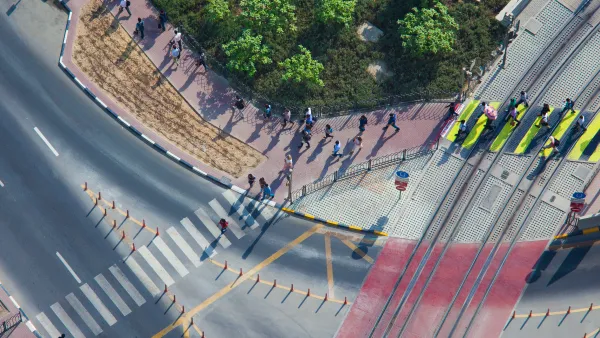
Dubai Launches Free Smart Umbrella Rental to Improve Walkability
By helping residents walk comfortably in the rain or blazing sun, Dubai hopes to advance its 2040 master plan goals of sustainability and becoming a “20-minute city.”
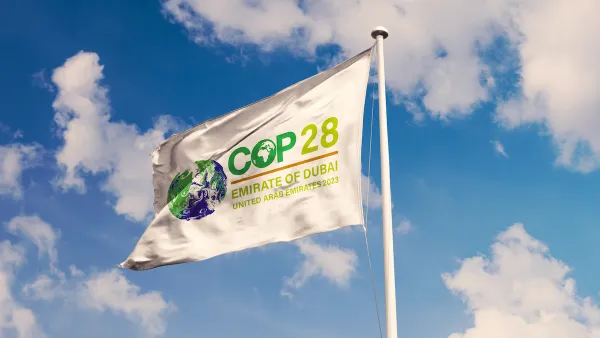
COP28: Beginning of the End for Fossil Fuels?
A deal came together “quickly and unexpectedly" on the final night of the nearly 2-week United Nations climate talks in Dubai, UAE, according to a series of articles by Washington Post climate reporters.

Planetizen Federal Action Tracker
A weekly monitor of how Trump’s orders and actions are impacting planners and planning in America.

Chicago breaks ground on $3 billion megadevelopment
The new neighborhood, titled Foundry Park, will one day host 3,700 residences.

This MA town is drowning in its own sewage — and residents like it that way
Susan Murcott, a waste water expert, said if Carlisle didn't address their leaking sewage, the problem could turn “deadly.”

Amtrak cuts ribbon on Seattle Airo maintenance facility
The $250 million, nearly 100,000-square-foot building can house an entire Cascades Airo trainset.

To power data centers, Google seeks autonomous control of thousands of homes’ electricity
The tech company has signed a deal to indirectly pay Mid-Atlantic residents to reduce their power demand when the grid is strained.

From robotaxis to robotrains: LA, DC weigh driverless transit
If approved, the projects will take years to implement and face financial and technical hurdles.

FREE Course: Walkable City 1: Why Walkability?
After describing his path towards focusing on walkability as the essence of good planning, Jeff Speck marches through his five principal reasons for making more walkable places.
Reinventing Malls: Planning Alchemy—Turning Gray Fields Into Gold
The course focuses on the opportunities and imperatives that shape reinvention of mall sites.

City of Rosemead
Rutgers University, Edward J. Bloustein School of Planning and Public Policy
One Hundred Miles
The Architects Foundation
University of Cincinnati Online
Montrose County
The Pocatello Development Authority
The Urban Renewal Agency of the City of Pocatello