Seattle is panning to tear down an aging viaduct that runs along its waterfront and replace it with a tunnel beneath downtown. When the viaduct falls, the city is looking to increase public space on a new waterfront.


"The state Transportation Department plans to replace the aging viaduct with a deep-bore tunnel beneath downtown. After the viaduct is torn down, civic leaders envision developing a world-class waterfront with open public spaces, a tree-lined boulevard, and maybe beaches from which to launch kayaks or fly kites. The canvas will be more than nine acres of new public space along the shoreline and new Alaskan Way boulevard from King Street to Elliott and Western Avenues. It has potential to connect a chain of Seattle icons: Pike Place Market; the Seattle Aquarium; Pioneer Square; the sports stadiums and the Olympic Sculpture Park."
The $50 million waterfront project will be designed by james corner field operations.
Read the full story: Seattle chooses NY design firm for new waterfront
Seattle Unveils Grand Plans for Its Waterfront, But Who's Going to Pay for it?
Last week, landscape architect James Corner presented a transformative vision for remaking Seattle's waterfront after the removal of the Alaskan Way Viaduct. Lynn Thompson describes Corner's plan, and its accompanying funding challenges.
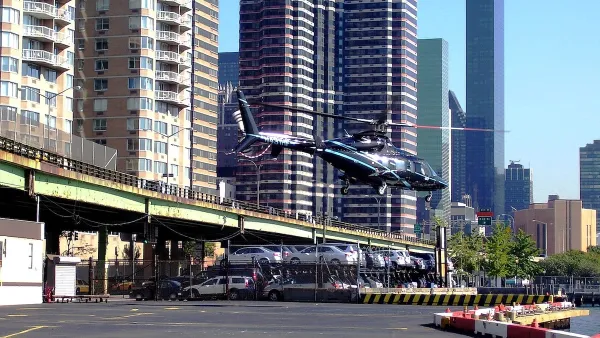
Manhattan Waterfront Parking Lot to Become Public Park
A lot that has served as parking for decades will add a much-needed public amenity to the East River waterfront.
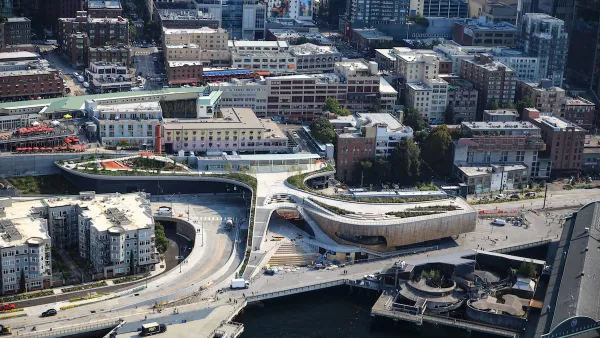
Seattle’s New Overlook Walk Offers Ample Park Space Near Pike Place Market
The elevated park and event space replaces part of the demolished Alaskan Way Viaduct, connecting the city’s famous Pike Place Market to the waterfront.

Planetizen Federal Action Tracker
A weekly monitor of how Trump’s orders and actions are impacting planners and planning in America.

Eastern Nebraska is running out of electricity
Data centers and electrification are straining eastern Nebraska’s grid, throttling economic development.

Washington state to charge fee to drivers with fuel-efficient cars
Revenue from the fee will go towards supporting the state’s highways.

Instead of building new housing, LA developers are turning mansions into mega-mansions
In the richest areas, the number of houses valued at $30 million with demolition permits has skyrocketed since 2018.

Illinois considers spending $1 billion in taxpayer money on data center
A quantum computing campus and data center are currently under construction in Chicago.

As development costs rise, Boston moves to lessen affordable housing requirements
The Boston Zoning Commission and the City Council still need to approve Boston Mayor Michelle Wu’s proposed changes

FREE Course: Walkable City 1: Why Walkability?
After describing his path towards focusing on walkability as the essence of good planning, Jeff Speck marches through his five principal reasons for making more walkable places.
Reinventing Malls: Planning Alchemy—Turning Gray Fields Into Gold
The course focuses on the opportunities and imperatives that shape reinvention of mall sites.

City of Charlotte
City of Rosemead
Rutgers University, Edward J. Bloustein School of Planning and Public Policy
University of Michigan School for Environment and Sustainability (SEAS)
Hunter College, City University of New York (CUNY)
The Architects Foundation
University District Partnership
City of Cambridge
The Pocatello Development Authority