Urban runoff and contaminated water are creating major ecological damage, even in the United States. One design competition has the goal of rethinking how we handle this crucial resource.


This post from Metropolis looks at the complex relationship between cities and water cleanliness, and looks to a different future through a design competition.
"Our water infrastructure, flawed at the best of times, is now on the brink of collapse. The United States alone is faced with spending $330 billion dollars over the next two decades, simply to keep our existing tap water systems functioning.
Now is the perfect moment to ask ourselves if there isn't a better way to manage our water systems.
Is it possible to completely redefine our relationship with water? To satisfy our thirst without compromising our aquifers or harming our marine life? To eradicate water-borne diseases using ecologically sound processes? To craft solutions capable of addressing water crises in developed and developing countries alike?"
Read the full story: Water and the Living City


Planetizen Federal Action Tracker
A weekly monitor of how Trump’s orders and actions are impacting planners and planning in America.

Chicago breaks ground on $3 billion megadevelopment
The new neighborhood, titled Foundry Park, will one day host 3,700 residences.
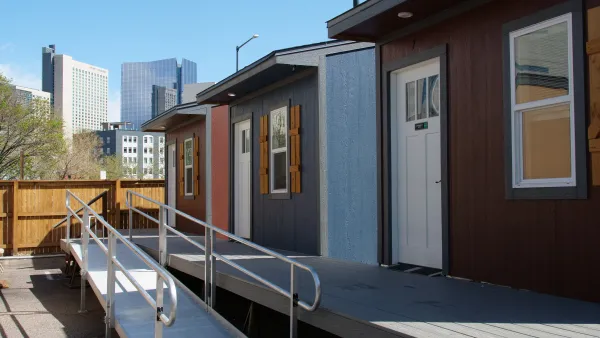
Denver is solving homelessness. Why aren't the rest of us?
Since 2023, Denver's street homeless population has decreased by 64%, proving that effective tools exist to support those in need of housing.

LA accused of breaching $1.4 billion sidewalk repair settlement
The city faces a backlog of nearly 5,000 street repair requests.

MTA kicks off six-year, $1 billion transit upgrade project
The authority is replacing the roughly 90-year-old train signals on the A and C line with modern technology.

Developers may expand largest gas pipeline network in Northwest
Pipeline giant Williams has proposed new expansions for its Northwest Pipeline from the Colorado Rockies through Idaho, Oregon and Washington.

FREE Course: Walkable City 1: Why Walkability?
After describing his path towards focusing on walkability as the essence of good planning, Jeff Speck marches through his five principal reasons for making more walkable places.
Reinventing Malls: Planning Alchemy—Turning Gray Fields Into Gold
The course focuses on the opportunities and imperatives that shape reinvention of mall sites.

City of Rosemead
Rutgers University, Edward J. Bloustein School of Planning and Public Policy
One Hundred Miles
The Architects Foundation
University of Cincinnati Online
Montrose County
Northern Illinois Transit Authority (NITA)
The Pocatello Development Authority