Citing three examples of growing pains in Metro Atlanta, this piece wonders whether the region is incapable of efficiently growing any further.


The suburban growth pattern of Atlanta may be coming to an end, according to this post from The Economist's blog.
"Between April 1st 2009 and April 1st 2010, metro Atlanta's growth rate was at its lowest level since the 1950s. On an aesthetic level, this is no bad thing: the city grew too quickly for its infrastructure. Fewer people and cars might make the place more pleasant for those of us who live here. But going from a boomtown to a coasting-along city-from New York to Boston, say, or Shanghai to Hong Kong-is a jarring shift, particularly for Atlanta, accustomed as it is to seeing itself as the driving engine of the South."
Read the full story: Stop the suburbs; I want to get off

October Must-Reads: Top 10 Articles From Last Month
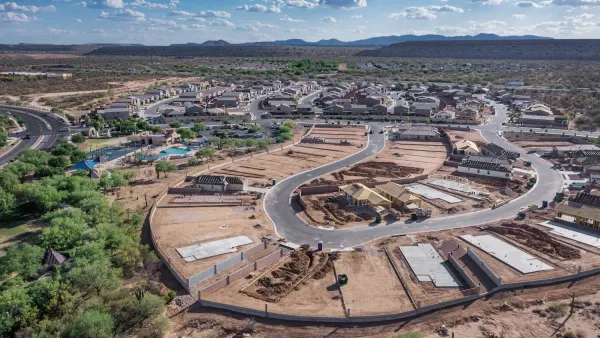
Arizona’s future needs sustainable growth, and part of the answer may lie in an experiment from its past.

Arizona Overrides Moratorium Imposed due to Water Crisis, Approves up to 60K New Homes
A newly created legal process allows development to proceed if builders agree to bring in renewable water sources and reduce their groundwater use by 25%.
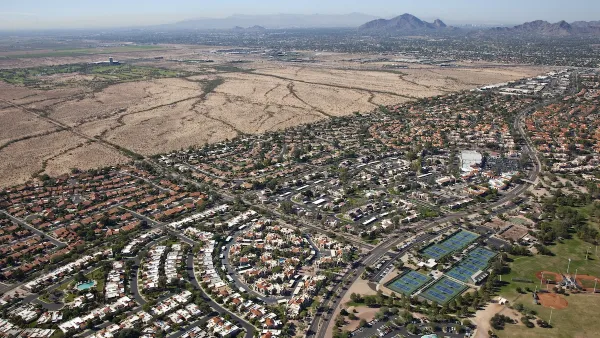
Nearly Half a Million New Arizona Homes Halted Due to Water Crisis
The Arizona Department of Water Resources has put a moratorium on new water supply permits, making the future of planned residential developments uncertain.

Planetizen Federal Action Tracker
A weekly monitor of how Trump’s orders and actions are impacting planners and planning in America.

Chicago breaks ground on $3 billion megadevelopment
The new neighborhood, titled Foundry Park, will one day host 3,700 residences.

This MA town is drowning in its own sewage — and residents like it that way
Susan Murcott, a waste water expert, said if Carlisle didn't address their leaking sewage, the problem could turn “deadly.”

California plans to bury El Niño’s downpour
If the state plays its cards right, it may be able to store a billion acre-feet of El Niño’s water in aquifers.

With no reauthorization bill in sight, Texas slashes $6.6 billion from transportation budget
An official said the program may receive additional funding when a federal reauthorization bill passes.

Chicago’s new transit authority has ‘unprecedented’ land development power
The Northern Illinois Transit Authority is allowed to buy and develop land for reasons unrelated to transit, a power that is fairly unique among transit authorities.

FREE Course: Walkable City 1: Why Walkability?
After describing his path towards focusing on walkability as the essence of good planning, Jeff Speck marches through his five principal reasons for making more walkable places.
Reinventing Malls: Planning Alchemy—Turning Gray Fields Into Gold
The course focuses on the opportunities and imperatives that shape reinvention of mall sites.

City of Rosemead
Rutgers University, Edward J. Bloustein School of Planning and Public Policy
One Hundred Miles
The Architects Foundation
University of Cincinnati Online
Montrose County
The Pocatello Development Authority
The Urban Renewal Agency of the City of Pocatello