An environmental impact study will be launched to look at a possible 9.3-mile light rail line in Detroit. Time's blog questions whether it's really such a smart move to build the line.


The system is expected to cost about $500 million. Local officials are hopeful it will spur economic development along the line. But Time isn't sure the system will live up to its potential.
"The proposed rail would cover only 9.3 miles, running from Hart Plaza downtown to "almost" Eight Mile Road, the city's border. Basically, it would be the Detroit People Mover - a 2.9-mile monorail that connects 13 stations scattered through downtown Detroit - but on cheap steroids. And the relatively few people who'd use it probably wouldn't go much further than the theater district or the cultural center most times. So for all practical purposes, it'll be like hitching a ride with your boy from the African World Day festival on the riverfront to catch Chris Rock at the State Theater or Henry O. Tanner at the DIA. Thanks for the lift, homie, but this isn't a ride that inspires visions of a world-class Detroit."
Read the full story: Detroit's Model Train

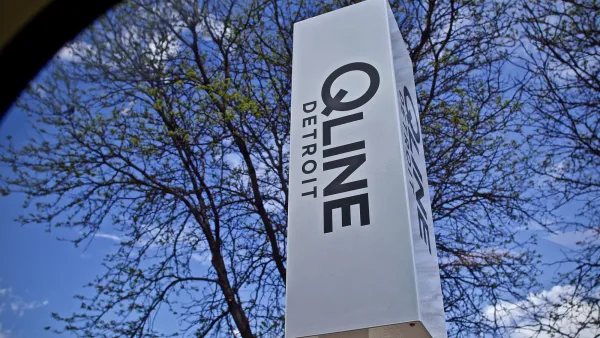
Ridership Drops As Detroit's QLine Streetcar Starts Charging
Since Detroit's new streetcar system started charging, ridership has dropped. Those who are riding aren't necessarily paying anyways.
Detroit's M-1 Rail Line Credited for Delivering Investment—A Year Before Opening
The 3.3-mile M-1 Rail line in Detroit has been described as a boondoggle of unparalleled proportions. Boosters of the project, however, have gathering evidence of investment in neighborhoods along the route.
Comparing Boondoggles: Light Rail Line in Detroit, Streetcar in Washington D.C.
Jim Epstein suggests that Detroit's new light rail line is America's largest boondoggle; Matthew Yglesias argues that that ignominy belongs to Washington D.C.'s planned streetcar.

Planetizen Federal Action Tracker
A weekly monitor of how Trump’s orders and actions are impacting planners and planning in America.

‘Going backwards:’ Baltimore mayor, students rally against state's transit funding plan
Maryland's proposed six-year plan provides no funding for Baltimore’s BMORE bus program and reduces its road maintenance funding.

Detroit to transform waterfront with $2.2 billion investment
Developers will convert about 18 acres of unused parking lot space into civic spaces.

A multi-billion dollar problem is brewing under Oakland’s streets
Oakland’s stormwater drainage systems are in desperate need of upgrades and repairs. The El Niño will only further strain the city’s infrastructure.

$2 trillion in economic growth may hide in ‘micropolitan communities’
Small cities hold 39% of America’s population, but receive only 10% of U.S. venture capital investment.

'I can't live in this:' Mississippi town besieged by power plant noise
A plant powering Elon Musk’s xAI data centers is subjecting Southaven, Mississippi residents to ceaseless noise.

FREE Course: Walkable City 1: Why Walkability?
After describing his path towards focusing on walkability as the essence of good planning, Jeff Speck marches through his five principal reasons for making more walkable places.
Reinventing Malls: Planning Alchemy—Turning Gray Fields Into Gold
The course focuses on the opportunities and imperatives that shape reinvention of mall sites.

One Hundred Miles
County of Mendocino
planning NEXT
The Architects Foundation
University of Cincinnati Online
Montrose County
Northern Illinois Transit Authority (NITA)
The Pocatello Development Authority