The 3.3-mile M-1 Rail line in Detroit has been described as a boondoggle of unparalleled proportions. Boosters of the project, however, have gathering evidence of investment in neighborhoods along the route.


"M-1 Rail may be a year away from ferrying passengers from downtown to Midtown, but housing developments already are popping up along the Woodward Avenue route," reports Louis Aguilar. According to that line of thinking, the housing developments could be "an early sign the streetcar service could play a major role in eradicating blight along the 3.3-mile line."
As for the long-term returns expected from the investment in the M-1 system, "[w]ithin 10 years, its supporters contend, the M-1 Rail will drive $3 billion in development and 10,000 housing units, filling the yawning gaps of dead buildings and empty lots along Detroit’s most storied street." Moreover, more than a dozen buildings have changed ownership in the neighborhood of Milwaukee Junction—a sign of investors anticipating the M-1 Rail's arrival.
The article also provides details on three of the ten housing plans currently in the works along the route.
Read the full story: M-1 Rail helps get Woodward developments rolling

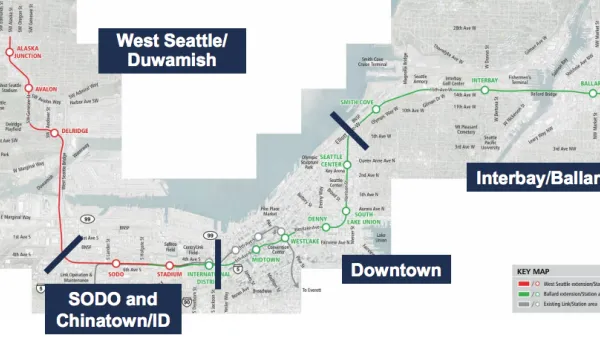
Seattle to Build Housing Alongside Light Rail
Seattle is going beyond transit oriented development by building apartments on parcels of land near stations.
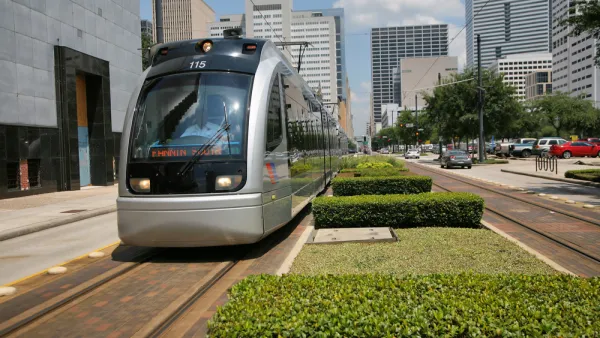
Two Studies Show How Light Rail Benefits Houston
Finally, the city seems to be reaping benefits from a major investment in public transportation.

Ridership Drops As Detroit's QLine Streetcar Starts Charging
Since Detroit's new streetcar system started charging, ridership has dropped. Those who are riding aren't necessarily paying anyways.

Planetizen Federal Action Tracker
A weekly monitor of how Trump’s orders and actions are impacting planners and planning in America.

California plans to bury El Niño’s downpour
If the state plays its cards right, it may be able to store a billion acre-feet of El Niño’s water in aquifers.

Desperate measures: Advocates weigh draining Lake Powell to fill Colorado River
Draining the reservoir could reduce evaporation losses by a couple hundred thousand acre-feet.

California city breaks ground on transit connector
The project includes three mobility hubs and a pedestrian bridge.

After public outcry, Massachusetts city releases housing development tracker
Cambridge’s tracker currently shows 250 housing projects in various stages of development.

40 years after approval, Chicago breaks ground on new park
The park honors Jean Baptiste Point du Sable, the city’s first permanent non-native settler.

FREE Course: Walkable City 1: Why Walkability?
After describing his path towards focusing on walkability as the essence of good planning, Jeff Speck marches through his five principal reasons for making more walkable places.
Reinventing Malls: Planning Alchemy—Turning Gray Fields Into Gold
The course focuses on the opportunities and imperatives that shape reinvention of mall sites.

City of Rosemead
Rutgers University, Edward J. Bloustein School of Planning and Public Policy
One Hundred Miles
Hunter College, City University of New York (CUNY)
The Architects Foundation
University of Cincinnati Online
City of Cambridge
Montrose County
The Pocatello Development Authority