This piece from The New York Times looks at how an ill-fated development plan for the island of Alameda fell apart, and the city official tied up in the controversy.


Dspite a long opposition to new development on the island, the city had gotten behind a plan by Southern California developer SunCal Companies to redevelop more than 700 acres of an old naval base with thousands of homes and offices.
"Mayor Beverly Johnson recorded a robo-call that went out to every resident on March 25, 2009: 'A plan has been created that deserves our support.'
One week after that call, the city promoted Ann Marie Gallant, its exacting interim finance director, to interim city manager. Within months, SunCal was no longer welcome in Alameda, and last week, the City Council officially voted the company off the island by a 4 to 0 vote.
How the widespread support for SunCal transformed into bitter opposition - and Ms. Gallant's role in that - is at the heart of the surprising implosion of one of the most ambitious development projects ever in the East Bay."
Read the full story: After Development Plan Fails, the Accusations Fly

Ownership Undecided on California Naval Base Redevelopment
A decommissioned naval base in Concord, California, is moving steadily towards redevelopment as a mixed use community. But who will own the redeveloped base is still undecided.
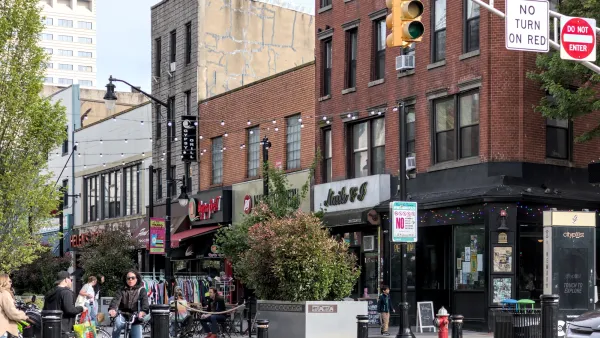
Jersey City could build 700 homes on city-owned parking lots
If approved, a redevelopment proposal would build hundreds of new homes on a pair of city parking lots.

Madison approves hundreds of affordable apartments as deadline for federal funding looms
A recently approved project will bring 163 affordable units to the north side.

Planetizen Federal Action Tracker
A weekly monitor of how Trump’s orders and actions are impacting planners and planning in America.

The state-sanctioned urbicide of Austin
People don’t kill cities. Freeways do.

US to reduce Colorado River water deliveries to Mexico
A new Colorado Treaty amendment reduces Mexico’s Colorado River water allocation by 250,000 acre feet.

Nation's most wind-powered state turns to coal as data centers increase energy demand
For the first time in decades, Iowa has increased its generation of coal power.

NYC cools commuters with city's first rain garden above a bus stop
New York City officials say the plants in the rain garden can absorb 16 gallons of rainwater during heavy storms.

Brightline West’s future may rely on $6 billion federal loan
The company has until Nov. 2 to make a $400 million equity investment into its proposed high-speed rail line.

FREE Course: Walkable City 1: Why Walkability?
After describing his path towards focusing on walkability as the essence of good planning, Jeff Speck marches through his five principal reasons for making more walkable places.
Reinventing Malls: Planning Alchemy—Turning Gray Fields Into Gold
The course focuses on the opportunities and imperatives that shape reinvention of mall sites.

Greater Baltimore Committee
Eagle County Government
Harvard University Graduate School of Design
The Architects Foundation
University of Cincinnati Online
The Pocatello Development Authority
The Urban Renewal Agency of the City of Pocatello
Journal of the American Planning Association